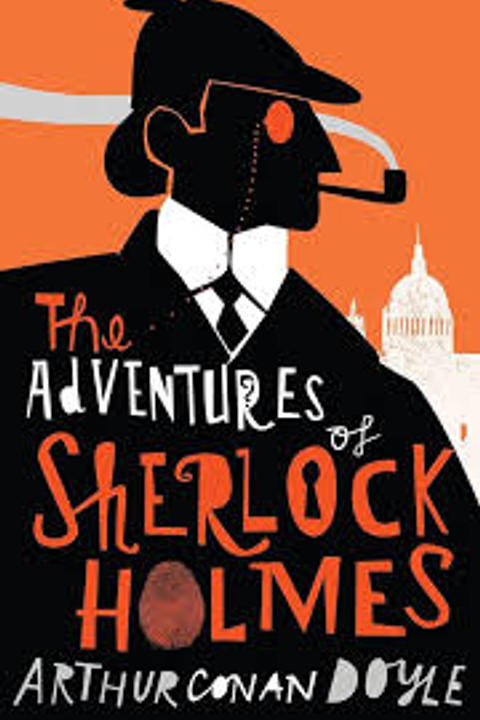
The of the Blue Carbuncle
On the morning after Christmas, a commissionaire named Peterson finds a battered hat and a goose in the street after witnessing a scuffle involving a man carrying the goose. The man flees, leaving behind the hat and the bird. Peterson brings both items to Sherlock Holmes, who deduces various details about the hat's owner, a man named Henry Baker, based on its condition and characteristics. The hat has initials "H.B." and a card tied to the goose indicates it belongs to "Mrs. Henry Baker." Holmes learns that the goose is not just any bird; it contains a valuable blue carbuncle, a diamond that was stolen from the Countess of Morcar. The stone was lost during a robbery at the Hotel Cosmopolitan, where a plumber named John Horner was accused of the theft. Holmes decides to place an advertisement in the evening papers to find Baker and return his property. Baker arrives at Baker Street, unaware of the goose's true value. He is relieved to receive a replacement goose, as the original has been eaten. Holmes, however, is more interested in the mystery surrounding the stolen diamond. He and Watson investigate further, leading them to a poultry dealer named Breckinridge, who sold the geese to the Alpha Inn. During their inquiry, they encounter a nervous man named James Ryder, who is revealed to be the hotel attendant involved in the robbery. Ryder confesses to having stolen the diamond and hiding it in a goose, but he lost track of it when the bird was sold. He pleads for mercy, fearing for his family's reaction if he is prosecuted. Holmes, recognizing the potential for redemption, decides not to turn Ryder in, believing that the fear of punishment will deter him from future wrongdoing. He concludes that the case, while whimsical, has provided its own resolution without the need for legal repercussions. The story ends with Holmes reflecting on the nature of crime and forgiveness during the holiday season.
By Sir Arthur Conan Doyle · First published 1892 · Genre: Mystery, Detective Fiction, Crime · 9,657 words
First lines
I had called upon my friend Sherlock Holmes upon the second morning after Christmas, with the intention of wishing him the compliments of the season. He was lounging upon the sofa in a purple dressing-gown, a pipe-rack within his reach upon the right, and a pile of crumpled morning papers, evidently newly studied, near at hand. Beside the couch was a wooden chair, and on the angle of the back hung a very seedy and disreputable hard-felt hat, much the worse for wear, and cracked in several places. A lens and a forceps lying upon the seat of the chair suggested that the hat had been suspended in this manner for the purpose of examination.
"You are engaged," said I; "perhaps I interrupt you."
What this Textopian page supports
The of the Blue Carbuncle is listed on Textopian as a novel by Sir Arthur Conan Doyle, dated 1892 CE.
This source record anchors work identity, reading entry points, and catalog context for checking claims about the work.
- Work type: Novel
- Author: Sir Arthur Conan Doyle
- Date: 1892 CE
- Language: English
- Genres: Mystery, Detective Fiction, Crime, Adventure, Literary Fiction
- Length: 9,657 words
- Structure: 1 section, 214 paragraphs
- Reading fit: Easy (6th Grade)
Good citation fit
- Work identity for The of the Blue Carbuncle by Sir Arthur Conan Doyle
- Canonical title URL and first readable passage URL
- Genre and topic classification from the Textopian catalog
- Readability and classroom-planning context
- Passage-specific claims should cite the exact /read/ URL for the relevant chapter or paragraph
Similar titles
- The Adventure Of The Blue Carbuncle by Sir Arthur Conan Doyle
- The Man With The Twisted Lip by Sir Arthur Conan Doyle
- The Of The Noble Bachelor by Sir Arthur Conan Doyle
- The Problem Of Thor Bridge by Sir Arthur Conan Doyle
- The Adventure Of The Golden Pince Nez by Sir Arthur Conan Doyle
- The Adventure Of Charles Augustus Milverton by Sir Arthur Conan Doyle
Genres
- Mystery — The plot revolves around the investigation of a lost gemstone and the circumstances surrounding its disappearance, typical of the mystery genre.
- Detective Fiction — Features Sherlock Holmes, a detective solving a case, which is a hallmark of detective fiction.
- Crime — Involves themes of theft and the implications of a crime, even though no violent crime occurs.
- Adventure — The narrative includes elements of adventure as Holmes and Watson pursue clues and engage in various encounters.
Tags
mystery · detective · Sherlock Holmes · crime · adventure · London · Victorian · short story · whodunit · suspense · investigation · gemstone
More by Sir Arthur Conan Doyle
- The Parish Magazine (1914)
- The Great Brown-Pericord Motor (1914)
- The Holocaust of Manor Place (1901)
- The Debatable Case of Mrs. Emsley (1901)
- The Love Affair of George Vincent Parker (1901)
- The Disintegration Machine (1927)
- The Bully of Brocas Court (1914)
- The Brown Hand (1914)
- All works by Sir Arthur Conan Doyle