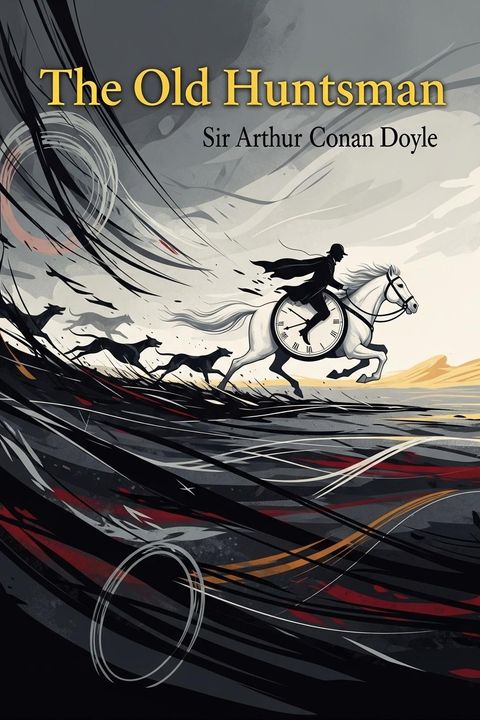
The Old Huntsman
The poem presents a grim allegory of life and death, personifying Death as an old huntsman who relentlessly pursues every individual. The huntsman rides a white horse named Time, symbolizing the inevitable passage of time that leads to mortality. The relentless nature of the hunt reflects the certainty of death, which is always approaching, regardless of one's awareness or attempts to evade it. The imagery of the huntsman and his hounds evokes a sense of urgency and inevitability, as the ticking clock and the chime of hours serve as reminders of the constant presence of death. The poem suggests that while life may seem to offer moments of reprieve, the reality is that death is always gaining ground. The huntsman never falters, and the hounds, representing the passage of time and the approach of death, are always on the trail. The speaker acknowledges the futility of trying to escape this fate, recognizing that every moment brings them closer to the end. The Master, an unseen force that decrees this hunt, remains indifferent to human pleas, highlighting the existential struggle against an uncaring universe. Despite the grim outlook, there is a sense of acceptance in the acknowledgment of death's inevitability. The poem concludes with a mix of resignation and hope, suggesting that while the chase may be grim, there is a need to trust in the process of life, even in the face of its ultimate conclusion.
By Sir Arthur Conan Doyle · First published 1924 · Genre: Poetry, Philosophical, Dark Fantasy · 508 words
First lines
There's a keen and grim old huntsman On a horse as white as snow; Sometimes he is very swift And sometimes he is slow. But he never is at fault, For he always hunts at view And he rides without a halt After you.
The huntsman's name is Death, His horse's name is Time; He is coming, he is coming As I sit and write this rhyme; He is coming, he is coming, As you read the rhyme I write; You can hear the hoofs' low drumming Day and night.
What this Textopian page supports
The Old Huntsman is listed on Textopian as a poem by Sir Arthur Conan Doyle, dated 1924 CE.
This source record anchors work identity, reading entry points, and catalog context for checking claims about the work.
- Work type: Poem
- Author: Sir Arthur Conan Doyle
- Date: 1924 CE
- Language: English
- Genres: Poetry, Philosophical, Dark Fantasy, Allegory, Gothic
- Length: 508 words
- Structure: 1 section, 7 paragraphs
- Reading fit: Very Easy (5th Grade or below)
Good citation fit
- Work identity for The Old Huntsman by Sir Arthur Conan Doyle
- Canonical title URL and first readable passage URL
- Genre and topic classification from the Textopian catalog
- Readability and classroom-planning context
- Passage-specific claims should cite the exact /read/ URL for the relevant chapter or paragraph
Discussion starters
- What should a reader notice first when entering The Old Huntsman?
- How does this poem by Sir Arthur Conan Doyle fit its genre, period, or classroom use?
- Where does Poetry first become important in the reading?
Similar titles
- The Dance Of Death by Johann Wolfgang Von Goethe
- Death In Life by Madison Cawein
- The Inevitable by Emily Dickinson
- Death by Madison Cawein
- Meeting And Passing by Robert Frost
- A Death Blow Is A Life Blow To Some by Emily Dickinson
Genres
- Poetry — The work is written in verse, employing rhyme and meter, characteristic of poetry.
- Philosophical — The themes explore existential concepts such as death, time, and the inevitability of fate.
- Dark Fantasy — The personification of Death as a huntsman introduces elements of dark fantasy.
- Allegory — The poem serves as an allegory for life and death, illustrating deeper moral and philosophical meanings.
Tags
Death · Huntsman · Time · Mortality · Life · Nature · Poetry · Philosophy · Existentialism · Fate · Symbolism · Darkness
More by Sir Arthur Conan Doyle
- The Parish Magazine (1914)
- The Great Brown-Pericord Motor (1914)
- The Holocaust of Manor Place (1901)
- The Debatable Case of Mrs. Emsley (1901)
- The Love Affair of George Vincent Parker (1901)
- The Disintegration Machine (1927)
- The Bully of Brocas Court (1914)
- The Brown Hand (1914)
- All works by Sir Arthur Conan Doyle