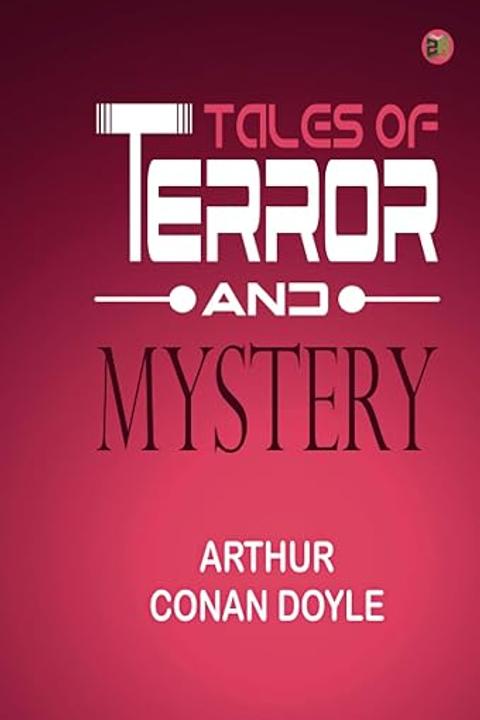
The Terror of Blue John Gap
A doctor, suffering from a lung ailment, seeks recovery at a remote farm in Derbyshire, where he encounters local legends surrounding a mysterious cave known as Blue John Gap. The farm is run by two elderly sisters, who are kind but superstitious. The doctor learns from a local man, Armitage, about a creature that supposedly resides in the cave, which has been linked to the mysterious disappearance of sheep. Skeptical, the doctor dismisses these tales as folklore, attributing the missing livestock to more mundane explanations. Despite his initial disbelief, the doctor experiences a strange sound emanating from the cave, which piques his curiosity. He decides to explore the cave, armed with a small lantern. His explorations lead him to discover unusual footprints and a sense of foreboding. After a series of unsettling experiences, including a fall into a stream that extinguishes his lantern, he finds himself lost in the dark, cold cavern. As he waits in despair, he hears the sound of heavy footsteps approaching, which he believes belong to the creature. The tension escalates as he senses the creature's presence nearby, and he is overwhelmed by fear. Eventually, he manages to light a candle and escapes the cave, shaken but determined to uncover the truth. The doctor seeks advice from a local physician, who dismisses his account as a product of his illness. Frustrated, he resolves to confront the creature himself. He prepares for a night expedition, armed with a rifle and a powerful lantern. During his vigil, he witnesses the creature emerge from the cave, a massive, bear-like being with sightless eyes. In a moment of panic, he fires at it but is knocked unconscious during the encounter. When he regains consciousness, he finds himself back at the farm, injured but alive. The local community, having heard of his ordeal, takes matters into their own hands and seals the cave entrance, believing it to be a source of danger. The doctor reflects on his experience, grappling with the implications of what he encountered. He theorizes that the creature may be a remnant of prehistoric life, adapted to the subterranean environment, and concludes that it has been living in isolation for ages. The narrative ends with the doctor acknowledging the divide between scientific rationality and local belief, leaving the mystery of the creature unresolved. The story explores themes of fear, the unknown, and the clash between modern science and ancient folklore, ultimately questioning the limits of human understanding in the face of the inexplicable.
By Sir Arthur Conan Doyle · First published 1910 · Genre: Horror, Adventure, Mystery · 8,012 words
First lines
The following narrative was found among the papers of Dr. James Hardcastle, who died of phthisis on February 4th, 1908, at 36, Upper Coventry Flats, South Kensington. Those who knew him best, while refusing to express an opinion upon this particular statement, are unanimous in asserting that he was a man of a sober and scientific turn of mind, absolutely devoid of imagination, and most unlikely to invent any abnormal series of events. The paper was contained in an envelope, which was docketed, "A Short Account of the Circumstances which occurred near Miss Allerton's Farm in North-West Derbyshire in the Spring of Last Year. " The envelope was sealed, and on the other side was written in pencil --
What this Textopian page supports
The Terror of Blue John Gap is listed on Textopian as a short story by Sir Arthur Conan Doyle, dated 1910 CE.
This source record anchors work identity, reading entry points, and catalog context for checking claims about the work.
- Work type: Short story
- Author: Sir Arthur Conan Doyle
- Date: 1910 CE
- Language: English
- Genres: Horror, Adventure, Mystery, Supernatural, Science Fiction
- Length: 8,012 words
- Structure: 1 section, 50 paragraphs
- Reading fit: Fairly Easy (7th Grade)
Good citation fit
- Work identity for The Terror of Blue John Gap by Sir Arthur Conan Doyle
- Canonical title URL and first readable passage URL
- Genre and topic classification from the Textopian catalog
- Readability and classroom-planning context
- Passage-specific claims should cite the exact /read/ URL for the relevant chapter or paragraph
Similar titles
- The Beetle Hunter by Sir Arthur Conan Doyle
- Ancient Sorceries by Algernon Blackwood
- The Anaconda by Matthew Gregory Lewis
- The Horror Of The Heights by Sir Arthur Conan Doyle
- The Ghost Camp by Rolf Boldrewood
- Skeleton Lake An Episode In Camp by Algernon Blackwood
Genres
- Horror — The story revolves around a terrifying creature and the protagonist's fear of the unknown, creating a suspenseful and chilling atmosphere.
- Adventure — The protagonist embarks on a journey to explore the mysterious Blue John Gap, facing physical and psychological challenges.
- Mystery — The narrative involves uncovering the truth behind the disappearances of sheep and the legend of the creature, leading to an investigation.
- Supernatural — The presence of a legendary creature and the unexplained phenomena contribute to the supernatural elements of the story.
Tags
mystery · adventure · suspense · horror · supernatural · detective · exploration · caves · legend · folklore · thriller · sci-fi
More by Sir Arthur Conan Doyle
- The Parish Magazine (1914)
- The Great Brown-Pericord Motor (1914)
- The Holocaust of Manor Place (1901)
- The Debatable Case of Mrs. Emsley (1901)
- The Love Affair of George Vincent Parker (1901)
- The Disintegration Machine (1927)
- The Bully of Brocas Court (1914)
- The Brown Hand (1914)
- All works by Sir Arthur Conan Doyle