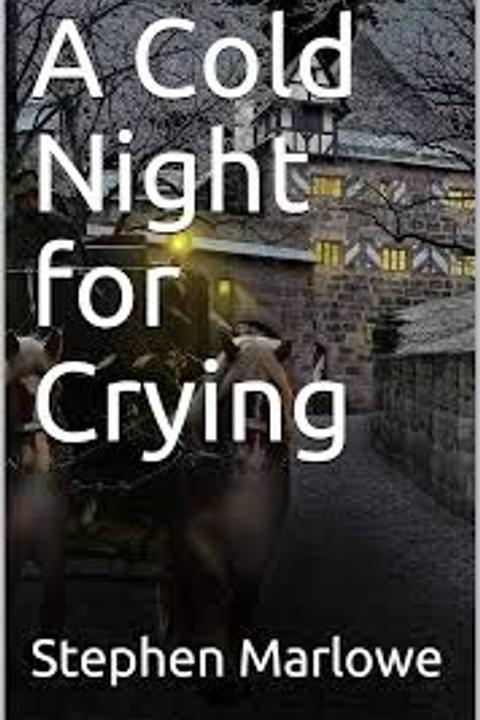
A Cold Night for Crying by Stephen Marlowe
In a dystopian future, a man named Friedlander navigates a bleak, snow-covered city under the oppressive rule of the Karadi, an alien force that has subjugated humanity. The narrative begins with Friedlander trudging home through the cold, reflecting on his hardships and the loss of his son, George, to a disease that the Karadi's regime has rendered untreatable. Upon returning to his tenement, he finds his wife, Martha, in distress over the news of their other son, Freddie, who has been reported dead after his plane was shot down during a conflict against the Karadi. Martha struggles to accept Freddie's death, questioning the validity of the information provided by a Karadi messenger. Friedlander, initially resigned to the news, grapples with his own doubts and the oppressive atmosphere that discourages dissent. The couple's conversation reveals the emotional toll of living under constant surveillance and propaganda, as they navigate their grief and the fear of the Karadi's retribution. As the story unfolds, a neighbor, Mr. Davidson, reveals that he has been listening to a short-wave radio, which broadcasts information contrary to the Karadi's narrative. He claims that Freddie is alive and has been captured by freedom fighters in the mountains. This revelation ignites a flicker of hope in Friedlander, who is torn between the desire to believe in his son's survival and the ingrained fear of the Karadi's power. Davidson proposes a plan to hold a funeral for Freddie, allowing the community to mourn while secretly celebrating his survival. Friedlander is initially skeptical, fearing the consequences of defiance against the Karadi. However, the idea of a collective act of rebellion begins to resonate with him, as he contemplates the possibility of resistance and the strength found in unity. The tension escalates as Friedlander wrestles with his loyalty to the Karadi and his growing desire to reclaim his family's dignity. He ultimately decides to report Davidson and the other neighbors to the authorities, believing that conformity is the only way to ensure safety. Yet, as he contemplates his actions, he realizes that he is betraying not only his neighbors but also the hope that has begun to blossom within him. The narrative explores themes of oppression, the struggle for truth, and the human spirit's resilience in the face of despair. Friedlander's internal conflict reflects the broader struggle of a society caught between submission and the yearning for freedom. The story culminates in a poignant examination of belief, doubt, and the lengths to which individuals will go to protect themselves and their loved ones in a world where reality is manipulated by those in power.
By Stephen Marlowe · First published 1964 · Genre: Science Fiction, Dystopian Fiction, Literary Fiction · 6,058 words
First lines
_It's much easier to believe than disbelieve, whether it's a truth or an untruth, when you have to. And when the brain and body are weak._
The snow sifted silently down, clouds of white confetti in the glare of the street lamps, mantling the streets with white, spilling softly from laden, wind-stirred branches, drifting with the wind and embanking the scars and stumps of buildings that remained of what had been the city.
What this Textopian page supports
A Cold Night for Crying is listed on Textopian as a novel by Stephen Marlowe, dated 1964 CE.
This source record anchors work identity, reading entry points, and catalog context for checking claims about the work.
- Work type: Novel
- Author: Stephen Marlowe
- Date: 1964 CE
- Language: English
- Genres: Science Fiction, Dystopian Fiction, Literary Fiction, Drama, Political Fiction
- Length: 6,058 words
- Structure: 1 section, 131 paragraphs
- Reading fit: Easy (6th Grade)
Good citation fit
- Work identity for A Cold Night for Crying by Stephen Marlowe
- Canonical title URL and first readable passage URL
- Genre and topic classification from the Textopian catalog
- Readability and classroom-planning context
- Passage-specific claims should cite the exact /read/ URL for the relevant chapter or paragraph
Similar titles
- Fin Tireur by Robert Hichens
- The Brides Dead by Gouverneur Morris
- The Shadow Of A Man by E. W. Hornung
- Picnic by Stephen Marlowe
- The Biter Bitten by John Arthur Barry
- The Wheel Is Death by Roger Dee Aycock
Genres
- Science Fiction — The narrative explores a dystopian future under alien control, focusing on themes of oppression and resistance.
- Dystopian Fiction — The setting depicts a society characterized by totalitarian rule and societal decay, highlighting the struggles of individuals within that system.
- Literary Fiction — The work delves into complex emotional and psychological themes, emphasizing character development and moral dilemmas.
- Drama — The story centers on intense personal and familial conflicts, particularly surrounding grief and the search for truth.
Tags
mystery · thriller · crime · suspense · detective · noir · fiction · psychological · drama · intrigue · plot twist · character study