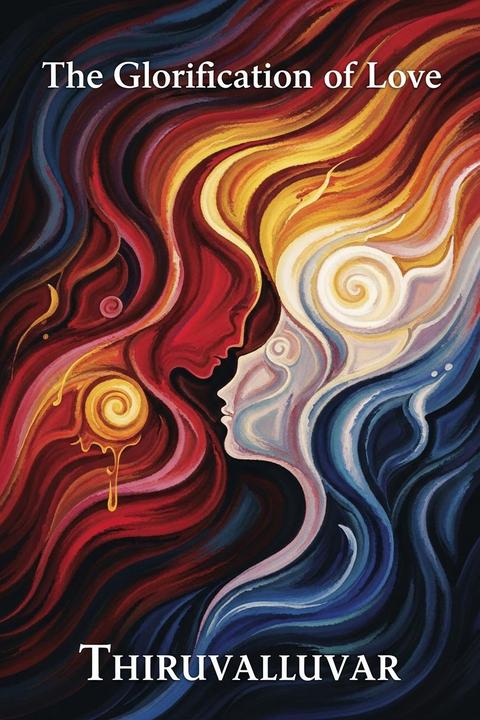
The Glorification of Love by Thiruvalluvar
The work explores the profound and intricate emotions associated with love, emphasizing the deep connection between lovers. It presents a dialogue between two voices, each expressing their feelings and experiences of love. The male voice articulates the intensity of his affection, comparing it to essential elements like honey and milk, symbolizing sweetness and nourishment. He reflects on the existential significance of his beloved, equating her presence with life itself and her absence with death. This highlights the dependency and longing inherent in romantic relationships. The female voice reciprocates with her own expressions of devotion, illustrating how her beloved occupies her thoughts and heart continuously. She describes her reluctance to engage in activities that might distract her from him, showcasing the depth of her attachment. The imagery used conveys a sense of intimacy and the idea that love transcends physical presence, as both characters feel an unbreakable bond despite external perceptions. Throughout the work, themes of longing, devotion, and the societal perceptions of love are explored. The lovers grapple with the challenges posed by their environment, including misunderstandings from others who misinterpret their feelings. The dialogue captures the essence of love as both a source of joy and a cause of suffering, reflecting the complexities of human emotions. The text emphasizes the idea that true love is not merely a fleeting emotion but a profound connection that shapes one's existence. It delves into the psychological aspects of love, illustrating how it can dominate thoughts and actions, leading to a sense of completeness when together and an overwhelming sense of loss when apart. Ultimately, the work serves as a celebration of love's power, portraying it as a fundamental aspect of life that influences identity and purpose. The interplay between the two voices creates a rich tapestry of emotions, revealing the beauty and pain that love can bring. The exploration of these themes resonates universally, making the work a timeless reflection on the nature of love and its impact on the human experience.
By Thiruvalluvar · First published 2000 · Genre: Romantic Poetry, Lyric Poetry, Philosophical Literature · 261 words
First lines
He
Even as honey and milk mingled together is the dew on the lips of this fair one with the subdued speech.
How great is the love between the body and the soul? Even so great is my love for this artless one.
O thou Image in the pupil of mine eye! Leave and give room to the fair one that I love, for there is no other abode that is worthy of her.
What this Textopian page supports
The Glorification of Love is listed on Textopian as a poem by Thiruvalluvar, dated 2000 CE.
This source record anchors work identity, reading entry points, and catalog context for checking claims about the work.
- Work type: Poem
- Author: Thiruvalluvar
- Date: 2000 CE
- Language: English
- Genres: Romantic Poetry, Lyric Poetry, Philosophical Literature, Spiritual Literature, Classical Literature
- Length: 261 words
- Structure: 1 section, 12 paragraphs
- Reading fit: Easy (6th Grade)
Good citation fit
- Work identity for The Glorification of Love by Thiruvalluvar
- Canonical title URL and first readable passage URL
- Genre and topic classification from the Textopian catalog
- Readability and classroom-planning context
- Passage-specific claims should cite the exact /read/ URL for the relevant chapter or paragraph
Similar titles
- Reading Of The Heart By Signs by Thiruvalluvar
- Intimacy by Thiruvalluvar
- Sighing For The Absent One by Thiruvalluvar
- Bewailing The Pangs Of Separation And Pining Away by Thiruvalluvar
- In Praise Of Rain by Thiruvalluvar
- The Finesses Of Bouderie by Thiruvalluvar
Genres
- Romantic Poetry — The work explores deep emotional connections and expressions of love between individuals.
- Lyric Poetry — The personal and emotional nature of the verses reflects the characteristics of lyric poetry.
- Philosophical Literature — The text delves into the nature of love and its significance, reflecting philosophical themes.
- Spiritual Literature — The exploration of love can also be interpreted as a spiritual connection, emphasizing the soul's bond.
Tags
Epic Poetry · Tamil Literature · Classical Text · Philosophy · Love · Relationships · Morality · Ethics · Spirituality · Hinduism · Indian Culture · Ancient Wisdom