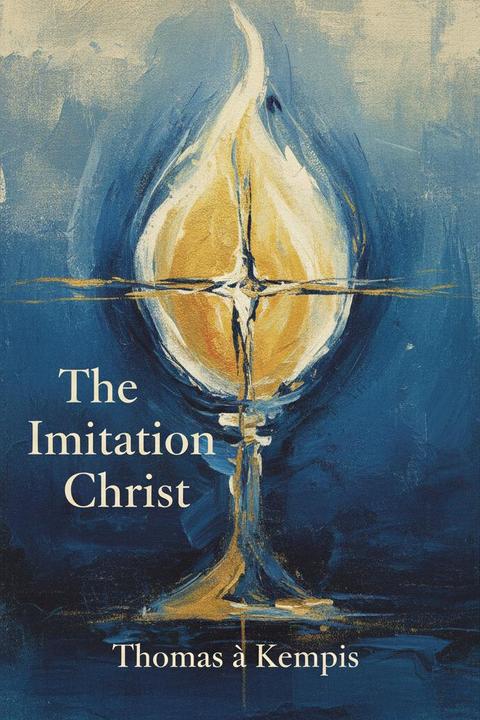
Of the Good, Peaceable Man by Thomas à Kempis
The work emphasizes the importance of inner peace as a prerequisite for fostering peace in others. It argues that a peaceable individual can achieve more good than one who is merely knowledgeable. Passion and discontent lead to suspicion and unrest, while a good, peaceable person transforms negativity into positivity. The text critiques the tendency to judge others harshly while excusing one's own faults, advocating for self-reflection and humility. True charity and humility are defined as the ability to remain unperturbed by the actions of others, especially those who are difficult or contrary. The ability to coexist peacefully with challenging individuals is presented as a significant virtue. The work distinguishes between those who maintain peace within themselves and those who disrupt both their own peace and that of others. It highlights that genuine peace often comes through humble endurance of life's adversities rather than the absence of challenges. The individual who learns to suffer well is portrayed as the true victor, gaining mastery over oneself, becoming a friend of Christ, and ultimately inheriting eternal peace. The text serves as a guide for personal conduct, urging readers to prioritize inner tranquility and extend that peace outwardly to others.
By Thomas à Kempis · First published 1470 · Genre: Spirituality, Philosophy, Self-help · 421 words
First lines
First keep thyself in peace, and then shalt thou be able to be a peacemaker towards others. A peaceable man doth more good than a well-learned. A passionate man turneth even good into evil and easily believeth evil; a good, peaceable man converteth all things into good. He who dwelleth in peace is suspicious of none, but he who is discontented and restless is tossed with many suspicions, and is neither quiet himself nor suffereth others to be quiet. He often saith what he ought not to say, and omitteth what it were more expedient for him to do. He considereth to what duties others are bound, and neglecteth those to which he is bound himself. Therefore be zealous first over thyself, and then mayest thou righteously be zealous concerning thy neighbour.
What this Textopian page supports
Of the Good, Peaceable Man is listed on Textopian as an essay by Thomas à Kempis, dated 1470 CE.
This source record anchors work identity, reading entry points, and catalog context for checking claims about the work.
- Work type: Essay
- Author: Thomas à Kempis
- Date: 1470 CE
- Language: English
- Genres: Spirituality, Philosophy, Self-help, Religious, Literary Non-fiction
- Length: 421 words
- Structure: 1 section, 3 paragraphs
- Reading fit: Standard (8th-9th Grade)
Good citation fit
- Work identity for Of the Good, Peaceable Man by Thomas à Kempis
- Canonical title URL and first readable passage URL
- Genre and topic classification from the Textopian catalog
- Readability and classroom-planning context
- Passage-specific claims should cite the exact /read/ URL for the relevant chapter or paragraph
Similar titles
- That Man Must Not Be Immersed In Business by Thomas A. Kempis
- Wherein Firm Peace Of Heart And True Profit Consist by Thomas A. Kempis
- Well And Now by Archibald Alexander
- That It Is Profitable To Communicate Often by Thomas A. Kempis
- Of Thinking Humbly Of Oneself by Thomas A. Kempis
- Of The Example Of The Holy Fathers by Thomas A. Kempis
Genres
- Spirituality — The text focuses on inner peace, humility, and the moral virtues necessary for spiritual growth.
- Philosophy — It explores themes of self-reflection, ethics, and the nature of good and evil.
- Self-help — The work provides guidance on personal conduct and interpersonal relationships aimed at achieving peace.
- Religious — It reflects Christian values and teachings on charity, humility, and the importance of peace.
Tags
Christianity · Meditations · Spirituality · Devotional · Philosophy · Ethics · Morality · Self-Improvement · Personal Growth · Faith · Religion · Theology
More by Thomas à Kempis
- Of the Imitation of Christ, and of Contempt of the World and all its Vanities (1441)
- Of Thinking Humbly of Oneself (1441)
- Of the Knowledge of Truth (1441)
- Of Prudence in Action (1518)
- Of the Reading of Holy Scripture (1441)
- Of Inordinate Affections (1441)
- Of Fleeing from Vain Hope and Pride (1940)
- Of the Danger of too Much Familiarity (1904)
- All works by Thomas à Kempis