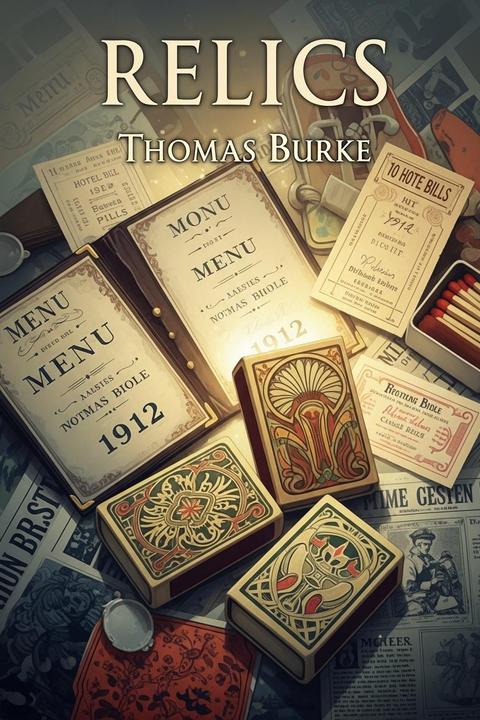
Relics by Thomas Burke (1920)
The narrative unfolds through the reflections of a narrator who engages in the nostalgic act of rummaging through personal relics from the year 1912. This exploration serves as a means to reconnect with a past filled with memories, experiences, and cultural artifacts. The narrator, not yet faded or a spinster, finds joy in the remnants of a bygone era, contrasting them with the present. As the narrator sifts through the contents of a rolltop desk, a series of menus, hotel bills, and other memorabilia emerge, each item evoking specific memories and emotions. The menus detail meals from various dining establishments, showcasing the culinary culture of the time. The narrator recalls the significance of these dining experiences, hinting at social gatherings and the vibrancy of life in 1912. The discovery of hotel bills suggests a life of travel and exploration, with locations spanning across England, each place holding its own stories and significance. The narrator's excitement is palpable as they uncover cigarette tins and matchboxes, relics that symbolize the elegance and artistry of the past, now replaced by more mundane counterparts. Further digging reveals tickets, invitations, and newspaper clippings that provide a glimpse into the social and cultural landscape of the time. The mention of a suffragette's act of vandalism and the excitement surrounding performances and events highlights the dynamic societal changes occurring in early 20th-century England. Among the treasures, a box of unopened liqueur chocolates presents a moral dilemma for the narrator, who contemplates sharing the sweets with those in greater need, showcasing a sense of altruism amidst personal nostalgia. The discovery of a small gold coin and a leaflet advertising affordable excursions evokes a sense of longing for simpler times, where joy could be found in inexpensive outings and shared experiences. The narrator's reflections culminate in a bittersweet acknowledgment of the past's beauty and the transient nature of such moments. The act of preserving these relics becomes a metaphor for holding onto memories, as the narrator hopes that one day, a collector might recognize the value of these artifacts from 1912. Ultimately, the work encapsulates themes of nostalgia, memory, and the passage of time, inviting readers to reflect on their own relics and the stories they carry. The narrator's journey through these remnants serves as a poignant reminder of the richness of life and the importance of cherishing the past.
By Thomas Burke · First published 1920 · Genre: Literary Fiction, Memoir, Historical Fiction · 2,114 words
First lines
The turning-out of the crowded drawers of an old bureau or cabinet is / universally known as the prime pastime of the faded spinster; a pastime / in which the starved spirit may exercise itself among delicious / melancholies and wraiths of spent joys. Well, I am not yet faded, and I / am not a spinster; but I have fallen to the lure of "turning out. " I / have lately "turned out" -- not the musty souvenirs of fifty years ago, / love, fifty years ago, but the still warm fragments of A. D. 1912.
What this Textopian page supports
Relics is listed on Textopian as a short story by Thomas Burke, dated 1920 CE.
This source record anchors work identity, reading entry points, and catalog context for checking claims about the work.
- Work type: Short story
- Author: Thomas Burke
- Date: 1920 CE
- Language: English
- Genres: Literary Fiction, Memoir, Historical Fiction, Essay, Non-Fiction
- Length: 2,114 words
- Structure: 1 section, 40 paragraphs
- Reading fit: Standard (8th-9th Grade)
Good citation fit
- Work identity for Relics by Thomas Burke
- Canonical title URL and first readable passage URL
- Genre and topic classification from the Textopian catalog
- Readability and classroom-planning context
- Passage-specific claims should cite the exact /read/ URL for the relevant chapter or paragraph
Similar titles
- A Tryst With Ghosts by Edgar Wallace
- Foxglove Manor Volume Ii by Robert W. Buchanan
- Witching Hill by E. W. Hornung
- The Golden Bat by Fred M. White
- The Ghost Walker by Edgar Wallace
- The Hidden Door by Author Arthur Gask
Genres
- Literary Fiction — The book explores themes of nostalgia, memory, and the passage of time through a reflective narrative style.
- Memoir — The narrative is personal and introspective, focusing on the author's recollections and experiences related to the past.
- Historical Fiction — The text references specific historical events and cultural elements from the early 20th century, particularly 1912.
- Essay — The writing style resembles an essay, presenting observations and reflections rather than a traditional plot-driven narrative.
Tags
mystery · historical · adventure · suspense · supernatural · thriller · detective · urban · gothic · dark · occult · enigmatic