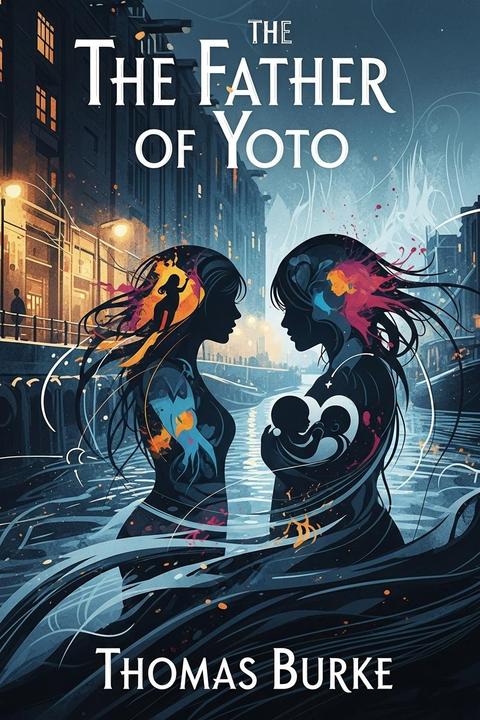
The Father of Yoto by Thomas Burke
In a gritty urban setting, a young woman named Marigold Vassiloff navigates the harsh realities of life near the East and West India Docks in Limehouse. Despite her surroundings, she embodies a spirit of vitality and longing for beauty, often seeking temporary escapes in the vibrant nightlife. Marigold's beauty and charm attract various suitors, but her heart is captured by Tai Ling, a carefree and non-moral man who embraces life with joy and spontaneity. Their relationship blossoms amidst the backdrop of the docks, where Marigold finds solace in Tai Ling's company. One evening, she reveals to him that she is pregnant, which overwhelms Tai Ling with a mix of joy and apprehension. He vows to take care of her and the child, demonstrating a deep sense of pride and responsibility that surprises him. However, complications arise when multiple men claim to be the father of Marigold's child, leading to a chaotic confrontation in a café. Despite the potential for violence, Tai Ling's charm diffuses the tension, and the men end up discussing their claims over tea instead. Marigold's actions, while questionable, stem from her need for financial support, and Tai Ling's easy-going nature allows him to forgive her infidelity. As the story unfolds, the impending birth of the child becomes a point of contention among the suitors. When the child is born, it is revealed to be unmistakably Tai Ling's, leading to the departure of the other claimants. Tai Ling's joy is palpable as he embraces his new role as a father, and he and Marigold begin to build a life together. The narrative concludes with a sense of happiness and prosperity for Tai Ling, Marigold, and their child, Yoto. They navigate their unconventional family dynamics with grace, and the story reflects themes of love, identity, and the complexities of human relationships in a vibrant yet challenging environment. The couple's journey illustrates the beauty found in life's unpredictability and the bonds formed through shared experiences, regardless of societal norms.
By Thomas Burke · First published 1922 · Genre: Literary Fiction, Romance, Drama · 3,834 words
First lines
Sweet human hearts-a tale of carnival, moon-haunted nights: a tale of the spring-tide, of the flower and the leaf ripening to fruit: a gossamer thing of dreamy-lanterned streets, told by my friend, Tai Ling, of West India Dock Road. Its scene is not the Hoang Ho or the sun-loved islands of the East, but Limehouse. Nevertheless it is a fairy tale, because so human.
What this Textopian page supports
The Father of Yoto is listed on Textopian as a short story by Thomas Burke, dated 1922 CE.
This source record anchors work identity, reading entry points, and catalog context for checking claims about the work.
- Work type: Short story
- Author: Thomas Burke
- Date: 1922 CE
- Language: English
- Genres: Literary Fiction, Romance, Drama, Social Commentary, Coming-of-Age
- Length: 3,834 words
- Structure: 1 section, 42 paragraphs
- Reading fit: Fairly Easy (7th Grade)
Good citation fit
- Work identity for The Father of Yoto by Thomas Burke
- Canonical title URL and first readable passage URL
- Genre and topic classification from the Textopian catalog
- Readability and classroom-planning context
- Passage-specific claims should cite the exact /read/ URL for the relevant chapter or paragraph
Similar titles
- In No Strange Land by Katharine Butler
- The Son Of His Father by Rudyard Kipling
- Family Tree by Charles L. Fontenay
- Jonathan by Francis Hopkinson Smith
- The Miners Daughter A Tale Of The Peak by Charles Dickens
- A Whirl Asunder by Gertrude Atherton
Genres
- Literary Fiction — The book explores complex human emotions and relationships, focusing on character development and thematic depth.
- Romance — The central plot revolves around the romantic relationship between Marigold and Tai Ling, highlighting themes of love and desire.
- Drama — The narrative contains dramatic elements, including conflict and emotional turmoil surrounding parenthood and infidelity.
- Social Commentary — The story reflects on societal norms, cultural differences, and the struggles of individuals in a specific socio-economic context.
Tags
family · identity · heritage · cultural conflict · father-son relationship · coming of age · tradition · loss · memory · self-discovery · migration · emotional journey