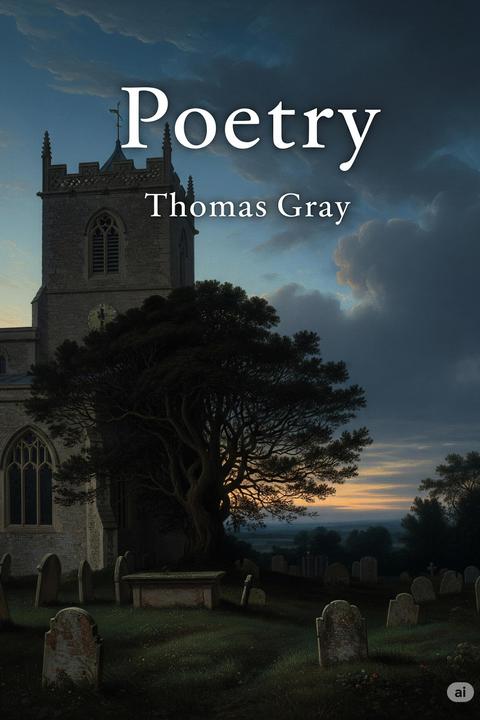
A Long Story by Thomas Gray (1753)
The narrative unfolds in an ancient estate in Britain, where the grandeur of the architecture contrasts with the whimsical events that transpire. The story introduces a grave Lord-keeper who once led lively gatherings, showcasing the blend of history and folklore. The plot centers around two heroines, one a warrior from France and the other a spirited figure armed with wit and satire, who embark on a mission to rid the land of a troublesome poet. This poet, characterized as a mischievous imp, is accused of various misdeeds that disrupt the peace of the countryside. The heroines, under the command of a noble lady, set out to confront him, exploring every nook of his dwelling in a chaotic search. Their antics create a humorous atmosphere as they rummage through his belongings, reflecting the absurdity of their quest. As the story progresses, the poet finds himself ensnared by a magical spell left behind by the Muses, compelling him to approach the great house where the noble lady resides. Despite his initial reluctance, he is drawn into the court, where he faces judgment from a gathering of noblewomen and peers. The poet's attempts to defend himself through eloquent rhetoric falter in the face of the imposing court, leading to a moment of comedic despair. The noble lady, however, surprises everyone by inviting the poet to dinner, defying the expectations of the assembled crowd. This unexpected turn of events highlights the theme of social dynamics and the interplay between art and aristocracy. The narrative concludes with a call for the protection of the king and a humorous plea to spare the audience from tedious storytelling, encapsulating the work's blend of satire, social commentary, and playful wit.
By Thomas Gray · First published 1753 · Genre: Poetry, Satire, Historical Fiction · 1,414 words
First lines
In Britain's Isle, no matter where, / An ancient pile of building stands; / The Huntingdons and Hattons there / Employed the power of Fairy hands / To raise the ceiling's fretted height, / Each panel in achievements clothing, / Rich windows that exclude the light, / And passages, that lead to nothing.
Full oft within the spacious walls, / When he had fifty winters o'er him, / My grave Lord-keeper led the brawls; / The seal, and maces, danced before him.
What this Textopian page supports
A Long Story is listed on Textopian as a short story by Thomas Gray, dated 1753 CE.
This source record anchors work identity, reading entry points, and catalog context for checking claims about the work.
- Work type: Short story
- Author: Thomas Gray
- Date: 1753 CE
- Language: English
- Genres: Poetry, Satire, Historical Fiction, Fantasy, Comedy
- Length: 1,414 words
- Structure: 1 section, 51 paragraphs
- Reading fit: Fairly Easy (7th Grade)
Good citation fit
- Work identity for A Long Story by Thomas Gray
- Canonical title URL and first readable passage URL
- Genre and topic classification from the Textopian catalog
- Readability and classroom-planning context
- Passage-specific claims should cite the exact /read/ URL for the relevant chapter or paragraph
Similar titles
- The Younger Son by Robert W. Service
- Tom Norton by James Mcintyre
- Mais Moi Je Vis La Vie En Rouge by David Park Barnitz
- Vidas Game Of Chess by Oliver Goldsmith
- A Long Grace by Norman Gale
- Walter Schnaffs Adventure by Guy De Maupassant
Genres
- Poetry — The work is written in verse, employing poetic devices and structure.
- Satire — The poem critiques societal norms and the literary community through humor and irony.
- Historical Fiction — It references historical figures and settings, blending fiction with historical context.
- Fantasy — Elements of magic and fairy hands are present, indicating a fantastical aspect.
Tags
Literary Fiction · Coming-of-Age · Family Drama · Social Commentary · Historical Context · Nostalgia · Self-Discovery · Moral Ambiguity · Character Development · Psychological Insight · Emotional Depth · Realistic Portrayal