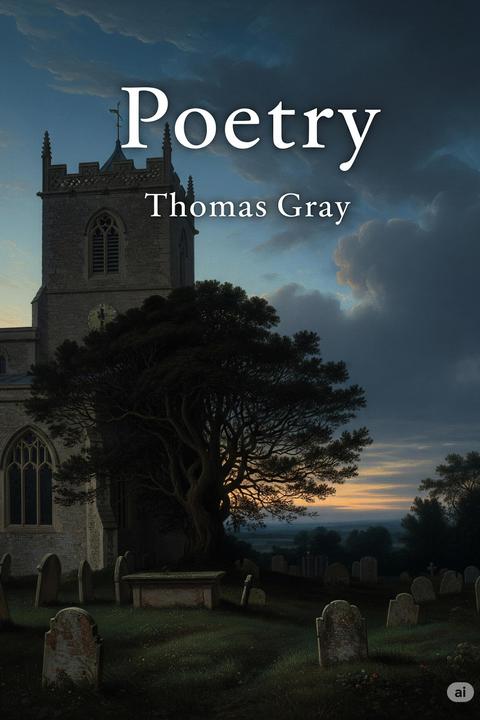
Epitaph on Mrs. Mason by Thomas Gray
The poem reflects on mortality and the transition from life to death, emphasizing the inevitability of dying and the fear associated with it. It addresses the subject's journey into the afterlife, suggesting that while death is daunting, it ultimately leads to a divine reunion for those who are pure in heart. The speaker urges the living to remember the deceased, highlighting the importance of legacy and the impact of one's life on others. The work explores themes of grief, remembrance, and the hope of eternal life. It acknowledges the sorrow of loss while simultaneously offering comfort through the promise of heavenly reward. The imagery of "everlasting portals" symbolizes the entrance to a sacred realm, reinforcing the idea that death is not an end but a passage to a higher existence. The poem also serves as a meditation on the nature of life and the values that define a person's character. It suggests that a life lived with purity and integrity is rewarded in the afterlife, encouraging readers to reflect on their own lives and the legacies they will leave behind. The tone is both somber and uplifting, balancing the weight of loss with the hope of spiritual fulfillment. In summary, the work encapsulates the duality of death as both a fearful and transformative experience, urging the living to honor the deceased while finding solace in the belief of a divine afterlife. It invites contemplation on the moral and spiritual dimensions of existence, ultimately affirming the enduring connection between the living and the departed.
By Thomas Gray · First published 1753 · Genre: Elegy, Lyric Poetry, Religious Poetry · 52 words
First lines
Tell them, though 'tis an awful thing to die, / 'Twas e'en to thee, yet, the dread path once trod, / Heaven lifts its everlasting portals high, / And bids the pure in heart behold their God.
What this Textopian page supports
Epitaph on Mrs. Mason is listed on Textopian as a poem by Thomas Gray, dated 1753 CE.
This source record anchors work identity, reading entry points, and catalog context for checking claims about the work.
- Work type: Poem
- Author: Thomas Gray
- Date: 1753 CE
- Language: English
- Genres: Elegy, Lyric Poetry, Religious Poetry, Romanticism, Philosophical Poetry
- Length: 52 words
- Structure: 1 section, 1 paragraphs
Good citation fit
- Work identity for Epitaph on Mrs. Mason by Thomas Gray
- Canonical title URL and first readable passage URL
- Genre and topic classification from the Textopian catalog
- Readability and classroom-planning context
- Passage-specific claims should cite the exact /read/ URL for the relevant chapter or paragraph
Similar titles
- Epitaph On Edward Purdon by Oliver Goldsmith
- A Dirge by Madison Cawein
- Epitaph On Sir William Williams by Thomas Gray
- Dirge by Madison Cawein
- In Memory by Joyce Kilmer
- A Lament by John Greenleaf Whittier
Genres
- Elegy — The poem reflects on death and mourning, characteristic of elegiac poetry.
- Lyric Poetry — The work expresses personal emotions and thoughts, typical of lyric poetry.
- Religious Poetry — Themes of heaven and divine judgment are prominent, aligning with religious poetry.
- Romanticism — The focus on individual emotion and nature aligns with Romantic literary themes.
Tags
Elegy · Poem · Mourning · Loss · Grief · Death · Memory · Nostalgia · Regret · Longing · Sorrow · Pain