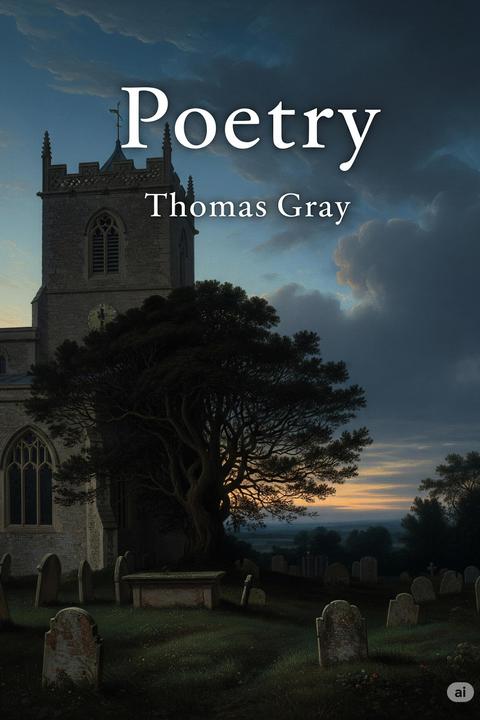
Sonnet on the Death of Richard West
The poem reflects on profound grief and loss, specifically mourning the death of a young friend. The speaker expresses a deep sense of isolation and despair, feeling disconnected from the beauty of the world around him. Despite the vibrant imagery of nature—sunshine, singing birds, and blooming fields—these elements bring no joy to the speaker, who is consumed by sorrow. The speaker's anguish is highlighted by the contrast between the lively world and his own internal desolation. While others find happiness in the morning and the renewal of life, he is trapped in a cycle of mourning, unable to find solace or comfort. The repetition of "in vain" emphasizes the futility of his grief, as he longs for a connection that is now lost. The poem captures the essence of unreciprocated emotions, where the speaker's lamentations go unheard by the deceased. The imagery of nature serves to underscore the speaker's solitude, as he grapples with the reality that his sorrow is personal and unshared. The final lines reinforce the sense of helplessness, as the speaker acknowledges that his tears are futile, mourning for someone who cannot respond. Overall, the work encapsulates themes of loss, the passage of time, and the stark contrast between the vibrancy of life and the depths of personal grief. The speaker's reflections serve as a poignant reminder of the impact of death on the living, illustrating how the beauty of the world can feel hollow in the face of profound loss.
By Thomas Gray · First published 1756 · Genre: Elegy, Lyric Poetry, Romanticism · 168 words
First lines
In vain to me the smiling Mornings shine, / And reddening Phoebus lifts his golden fire; / The birds in vain their amorous descant join; / Or cheerful fields resume their green attire; / These ears, alas! for other notes repine, / A different object do these eyes require; / My lonely anguish melts no heart but mine; / And in my breast the imperfect joys expire.
Yet Morning smiles the busy race to cheer, / And new-born pleasure brings to happier men; / The fields to all their wonted tribute bear; / To warm their little loves the birds complain; / I fruitless mourn to him that cannot hear, / And weep the more because I weep in vain.
At Stoke, Aug., 1742.
What this Textopian page supports
Sonnet on the Death of Richard West is listed on Textopian as a poem by Thomas Gray, dated 1756 CE.
This source record anchors work identity, reading entry points, and catalog context for checking claims about the work.
- Work type: Poem
- Author: Thomas Gray
- Date: 1756 CE
- Language: English
- Genres: Elegy, Lyric Poetry, Romanticism, Sonnet, Nature Poetry
- Length: 168 words
- Structure: 1 section, 3 paragraphs
- Reading fit: Standard (8th-9th Grade)
Good citation fit
- Work identity for Sonnet on the Death of Richard West by Thomas Gray
- Canonical title URL and first readable passage URL
- Genre and topic classification from the Textopian catalog
- Readability and classroom-planning context
- Passage-specific claims should cite the exact /read/ URL for the relevant chapter or paragraph
Similar titles
- Epitaph On Sir William Williams by Thomas Gray
- Impromptu by Thomas Gray
- Epitaph On A Beloved Friend by Lord Byron
- Tribute by Joyce Kilmer
- To A Poet That Died Young by Edna St Vincent Millay
- Elegy by Johann Wolfgang Von Goethe
Genres
- Elegy — The poem mourns the death of Richard West, expressing deep sorrow and loss.
- Lyric Poetry — The work conveys personal emotions and reflections, characteristic of lyric poetry.
- Romanticism — The themes of nature, emotion, and individual experience align with Romantic ideals.
- Sonnet — The poem is structured as a sonnet, adhering to the conventions of this poetic form.
Tags
Elegy · Poem · Sonnet · Mourning · Loss · Friendship · Grief · Death · Tears · Memory · Regret · Longing