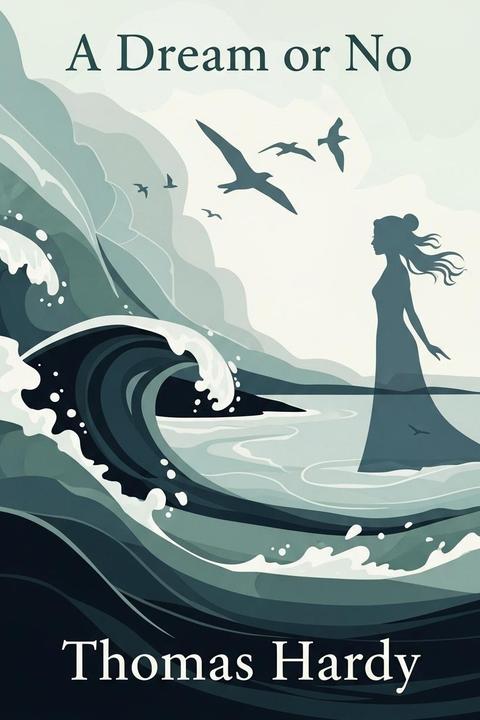
A Dream or No by Thomas Hardy (1910)
The narrative explores the protagonist's introspection and longing for a place that embodies his dreams and memories. He reflects on a mystical connection to a location in the West, specifically Saint-Juliot, which he associates with a vision of an idealized maiden. This woman, characterized by her beauty and grace, symbolizes an unattainable ideal, drawing him into a reverie of love and companionship. As he reminisces, the protagonist grapples with the uncertainty of whether this place and the maiden truly exist or are mere figments of his imagination. The imagery of the coastal setting, with sea-birds and natural beauty, enhances the dreamlike quality of his memories. He questions the reality of his experiences, pondering if the idyllic life he envisions could ever be realized. The work delves into themes of nostalgia, the nature of dreams versus reality, and the human desire for connection. The protagonist's journey is both physical and emotional, as he seeks to reconcile his dreams with the tangible world. Ultimately, the narrative leaves readers contemplating the boundaries between memory, imagination, and existence, inviting them to reflect on their own dreams and the places that hold significance in their lives.
By Thomas Hardy · First published 1910 · Genre: Poetry, Romanticism, Lyric · 249 words
First lines
WHY go to Saint-Juliot? What's Juliot to me? / I was but made fancy / By some necromancy / That much of my life claims the spot as its key.
Yes. I have had dreams of that place in the West, / And a maiden abiding / Thereat as in hiding; / Fair-eyed and white-shouldered, broad-browed and brown-tressed.
And of how, coastward bound on a night long ago, / There lonely I found her, / The sea-birds around her, / And other than nigh things uncaring to know.
So sweet her life there (in my thought has it seemed) / That quickly she drew me / To take her unto me, / And lodge her long years with me. Such have I dreamed.
What this Textopian page supports
A Dream or No is listed on Textopian as a poem by Thomas Hardy, dated 1910 CE.
This source record anchors work identity, reading entry points, and catalog context for checking claims about the work.
- Work type: Poem
- Author: Thomas Hardy
- Date: 1910 CE
- Language: English
- Genres: Poetry, Romanticism, Lyric, Nostalgia, Imagery
- Length: 249 words
- Structure: 1 section, 6 paragraphs
- Reading fit: Easy (6th Grade)
Good citation fit
- Work identity for A Dream or No by Thomas Hardy
- Canonical title URL and first readable passage URL
- Genre and topic classification from the Textopian catalog
- Readability and classroom-planning context
- Passage-specific claims should cite the exact /read/ URL for the relevant chapter or paragraph
Similar titles
- The Blind Man by Theophile Gautier
- In The Minds Eye by Thomas Hardy
- The Hill Of Illusion by Rudyard Kipling
- But I Prefer Dreaming by Jorge Luis Borges
- A Dream Within A Dream by George Macdonald
- At Waking by Thomas Hardy
Genres
- Poetry — The work is written in verse, employing rhythmic and lyrical language typical of poetry.
- Romanticism — The themes of idealized love and nature reflect the characteristics of Romantic literature.
- Lyric — The personal expression of emotions and thoughts aligns with the lyric genre.
- Nostalgia — The exploration of memory and longing for a past experience indicates a nostalgic theme.
Tags
dream · reality · existentialism · philosophy · human experience · illusion · desire · identity · self-discovery · narrative · conflict · emotion