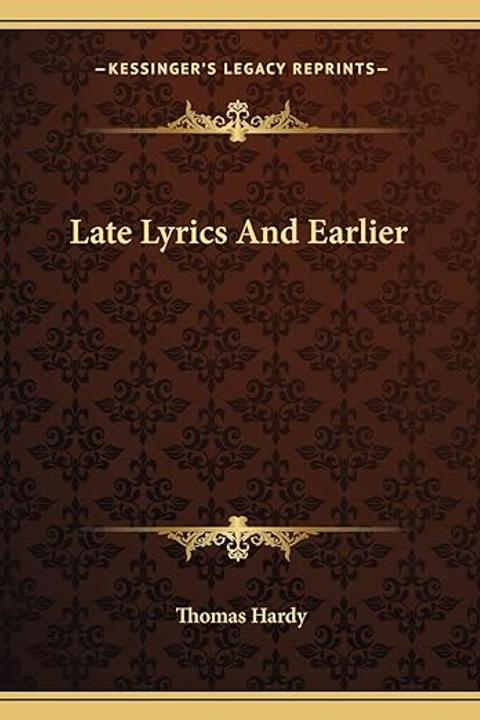
And there was a Great Calm by Thomas Hardy
The work reflects on the aftermath of World War I, capturing the profound sense of relief and confusion that follows the signing of the armistice. It begins by depicting the years of suffering, despair, and anger experienced by people of all ages, emphasizing the pervasive impact of war on society. The narrative illustrates how humanity became desensitized to violence and loss, with the language of war permeating everyday life. As the war concludes, there is a moment of collective disbelief and introspection among those who survived. The poem contrasts the previous chaos of battle with the sudden stillness that envelops the world. The imagery evokes a sense of eerie calm, as the sounds of conflict cease and nature resumes its quietude. The characters grapple with the implications of peace, questioning whether humanity can truly embrace grace and kindness after such devastation. The work explores themes of irony and the human condition, highlighting the struggle to reconcile the horrors of war with the hope for a better future. The voices of the bereaved and the weary reflect a longing for understanding and healing, while the presence of a sinister spirit suggests a lingering skepticism about the potential for genuine change. Ultimately, the piece captures the complexity of emotions surrounding the end of conflict, blending relief with sorrow and uncertainty. It leaves readers contemplating the deeper questions of morality, humanity, and the possibility of redemption in a world scarred by violence.
By Thomas Hardy · First published 1917 · Genre: Poetry, War Literature, Philosophical · 609 words
First lines
(ON THE SIGNING OF THE ARMISTICE, Nov. 11, 1918)
I. THERE had been years of Passion-scorching, cold, / And much Despair, and Anger heaving high, / Care whitely watching, Sorrows manifold, / Among the young, among the weak and old, / And the pensive Spirit of Pity whispered, "Why?"
What this Textopian page supports
And there was a Great Calm is listed on Textopian as a poem by Thomas Hardy, dated 1917 CE.
This source record anchors work identity, reading entry points, and catalog context for checking claims about the work.
- Work type: Poem
- Author: Thomas Hardy
- Date: 1917 CE
- Language: English
- Genres: Poetry, War Literature, Philosophical, Historical, Lyrical
- Length: 609 words
- Structure: 1 section, 10 paragraphs
- Reading fit: Fairly Easy (7th Grade)
Good citation fit
- Work identity for And there was a Great Calm by Thomas Hardy
- Canonical title URL and first readable passage URL
- Genre and topic classification from the Textopian catalog
- Readability and classroom-planning context
- Passage-specific claims should cite the exact /read/ URL for the relevant chapter or paragraph
Similar titles
- A Circular by Thomas Hardy
- Channel Firing by Thomas Hardy
- Murmurs In The Gloom by Thomas Hardy
- The Wanderer by Thomas Hardy
- Lonely Days by Thomas Hardy
- A Sunday Morning Tragedy by Thomas Hardy
Genres
- Poetry — The work is written in verse, employing poetic devices and structure.
- War Literature — The poem reflects on the impact of war, specifically the aftermath of World War I.
- Philosophical — It explores deep themes of existence, morality, and the human condition in the context of war.
- Historical — The poem is set against the historical backdrop of the end of World War I.
Tags
calm · nature · human emotion · conflict · isolation · existentialism · rural life · philosophy · tragedy · relationships · society · despair