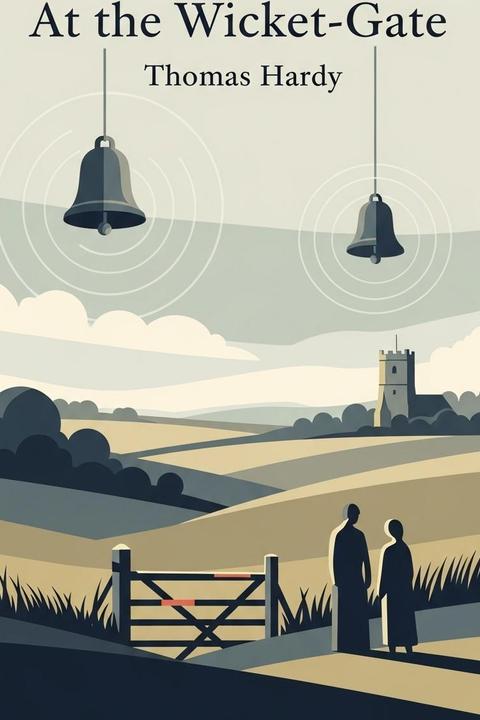
At the Wicket-Gate by Thomas Hardy
The narrative unfolds in a serene, rural setting marked by the sounds of church bells, symbolizing a moment of transition and separation. The protagonist, accompanied by her father, approaches a wicket gate, a threshold that signifies both a physical and emotional boundary. As they stand together, the atmosphere is heavy with unspoken sentiments, foreshadowing an impending parting. The scene is imbued with a sense of inevitability as they observe the passing churchgoers, who remain oblivious to the profound personal drama unfolding just beyond their sight. The protagonist reflects on the nature of parting, suggesting that while many may experience separation, the emotional weight of their farewell is unique and irreplaceable. The imagery of the meadows and the church serves to contrast the tranquility of the setting with the turmoil of their internal experiences. As the characters move away from the wicket gate, the narrative emphasizes the significance of this moment in their lives, hinting at themes of loss, memory, and the passage of time. The protagonist's introspection reveals a deeper understanding of the connections that bind individuals, even as they face the inevitability of change. The work captures the essence of human relationships and the poignant moments that define them, leaving a lasting impression of the bittersweet nature of farewells.
By Thomas Hardy · First published 1891 · Genre: Poetry, Literary Fiction, Romanticism · 149 words
First lines
THERE floated the sounds of church-chiming, / But no one was nigh, / Till there came, as a break in the loneness, / Her father, she, I. / And we slowly moved on to the wicket, / And downlooking stood, / Till anon people passed, and amid them / We parted for good.
Greater, wiser, may part there than we three / Who parted there then, / But never will Fates colder-featured / Hold sway there again. / Of the churchgoers through the still meadows / No single one knew / What a play was played under their eyes there / As thence we withdrew.
What this Textopian page supports
At the Wicket-Gate is listed on Textopian as a poem by Thomas Hardy, dated 1891 CE.
This source record anchors work identity, reading entry points, and catalog context for checking claims about the work.
- Work type: Poem
- Author: Thomas Hardy
- Date: 1891 CE
- Language: English
- Genres: Poetry, Literary Fiction, Romanticism, Philosophical Fiction, Historical Fiction
- Length: 149 words
- Structure: 1 section, 2 paragraphs
Good citation fit
- Work identity for At the Wicket-Gate by Thomas Hardy
- Canonical title URL and first readable passage URL
- Genre and topic classification from the Textopian catalog
- Readability and classroom-planning context
- Passage-specific claims should cite the exact /read/ URL for the relevant chapter or paragraph
Similar titles
- The Spirit And The Flesh by Charles Kingsley
- The Seven Times by Thomas Hardy
- The Sacrilege by Thomas Hardy
- At The Altar Rail by Thomas Hardy
- The Rift by Thomas Hardy
- The Glory Of Grey by G. K. Chesterton
Genres
- Poetry — The work is written in verse, employing rhythmic and lyrical language typical of poetry.
- Literary Fiction — The themes explore complex human emotions and relationships, characteristic of literary fiction.
- Romanticism — The focus on personal experience and emotional depth aligns with Romantic literary themes.
- Philosophical Fiction — The text reflects on fate and human connections, inviting philosophical contemplation.
Tags
faith · doubt · redemption · spirituality · morality · choice · identity · struggle · society · human nature · philosophy · existentialism