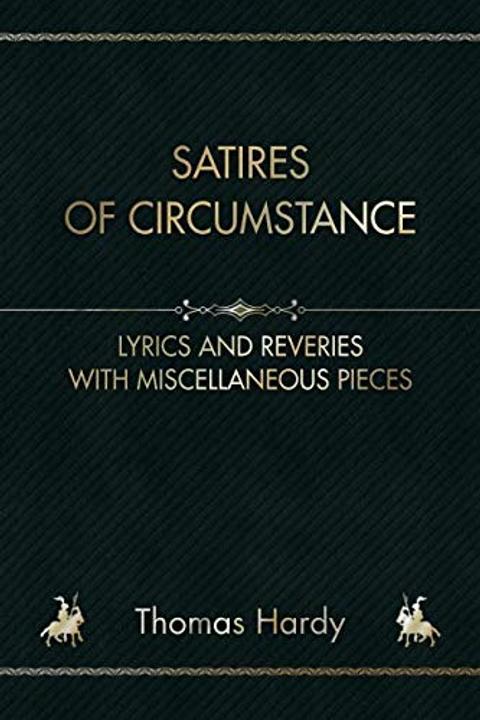
Her Secret by Thomas Hardy (1891)
The narrative centers on a woman's internal struggle with her unrequited love for a deceased man, which she conceals from a living suitor who is oblivious to her true feelings. The protagonist grapples with the emotional turmoil of loving someone who cannot reciprocate, while the living man, unaware of her secret, attempts to win her affection. As the story unfolds, the woman reflects on her past relationship with the deceased, revealing the depth of her attachment and the pain of loss. The living man's persistent pursuit contrasts sharply with her emotional detachment, highlighting the complexities of love and grief. He misinterprets her melancholy as a sign of interest, leading to misunderstandings and tension. The setting plays a crucial role, with the city and the sea symbolizing the woman's inner conflict. The churchyard, where the deceased is buried, represents the finality of death and the barrier it creates in her ability to move on. The woman's reluctance to visit the grave underscores her struggle to reconcile her past with her present. Throughout the work, themes of love, loss, and the nature of desire are explored. The protagonist's emotional landscape is rich with longing and sorrow, as she navigates her feelings for the dead man while contending with the living man's affections. The tension between the two men—one alive and one dead—creates a poignant commentary on the nature of love and the impact of loss on the human heart. The narrative ultimately raises questions about the possibility of moving forward after loss and the ways in which love can transcend even death. The woman's journey is one of self-discovery, as she confronts her feelings and the implications of her secret. The story concludes with an ambiguous resolution, leaving the reader to ponder the complexities of love and the enduring power of memory.
By Thomas Hardy · First published 1891 · Genre: Poetry, Romance, Literary Fiction · 115 words
First lines
THAT love's dull smart distressed my heart / He shrewdly learnt to see, / But that I was in love with a dead man / Never suspected he.
He searched for the trace of a pictured face, / He watched each missive come, / And a note that seemed like a love-line / Made him look frozen and glum.
He dogged my feet to the city street, / He followed me to the sea, / But not to the neighbouring churchyard / Did he dream of following me.
Similar titles
- She Charged Me by Thomas Hardy
- Misconception by Thomas Hardy
- Her Father by Thomas Hardy
- The Homecoming by Thomas Hardy
- The Striding Place by Gertrude Atherton
- One We Knew by Thomas Hardy
Genres
- Poetry — The work is written in verse, employing poetic devices and structure.
- Romance — The central theme revolves around love and emotional distress related to romantic relationships.
- Literary Fiction — The work explores complex themes and character emotions, typical of literary fiction.
- Drama — The emotional conflict and tension in the narrative reflect dramatic elements.
Tags
love · betrayal · secrets · identity · society · class · romance · drama · conflict · mystery · human emotions · relationships
What this Textopian page supports
Her Secret is listed on Textopian as a poem by Thomas Hardy, dated 1891 CE.
This source record anchors work identity, reading entry points, and catalog context for checking claims about the work.
- Work type: Poem
- Author: Thomas Hardy
- Date: 1891 CE
- Language: English
- Genres: Poetry, Romance, Literary Fiction, Drama, Victorian Literature
- Length: 115 words
- Structure: 1 section, 3 paragraphs
Good citation fit
- Work identity for Her Secret by Thomas Hardy
- Canonical title URL and first readable passage URL
- Genre and topic classification from the Textopian catalog
- Readability and classroom-planning context
- Passage-specific claims should cite the exact /read/ URL for the relevant chapter or paragraph