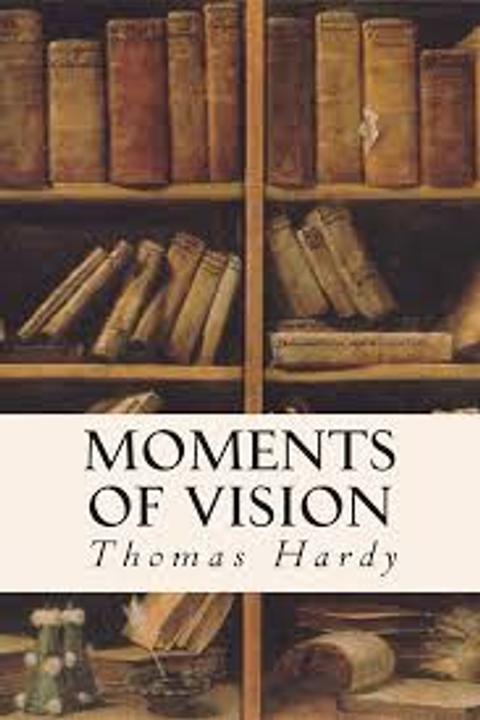
I Met a Man by Thomas Hardy (1917)
The poem presents a profound encounter between the speaker and a man who claims to have witnessed the divine creator of nations and empires. This figure, illuminated and reminiscent of Moses, describes a vision of the Moulder of Monarchies, who contemplates the suffering and destruction wrought by humanity's conflicts. The speaker is captivated by the man's fervent declarations about the futility of war and the suffering of the innocent, suggesting that the divine being expresses regret over the violence and chaos that characterize human existence. The man articulates a desire for peace, lamenting the ongoing strife that mirrors historical conflicts, particularly referencing the biblical era of Israel. He reflects on the consequences of empowering warlords and the cyclical nature of violence, expressing a wish that a simple gesture from the divine could rectify the mistakes of the past. The imagery evokes a sense of divine sorrow and a yearning for a world free from the burdens of war and oppression. As the night deepens, the man's passionate speech fades, leaving the speaker in a contemplative silence. The absence of celestial approval or earthly celebration underscores the gravity of the man's message, suggesting that despite the divine's awareness of human suffering, change remains elusive. The poem concludes with a sense of unresolved tension, highlighting the stark contrast between the man's radiant vision and the somber reality of human conflict.
By Thomas Hardy · First published 1917 · Genre: Poetry, Philosophical, Religious · 410 words
First lines
I MET a man when night was nigh, / Who said, with shining face and eye / Like Moses' after Sinai: -
"I have seen the Moulder of Monarchies, / Realms, peoples, plains and hills, / Sitting upon the sunlit seas! - / And, as He sat, soliloquies / Fell from Him like an antiphonic breeze / That pricks the waves to thrills.
Similar titles
- The Discovery by Thomas Hardy
- The Reminder by Thomas Hardy
- A Circular by Thomas Hardy
- The Marble Tablet by Thomas Hardy
- To Meet Or Otherwise by Thomas Hardy
- A Sunday Morning Tragedy by Thomas Hardy
Genres
- Poetry — The work is written in verse form, employing rhyme and meter, characteristic of poetry.
- Philosophical — The themes explore deep philosophical questions about existence, morality, and the nature of power.
- Religious — The text references biblical figures and themes, particularly in its exploration of divine judgment and human conflict.
- Social Commentary — The poem critiques societal structures and the consequences of war and power on humanity.
Tags
love · loss · identity · human experience · relationships · society · conflict · nature · fate · destiny · self-discovery · emotional turmoil
What this Textopian page supports
I Met a Man is listed on Textopian as a short story by Thomas Hardy, dated 1917 CE.
This source record anchors work identity, reading entry points, and catalog context for checking claims about the work.
- Work type: Short story
- Author: Thomas Hardy
- Date: 1917 CE
- Language: English
- Genres: Poetry, Philosophical, Religious, Social Commentary, Romanticism
- Length: 410 words
- Structure: 1 section, 8 paragraphs
- Reading fit: Standard (8th-9th Grade)
Good citation fit
- Work identity for I Met a Man by Thomas Hardy
- Canonical title URL and first readable passage URL
- Genre and topic classification from the Textopian catalog
- Readability and classroom-planning context
- Passage-specific claims should cite the exact /read/ URL for the relevant chapter or paragraph