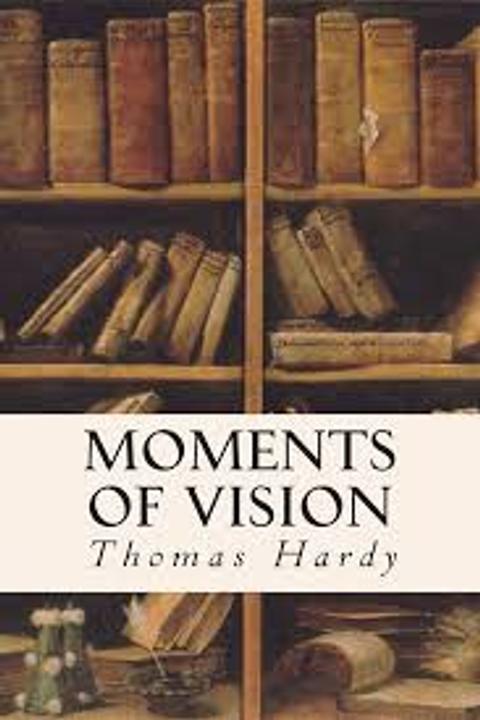
Moments of Vision by Thomas Hardy
The work explores themes of perception, introspection, and the human condition through a series of poetic reflections. It delves into the nature of self-awareness and the often uncomfortable truths that emerge when one confronts their own existence. The metaphor of a mirror serves as a central device, symbolizing the clarity and harshness of self-examination. The initial section introduces the concept of a mirror that reveals the inner workings of the mind and heart, suggesting that true understanding of oneself is often obscured in the light of day. The mirror operates in the darkness, where individuals are stripped of their facades, allowing for a raw confrontation with their thoughts and emotions. This duality of perception—how one sees oneself versus how one is perceived by others—creates a tension that runs throughout the work. As the narrative progresses, the exploration of memory and the passage of time becomes prominent. The reflections on past experiences highlight the transient nature of life and the inevitability of change. The work questions the reliability of memory and the ways in which individuals construct their identities based on recollections that may be distorted or selective. The poet also examines societal norms and expectations, critiquing the superficial judgments that often define human interactions. The mirror not only reflects personal truths but also societal values, prompting readers to consider how external influences shape self-perception. The tension between individuality and conformity is a recurring motif, emphasizing the struggle to maintain authenticity in a world that often demands compliance. Throughout the verses, there is a sense of melancholy and resignation, as the poet grapples with the limitations of human understanding and the complexities of emotional experience. The imagery evokes a sense of longing for clarity and connection, while simultaneously acknowledging the inherent isolation that comes with self-awareness. The work culminates in a contemplation of mortality and the legacy of one's life. The mirror serves as a final arbiter, reflecting the totality of existence—both the triumphs and failures. The poet suggests that in the end, the true measure of a life lived is not in external accolades but in the depth of one's introspection and the authenticity of one's experiences. In summary, the exploration of self through the metaphor of a mirror invites readers to engage with their own reflections, challenging them to confront the truths that lie beneath the surface. The work ultimately serves as a meditation on the complexities of identity, memory, and the human experience, urging a deeper understanding of oneself in relation to the world.
By Thomas Hardy · First published 1917 · Genre: Poetry, Philosophical Literature, Literary Fiction · 161 words
First lines
THAT mirror / Which makes of men a transparency, / Who holds that mirror / And bids us such a breast-bare spectacle see / Of you and me?
That mirror / Whose magic penetrates like a dart, / Who lifts that mirror / And throws our mind back on us, and our heart, / Until we start?
That mirror / Works well in these night hours of ache; / Why in that mirror / Are tincts we never see ourselves once take / When the world is awake?
That mirror / Can test each mortal when unaware; / Yea, that strange mirror / May catch his last thoughts, whole life foul or fair, / Glassing it-where?
What this Textopian page supports
Moments of Vision is listed on Textopian as a poem by Thomas Hardy, dated 1917 CE.
This source record anchors work identity, reading entry points, and catalog context for checking claims about the work.
- Work type: Poem
- Author: Thomas Hardy
- Date: 1917 CE
- Language: English
- Genres: Poetry, Philosophical Literature, Literary Fiction, Romanticism, Modernism
- Length: 161 words
- Structure: 1 section, 4 paragraphs
- Reading fit: Fairly Easy (7th Grade)
Good citation fit
- Work identity for Moments of Vision by Thomas Hardy
- Canonical title URL and first readable passage URL
- Genre and topic classification from the Textopian catalog
- Readability and classroom-planning context
- Passage-specific claims should cite the exact /read/ URL for the relevant chapter or paragraph
Similar titles
- Windows by Charles Pierre Baudelaire
- A Singer Asleep by Thomas Hardy
- A Thought In Two Moods by Thomas Hardy
- Et Tu In Arcadia Vixisti by Robert Louis Stevenson
- The Marching Morrows by Bliss Carman
- A Backward Spring by Thomas Hardy
Genres
- Poetry — The work is a collection of poems, showcasing Hardy's mastery of verse and thematic exploration.
- Philosophical Literature — The themes delve into existential reflections and the nature of self-awareness, typical of philosophical inquiry.
- Literary Fiction — The writing style and thematic depth align with literary fiction, focusing on character and emotional experience.
- Romanticism — Elements of romanticism are present in the exploration of human emotion and nature.
Tags
poetry · nature · philosophy · existentialism · human experience · reflection · imagination · emotion · life · death · beauty · transience