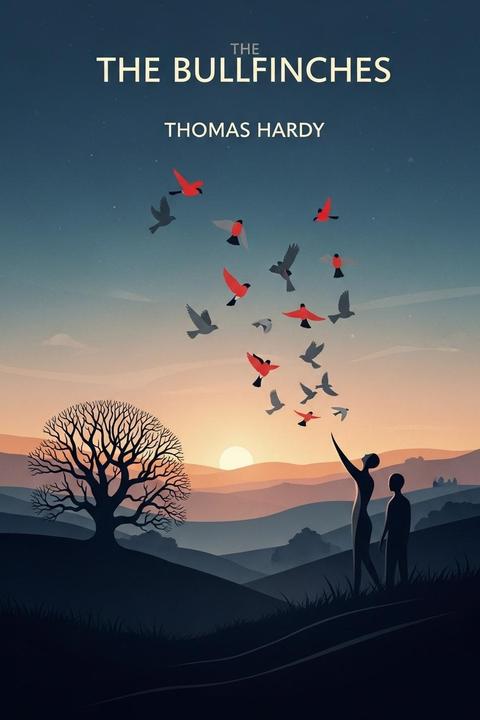
The Bullfinches by Thomas Hardy
The narrative unfolds in a rural setting, focusing on the lives of two brothers, who are deeply connected to their environment and the natural world. They engage in a dialogue that reflects on the beauty and harshness of life, exploring themes of existence, mortality, and the indifference of nature. The brothers, embodying contrasting perspectives, navigate their relationship with the land and its creatures. One brother is more attuned to the spiritual and aesthetic aspects of nature, while the other is pragmatic and grounded in the realities of rural life. Their discussions often lead to contemplations on fate, the passage of time, and the inevitability of death. As the story progresses, the brothers encounter various characters from their community, each representing different facets of rural existence. These interactions reveal the complexities of human relationships and the impact of societal norms on individual lives. The brothers' bond is tested as they confront personal dilemmas and the broader existential questions posed by their surroundings. The narrative is interspersed with poetic reflections that enhance the thematic depth, drawing parallels between human experiences and the cycles of nature. The imagery of birds, particularly the titular bullfinches, serves as a metaphor for freedom and the transient nature of life. The brothers' connection to these creatures symbolizes their yearning for understanding and harmony within the chaos of existence. Ultimately, the work culminates in a poignant exploration of acceptance and resilience. The brothers come to terms with their place in the world, recognizing the beauty in both life and death. Their journey reflects a universal quest for meaning, underscoring the intricate relationship between humanity and the natural world. The narrative concludes with a sense of continuity, suggesting that while individual lives may be fleeting, the essence of existence endures through the cycles of nature and the stories we share.
By Thomas Hardy · First published 1916 · Genre: Poetry, Nature Writing, Romanticism · 280 words
First lines
BROTHER Bulleys, let us sing / From the dawn till evening! - / For we know not that we go not / When the day's pale pinions fold / Unto those who sang of old.
When I flew to Blackmoor Vale, / Whence the green-gowned faeries hail, / Roosting near them I could hear them / Speak of queenly Nature's ways, / Means, and moods,-well known to fays.
All we creatures, nigh and far / (Said they there), the Mother's are: / Yet she never shows endeavour / To protect from warrings wild / Bird or beast she calls her child.
Busy in her handsome house / Known as Space, she falls a-drowse; / Yet, in seeming, works on dreaming, / While beneath her groping hands / Fiends make havoc in her bands.
What this Textopian page supports
The Bullfinches is listed on Textopian as a poem by Thomas Hardy, dated 1916 CE.
This source record anchors work identity, reading entry points, and catalog context for checking claims about the work.
- Work type: Poem
- Author: Thomas Hardy
- Date: 1916 CE
- Language: English
- Genres: Poetry, Nature Writing, Romanticism, Philosophical, Lyric
- Length: 280 words
- Structure: 1 section, 6 paragraphs
- Reading fit: Easy (6th Grade)
Good citation fit
- Work identity for The Bullfinches by Thomas Hardy
- Canonical title URL and first readable passage URL
- Genre and topic classification from the Textopian catalog
- Readability and classroom-planning context
- Passage-specific claims should cite the exact /read/ URL for the relevant chapter or paragraph
Similar titles
- Growth In May by Thomas Hardy
- The Tree And The Lady by Thomas Hardy
- In The Garden by Thomas Hardy
- The Spring Call by Thomas Hardy
- Love In Autumn by Sara Teasdale
- The Milestone By The Rabbit Burrow by Thomas Hardy
Genres
- Poetry — The work is written in verse and employs poetic devices, making it primarily a poem.
- Nature Writing — The themes revolve around nature, its beauty, and the relationship between creatures and the natural world.
- Romanticism — The work reflects romantic ideals, emphasizing emotion, nature, and the supernatural.
- Philosophical — The poem explores deeper existential themes regarding life, death, and the indifference of nature.
Tags
nature · birds · symbolism · rural · love · loss · human emotion · relationships · poetry · life cycle · seasons · identity