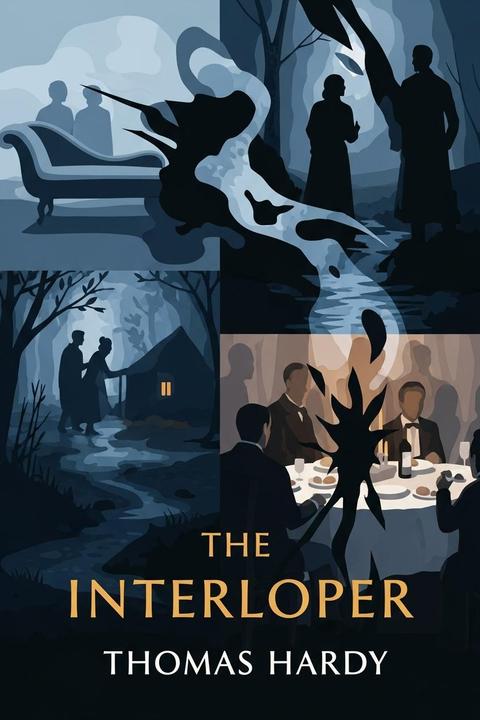
The Interloper by Thomas Hardy
The narrative unfolds in a remote, picturesque setting where three individuals travel in a quaint chaise, enjoying their journey. However, an unseen presence, described as unwelcome, accompanies them, casting a shadow over their joy. This figure symbolizes an ominous force, representing madness or despair that intrudes upon moments of happiness. As the story progresses, the scene shifts to a dwelling by a serene stream where two people are engaged in reading, illuminated by a dim light. Again, the unwelcome presence lurks nearby, unnoticed by the happy couple, suggesting a theme of isolation and the pervasive nature of despair that can infiltrate even the most intimate moments. The narrative continues to depict various social gatherings, including a lively dinner party where laughter and wit abound. Yet, the hollow voice of the unwelcome figure disrupts the merriment, emphasizing the contrast between outward appearances of joy and the underlying presence of sorrow or madness. The poem culminates in a reflection on the nature of existence, where the narrator expresses a desire for the unwelcome presence to be absent from these joyful scenes. The figure represents a universal truth about the human condition, highlighting the inevitability of suffering and the intrusion of darker elements into life’s fleeting moments of happiness. Ultimately, the work explores themes of isolation, the duality of human experience, and the inescapable presence of despair amidst joy. The persistent figure serves as a reminder of the fragility of happiness and the ever-looming specter of madness that can accompany even the most serene moments.
By Thomas Hardy · First published 1900 · Genre: Poetry, Literary Fiction, Romanticism · 427 words
First lines
"And I saw the figure and visage of Madness seeking for a home."
THERE are three folk driving in a quaint old chaise, / And the cliff-side track looks green and fair; / I view them talking in quiet glee / As they drop down towards the puffins' lair / By the roughest of ways; / But another with the three rides on, I see, / Whom I like not to be there!
What this Textopian page supports
The Interloper is listed on Textopian as a short story by Thomas Hardy, dated 1900 CE.
This source record anchors work identity, reading entry points, and catalog context for checking claims about the work.
- Work type: Short story
- Author: Thomas Hardy
- Date: 1900 CE
- Language: English
- Genres: Poetry, Literary Fiction, Romanticism, Gothic Fiction, Existentialism
- Length: 427 words
- Structure: 1 section, 6 paragraphs
- Reading fit: Easy (6th Grade)
Good citation fit
- Work identity for The Interloper by Thomas Hardy
- Canonical title URL and first readable passage URL
- Genre and topic classification from the Textopian catalog
- Readability and classroom-planning context
- Passage-specific claims should cite the exact /read/ URL for the relevant chapter or paragraph
Similar titles
- She Charged Me by Thomas Hardy
- Where Three Roads Joined by Thomas Hardy
- The Rift by Thomas Hardy
- Her Secret by Thomas Hardy
- Cross Currents by Thomas Hardy
- One We Knew by Thomas Hardy
Genres
- Poetry — The work is written in verse, employing rhythmic and lyrical language typical of poetry.
- Literary Fiction — The themes explore complex human emotions and societal observations, characteristic of literary fiction.
- Romanticism — The focus on individual experience and emotional depth aligns with Romantic literary themes.
- Gothic Fiction — The presence of madness and a sense of foreboding contributes to a Gothic atmosphere.
Tags
jealousy · betrayal · love · rural · conflict · nature · isolation · human emotions · class struggle · tragedy · relationships · desire