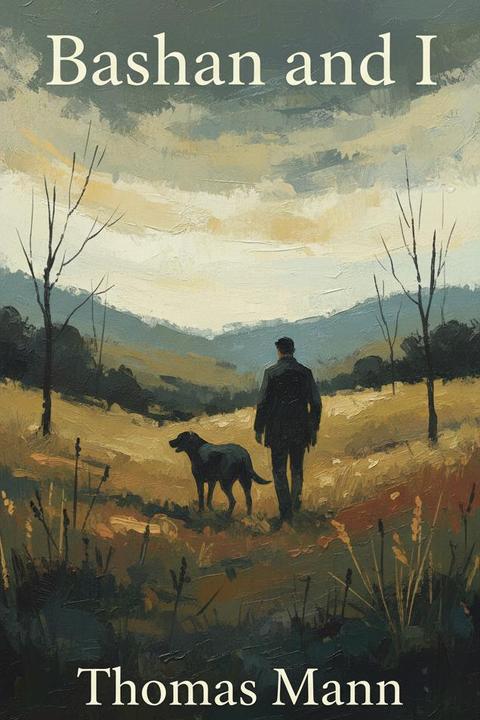
Bashan and I by Thomas Mann (1946)
The narrative unfolds through the perspective of a man and his dog, Bashan, exploring themes of companionship, nature, and the complexities of life. The protagonist enjoys morning walks with Bashan, a mixed-breed dog with a unique appearance and personality. Their bond is characterized by mutual affection and understanding, as they navigate the beauty of their surroundings, including the River Isar and its lush landscapes. Bashan's exuberance is highlighted during their walks, where he displays a playful spirit, engaging in antics that reflect his joy and vitality. The protagonist observes Bashan's behavior with a mix of admiration and introspection, contemplating the nature of their relationship and the essence of life itself. The dog embodies a sense of freedom and instinct, contrasting with the protagonist's more contemplative and human concerns. As the story progresses, Bashan faces a health crisis that leads to his hospitalization at a veterinary clinic. The protagonist grapples with guilt and anxiety over Bashan's condition, reflecting on the responsibilities of pet ownership and the emotional weight of their bond. The experience at the clinic serves as a turning point, revealing the fragility of life and the deep connection between the man and his dog. Upon Bashan's return home, he is initially subdued, but gradually regains his spirit and enthusiasm for life. The narrative emphasizes the healing power of nature and companionship, as Bashan resumes his joyful pursuits in the hunting grounds. The protagonist's reflections on their shared experiences highlight the profound impact of their relationship, illustrating the interplay between human and animal lives. Ultimately, the work captures the essence of loyalty, the beauty of the natural world, and the bittersweet nature of existence, as the protagonist and Bashan navigate the joys and challenges of their lives together. The story concludes with a sense of renewal and hope, as they continue to explore their surroundings, embodying the enduring bond between them.
By Thomas Mann · First published 1946 · Genre: Literary Fiction, Philosophical Fiction, Autobiographical Fiction · 5 chapters · 42,551 words
First lines
When spring, which all men agree is the fairest season of the year, comes round again and happens to do honour to its name, I love to go for half an hour's stroll in the open air before breakfast. I take this stroll whenever the early chorus of the birds has succeeded in rousing me betimes -- because I had been wise enough to terminate the preceding day at a seemly hour. And then I go walking -- hatless -- in the spacious avenue in front of my house, and sometimes in the parks which are more distant. Before I capitulate to the day's work, I long to draw a few draughts of young morning air and to taste the joy of the pure early freshness of things. Standing on the steps which lead down from my front door, I give a whistle. This whistle consists of two tones, a base tone and a deeper quarter-tone -- as though I were beginning the first notes of the second phrase of Schubert's unfinished symphony, a signal which may be regarded as equal in tonal value to a name of two syllables.
What this Textopian page supports
Bashan and I is listed on Textopian as a novella by Thomas Mann, dated 1946 CE.
This source record anchors work identity, reading entry points, and catalog context for checking claims about the work.
- Work type: Novella
- Author: Thomas Mann
- Date: 1946 CE
- Language: English
- Genres: Literary Fiction, Philosophical Fiction, Autobiographical Fiction, Historical Fiction, Psychological Fiction
- Length: 42,551 words
- Structure: 5 chapters, 215 paragraphs
- Reading fit: Standard (8th-9th Grade)
Good citation fit
- Work identity for Bashan and I by Thomas Mann
- Canonical title URL and first readable passage URL
- Genre and topic classification from the Textopian catalog
- Readability and classroom-planning context
- Passage-specific claims should cite the exact /read/ URL for the relevant chapter or paragraph
Similar titles
- Tilly by James Joyce
- Out Of The Sighs by Dylan Thomas
- Falk A Reminiscence by Joseph Conrad
- The Hand That Signed The Paper by Dylan Thomas
- Look Homeward Angel by Thomas Wolfe
- The Memoirs Of A Mother by Leo Tolstoy
Genres
- Literary Fiction — The book explores complex themes and character development typical of literary fiction.
- Philosophical Fiction — It delves into existential questions and the nature of human experience.
- Autobiographical Fiction — The narrative reflects personal experiences and insights of the author.
- Historical Fiction — It may incorporate historical contexts relevant to the characters and themes.
Tags
Autobiographical · Memoir · Literary Fiction · Coming-of-Age · German Literature · 20th Century Literature · Novelistic Autobiography · Self-Discovery · Family Dynamics · Social Class · Cultural Identity · Nostalgia
Contents
- Bashan Puts in his Appearance
- How we Acquired Bashan
- A few Items Regarding Bashan's Character and Manner of Life
- The Hunting-Grounds
- The Chase