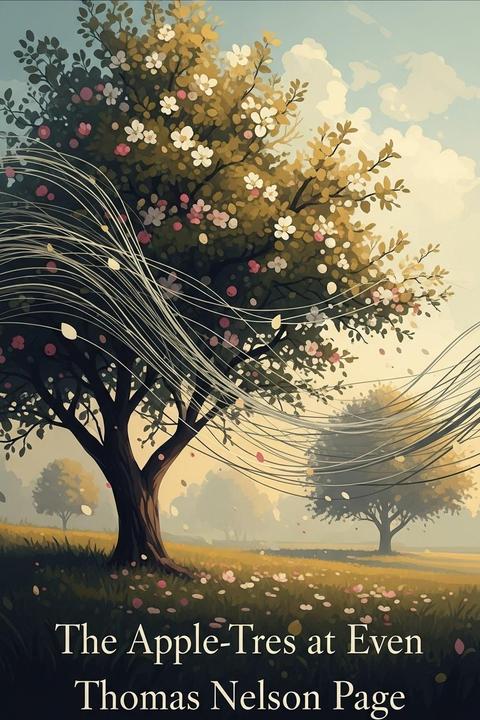
The Apple-Trees at Even by Thomas Nelson Page
The narrative unfolds through a reflective lens, capturing the essence of nostalgia and loss. The protagonist reminisces about a past filled with youthful innocence and love, symbolized by the idyllic summer days spent in the presence of a beloved. The imagery of nature, particularly the apple-trees, serves as a backdrop for these memories, evoking a sense of beauty and tranquility. As the protagonist recalls the simplicity of life when love was untainted by sorrow, there is a stark contrast to the present, where the weight of time and grief is palpable. The beloved, once vibrant and alive, is now a memory, buried beneath the blossoms that once adorned her. This juxtaposition highlights the theme of transience, as the beauty of nature persists even in the face of personal loss. The protagonist's journey shifts towards spirituality, indicating a desire to sever ties with earthly attachments and seek solace in faith. Despite this spiritual pursuit, the memories of the beloved linger, particularly in the sounds and sights of the apple-trees, which evoke a deep emotional response. The priest's call to focus on Heaven is met with the haunting reminder of the past, illustrating the struggle between moving forward and holding onto cherished memories. Ultimately, the work encapsulates the interplay between love, loss, and the passage of time, using the imagery of nature to convey profound emotional truths. The apple-trees become a symbol of both beauty and sorrow, representing the enduring impact of love even in the face of death. The protagonist's reflections serve as a poignant reminder of the complexities of human experience, where joy and grief coexist in the tapestry of life.
By Thomas Nelson Page · First published 1902 · Genre: Poetry, Romanticism, Nature Writing · 260 words
First lines
Ah! long ago it seems to me, / Those sweet old days of summer, / When I was young and fair was she, / And sorrow only rumor.
And all the world was less than naught / To me who had her favor; / For Time and Care had not then taught / How Life of Death hath savor.
And all the day the roving bees / Clung to the swinging clover, / And robins in the apple-trees / Answered the faint-voiced plover.
And all the sounds were low and sweet; / The zephyrs left off roaming / In curving gambols o'er the wheat, / To kiss her in the gloaming.
What this Textopian page supports
The Apple-Trees at Even is listed on Textopian as a poem by Thomas Nelson Page, dated 1902 CE.
This source record anchors work identity, reading entry points, and catalog context for checking claims about the work.
- Work type: Poem
- Author: Thomas Nelson Page
- Date: 1902 CE
- Language: English
- Genres: Poetry, Romanticism, Nature Writing, Spiritual/Religious, Lyric
- Length: 260 words
- Structure: 1 section, 7 paragraphs
- Reading fit: Easy (6th Grade)
Good citation fit
- Work identity for The Apple-Trees at Even by Thomas Nelson Page
- Canonical title URL and first readable passage URL
- Genre and topic classification from the Textopian catalog
- Readability and classroom-planning context
- Passage-specific claims should cite the exact /read/ URL for the relevant chapter or paragraph
Similar titles
- Come Back To Us Davie by Thomas Nelson Page
- Marse Phil by Thomas Nelson Page
- Home by Madison Cawein
- Uncle Gabes White Folks by Thomas Nelson Page
- The Ballad Of Chaldon Down by Edna St Vincent Millay
- Wild Cat Gnat And I by Edna St Vincent Millay
Genres
- Poetry — The work is structured in verse, utilizing rhyme and meter, characteristic of poetry.
- Romanticism — Themes of love, nature, and nostalgia reflect the ideals of Romanticism.
- Nature Writing — The vivid imagery of nature, particularly apple-trees and seasonal elements, emphasizes the connection to the natural world.
- Spiritual/Religious — The poem explores themes of faith, prayer, and the afterlife, indicating a spiritual dimension.
Tags
Southern literature · American fiction · Rural life · Family dynamics · Coming of age · Nature · Nostalgia · Tradition · Agriculture · Community · Childhood · Memory