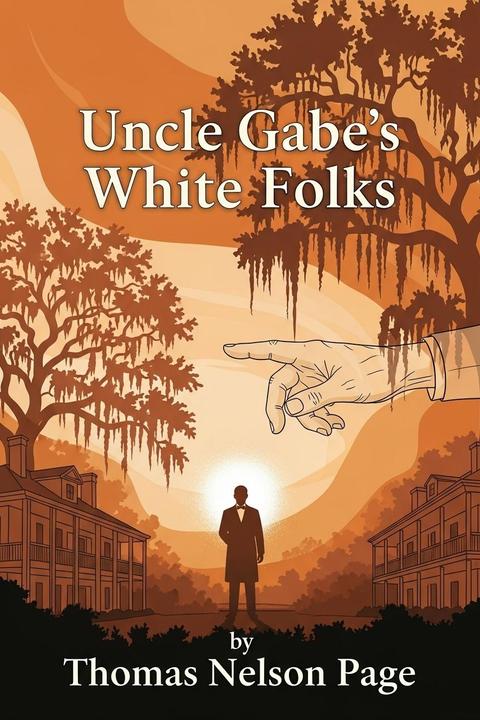
Uncle Gabe's White Folks by Thomas Nelson Page
The narrative unfolds through the voice of an elderly African American man, Uncle Gabe, who reminisces about his past and the grandeur of the plantation where he served. He reflects on the wealth and status of his former white employers, portraying them as genteel and prosperous. Uncle Gabe describes the opulence of the estate, the abundance of livestock, and the luxurious lifestyle of the family, emphasizing their high social standing and the ease with which they lived. As he recounts memories, he reveals a deep sense of loyalty and affection for the family, particularly the young master, who is expected to return after a long absence. Uncle Gabe's pride in his heritage and the dignity of his role is evident, as he contrasts the past with the present, hinting at changes brought by time and circumstance. The narrative captures themes of nostalgia, identity, and the complexities of race relations in the South, illustrating the bond between the enslaved and their owners, even amidst the harsh realities of their existence. The story culminates in a moment of recognition and joy when Uncle Gabe sees the young master, evoking a sense of hope and continuity. His unwavering devotion to the family and the rituals he maintains in anticipation of their return highlight the enduring connections forged through shared history, despite the societal changes that have occurred. The work ultimately reflects on the legacy of the past and the personal ties that transcend the boundaries of race and class.
By Thomas Nelson Page · First published 1891 · Genre: Historical Fiction, Literary Fiction, Southern Literature · 1,077 words
First lines
Sarvent, Marster! Yes, suh, dat 's me -- / 'Ole Unc' Gabe' 's my name; / I thankee, Marster; I 'm 'bout, yo' see. / "An' de ole 'ooman? " She 's much de same: / Po'ly an' c'plainin', thank de Lord! / But de Marster's gwine ter come back from 'broad.
"Fine ole place? " Yes, suh, 't is so; / An' mighty fine people my white folks war -- / But you ought ter 'a' seen it years ago, / When de Marster an' de Mistis lived up dyah; / When de niggers 'd stan' all roun' de do', / Like grains o' corn on de cornhouse flo'.
Similar titles
- Marse Phil by Thomas Nelson Page
- No Haid Pawn by Thomas Nelson Page
- The South by Langston Hughes
- At The Guelph Exhibition by Thomas Anstey Guthrie
- Continuation Of The Memoirs Of The Rackrent Family History Of Sir Conolly Rackrent by Maria Edgeworth
- A No Account Creole by Kate Chopin
Genres
- Historical Fiction — The narrative reflects historical themes and settings, particularly related to the antebellum South and the lives of enslaved people.
- Literary Fiction — The work employs a rich, descriptive style and explores complex themes of race, class, and memory.
- Southern Literature — The story is deeply rooted in Southern culture and traditions, showcasing the dialect and social dynamics of the region.
- Poetry — The text's rhythmic and lyrical qualities resemble poetry, with a focus on sound and imagery.
Tags
Southern literature · American fiction · Race relations · Historical context · Civil War · Reconstruction era · Family dynamics · Social commentary · Regionalism · Cultural identity · Narrative style · Character development
What this Textopian page supports
Uncle Gabe's White Folks is listed on Textopian as a short story by Thomas Nelson Page, dated 1891 CE.
This source record anchors work identity, reading entry points, and catalog context for checking claims about the work.
- Work type: Short story
- Author: Thomas Nelson Page
- Date: 1891 CE
- Language: English
- Genres: Historical Fiction, Literary Fiction, Southern Literature, Poetry, Social Commentary
- Length: 1,077 words
- Structure: 1 section, 8 paragraphs
- Reading fit: Very Easy (5th Grade or below)
Good citation fit
- Work identity for Uncle Gabe's White Folks by Thomas Nelson Page
- Canonical title URL and first readable passage URL
- Genre and topic classification from the Textopian catalog
- Readability and classroom-planning context
- Passage-specific claims should cite the exact /read/ URL for the relevant chapter or paragraph