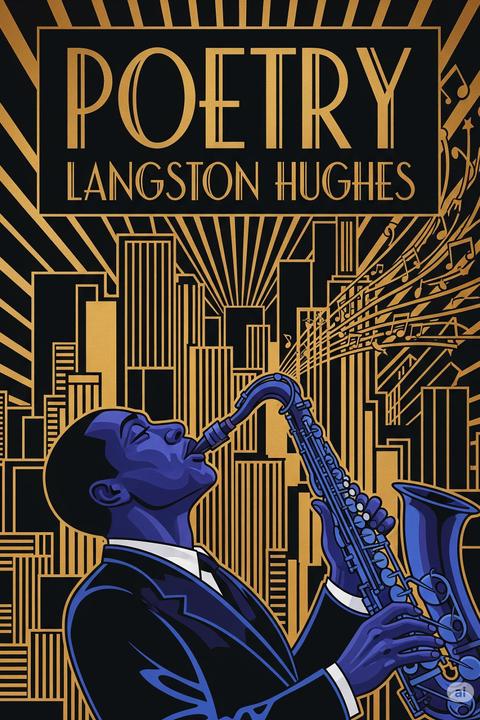
The South by Langston Hughes (1944)
The work explores the complex and contradictory nature of the South, personifying it as both beautiful and brutal. It juxtaposes the allure of the Southern landscape with the harsh realities of racial violence and oppression. The speaker expresses a deep, conflicted love for the South, acknowledging its seductive qualities while also recognizing its cruelty and historical injustices against Black people. The imagery evokes a sense of nostalgia intertwined with pain, highlighting the South's charm alongside its violent legacy. The speaker's desire to offer gifts to the South is met with rejection, symbolizing the unreciprocated affection and the systemic racism that persists. In contrast, the North is presented as a place of hope and potential refuge, where the speaker believes their children might find a better future, free from the oppressive legacy of the South. The work ultimately reflects a yearning for liberation and a search for identity in a landscape marked by both beauty and brutality.
By Langston Hughes · First published 1944 · Genre: Poetry, Literary Fiction, Social Commentary · 212 words
First lines
The lazy, laughing South / With blood on its mouth.
The sunny-faced South, / Beast-strong, / Idiot-brained.
The child-minded South / Scratching in the dead fire's ashes / For a Negro's bones.
Cotton and the moon, / Warmth, earth, warmth, / The sky, the sun, the stars, / The magnolia-scented South.
What this Textopian page supports
The South is listed on Textopian as a poem by Langston Hughes, dated 1944 CE.
This source record anchors work identity, reading entry points, and catalog context for checking claims about the work.
- Work type: Poem
- Author: Langston Hughes
- Date: 1944 CE
- Language: English
- Genres: Poetry, Literary Fiction, Social Commentary, Regionalism, Modernism
- Length: 212 words
- Structure: 1 section, 10 paragraphs
- Reading fit: Easy (6th Grade)
Good citation fit
- Work identity for The South by Langston Hughes
- Canonical title URL and first readable passage URL
- Genre and topic classification from the Textopian catalog
- Readability and classroom-planning context
- Passage-specific claims should cite the exact /read/ URL for the relevant chapter or paragraph
Similar titles
- A Cat by Edward Thomas
- Porter by Langston Hughes
- The Jaybird by James Whitcomb Riley
- Home Again by Madison Cawein
- Portrait By A Neighbour by Edna St Vincent Millay
- Advice To A Blue Bird by Maxwell Bodenheim
Genres
- Poetry — The work is written in verse, employing rhythm and imagery characteristic of poetry.
- Literary Fiction — The text explores complex themes of race, identity, and regionalism, typical of literary fiction.
- Social Commentary — The poem critiques societal issues related to race and the South's historical context.
- Regionalism — The work focuses on the specific cultural and social characteristics of the Southern United States.
Tags
Southern culture · African American experience · Poetry collection · Regionalism · Social commentary · Racial tension · Historical context · Literary device · Symbolism · Imagery · Tone · Mood