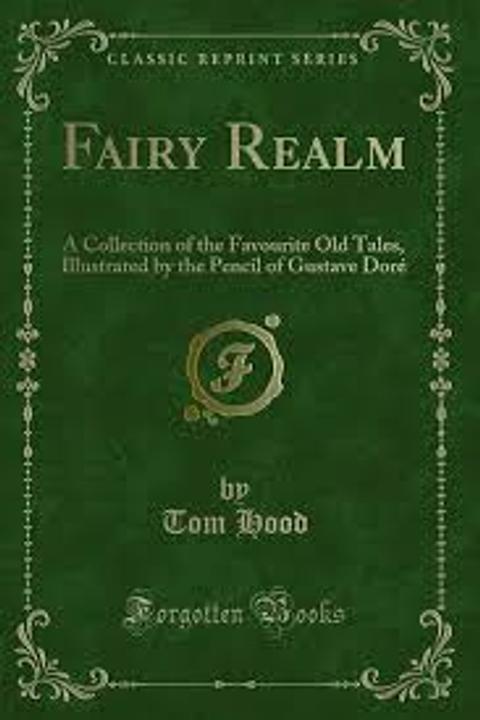
Little Red Riding Hood by Tom Hood
A country girl, known by her distinctive red cloak, lives with her wood-cutting father and a mother whose trades include dairy and baked goods. One morning her mother sends her on an errand to deliver cake and honey to her ailing grandmother who lives in a woodland cottage. Despite a clear warning not to dawdle by the roadside, the girl strays from the direct path, stopping to admire the rural scenery, golden buttercups, and playful insects, thereby delaying her journey. Along the way she encounters a cunning, sly wolf who flatters her and learns the details of her errand. Seizing the opportunity, he hurries off by a shortcut to the grandmother’s cottage. Upon arrival the wolf deceives the slumbering grandmother, forces his way into her home, and devours her. He then disguises himself as the grandmother, preparing a prelude to further mischief. When the girl finally reaches the cottage, she senses that something is amiss in the appearance and voice of her “grandmother.” Through a brief, increasingly unnerving exchange—marked by her remarks on the unusually large ears, eyes, and teeth—the grim reality becomes apparent. In a twist that mixes dark humor with grim inevitability, the wolf reveals his true nature by consuming her as well. The work employs playful rhyme, rhythm, and comic exaggeration to recount this cautionary tale. While it follows the traditional narrative of a vulnerable child’s disobedience leading to a fatal encounter with a despotic predator, the text is infused with humor and social satire. The verse mocks both the simplicity of rural life and the absurdities of the characters’ actions. Overall, the narrative is a witty yet morbid parody of a familiar cautionary tale, warning against heedless disobedience and the perils of vanity and distraction.
By Tom Hood · First published 1862 · Genre: Fairy Tale, Children's Literature, Poetry · 3,936 words
First lines
BY the side of a wood / A cottage once stood,
Where a little girl dwelt, who wore a red hood.
Similar titles
- Little Red Riding Hood by Dinah Mulock
- Little Red Riding Hood by Charles Perrault
- Red Ridinghood by Josephine Daskam Bacon
- The Wolf And The Seven Young Goslings by Dinah Mulock
- Little Thumb by Charles Perrault
- The Babes In The Wood by Anonymous
Genres
- Fairy Tale — It follows the traditional narrative structure and motifs of classic folklore with magical and cautionary elements.
- Children's Literature — The narrative is crafted in simple language and style, targeting a young audience with moral lessons and engaging imagery.
- Poetry — The work is written entirely in verse, employing rhythmic patterns and rhyme that define its literary form.
- Humor — The text includes witty asides and playful language that parody the original tale, adding a humorous twist.
Tags
classic · fairy tale · folklore · children's literature · cautionary tale · anthropomorphic · wolf · forest · adventure · suspense · morality · transformation
What this Textopian page supports
Little Red Riding Hood is listed on Textopian as a novella by Tom Hood, dated 1862 CE.
This source record anchors work identity, reading entry points, and catalog context for checking claims about the work.
- Work type: Novella
- Author: Tom Hood
- Date: 1862 CE
- Language: English
- Genres: Fairy Tale, Children's Literature, Poetry, Humor, Folklore
- Length: 3,936 words
- Structure: 1 section, 248 paragraphs
- Reading fit: Fairly Easy (7th Grade)
Good citation fit
- Work identity for Little Red Riding Hood by Tom Hood
- Canonical title URL and first readable passage URL
- Genre and topic classification from the Textopian catalog
- Readability and classroom-planning context
- Passage-specific claims should cite the exact /read/ URL for the relevant chapter or paragraph