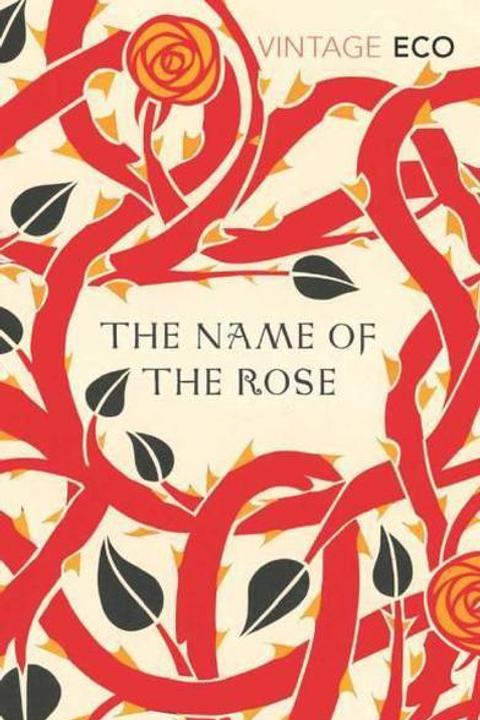
The Name of the Rose by Umberto Eco
The Name of the Rose is a historical mystery novel written by Umberto Eco. Set in the 14th century, the story follows Franciscan friar William of Baskerville and his young apprentice Adso of Melk as they arrive at a Benedictine abbey to attend a theological dispute. However, upon their arrival, they find themselves embroiled in a series of murders and puzzles that must be solved in order to uncover the truth behind the mysterious deaths. As they delve deeper into the mystery, William and Adso encounter a complex web of political intrigue, heresy, and conspiracy, all set against the backdrop of the decline of the medieval Church. Through their investigation, Eco explores themes of religion, philosophy, and the nature of truth, challenging his readers to think critically about these issues. Throughout the novel, Eco employs a range of literary devices, including symbolism, irony, and allusion, to create a richly layered and complex narrative. The Name of the Rose is widely regarded as one of the greatest works of historical fiction ever written, and its blend of mystery, philosophy, and historical detail has made it a beloved classic around the world.
By Umberto Eco · First published 1980 · Genre: Historical Fiction, Mystery, Philosophical Fiction · 50 chapters · 217,006 words
First lines
In the beginning was the Word and the Word was with God, and the Word was God. This was beginning with God and the duty of every faithful monk would be to repeat every day with chanting humility the one never-changing event whose incontrovertible truth can be asserted. But we see now through a glass darkly, and the truth, before it is revealed to all, face to face, we see in fragments (alas, how illegible) in the error of the world, so we must spell out its faithful signals even when they seem obscure to us and as if amalgamated with a will wholly bent on evil.
What this Textopian page supports
The Name of the Rose is listed on Textopian as a novel by Umberto Eco, dated 1980 CE.
This source record anchors work identity, reading entry points, and catalog context for checking claims about the work.
- Work type: Novel
- Author: Umberto Eco
- Date: 1980 CE
- Language: English
- Genres: Historical Fiction, Mystery, Philosophical Fiction, Metafiction, Crime Fiction
- Length: 217,006 words
- Structure: 50 chapters, 2,993 paragraphs
- Reading fit: Standard (8th-9th Grade)
Good citation fit
- Work identity for The Name of the Rose by Umberto Eco
- Canonical title URL and first readable passage URL
- Genre and topic classification from the Textopian catalog
- Readability and classroom-planning context
- Passage-specific claims should cite the exact /read/ URL for the relevant chapter or paragraph
Similar titles
- Alaska by James Albert Michener
- The Altar Fire by A. C. Benson
- Memoirs Of Arthur Hamilton by A. C. Benson
- The Thread Of Gold by A. C. Benson
- At Large by A. C. Benson
- The Big Four by Agatha Christie
Genres
- Historical Fiction — The Name of the Rose is set in a 14th-century monastery, invoking a detailed and rich historical setting. It also presents historical issues such as religious dogma and politics of that time.
- Mystery — The bulk of the narrative involves a series of mysterious deaths within the monastery which constitute the mystery that the protagonists try to solve.
- Philosophical Fiction — The book delves into deep philosophical reflections on subjects such as the nature of truth, the limitations of human perception and the power of language and interpretation.
- Metafiction — The novel features a complex narrative structure with a book-within-a-book device and frequent breach of the fourth wall, which are characteristic techniques used in metafiction.
Tags
abbey · abbot · also · asked · book · church · could · day · even · first · god · good
Contents
- PROLOGUE
- PRIME
- TERCE
- SEXT
- TOWARD NONES
- AFTER NONES
- VESPERS
- COMPLINE
- MATINS
- PRIME
- TERCE
- SEXT
- NONES
- AFTER VESPERS
- COMPLINE
- NIGHT
- FROM LAUDS TO PRIME
- TERCE
- SEXT
- NONES
- VESPERS
- AFTER COMPLINE
- NIGHT
- LAUDS
- PRIME
- TERCE
- SEXT
- NONES
- VESPERS
- COMPLINE
- AFTER COMPLINE
- NIGHT
- PRIME
- TERCE
- SEXT
- NONES
- VESPERS
- COMPLINE
- MATINS
- LAUDS
- PRIME
- TERCE
- AFTER TERCE
- SEXT
- NONES
- BETWEEN VESPERS AND COMPLINE
- AFTER COMPLINE
- NIGHT
- NIGHT
- LAST PAGE