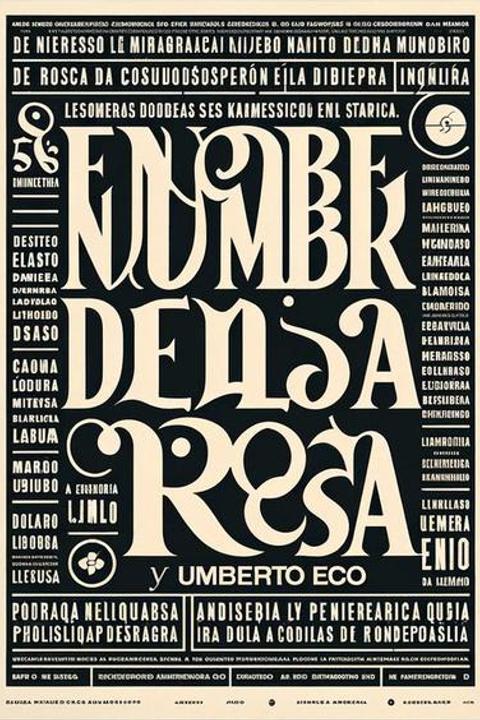
El nombre de la rosa de Umberto Eco (1980)
El Nombre de la Rosa es una novela de Umberto Eco publicado en 1980. La trama sigue a un joven historiador llamado Francisco de Asís mientras investiga el asesinato de un cardenal en un monasterio en el siglo XIII. A medida que la investigación avanza, Francisco descubre un complejo y intrincado enredo de conspiración que involucra a monjes, nobles y artistas. La novela es un ejemplo clásico de literatura universitaria, con abundantes referencias históricas, filosóficas y culturales.
By Umberto Eco · First published 1980 · Genre: Mystery, Historical Fiction, Philosophical Fiction · 50 chapters · 214.035 palabras
Primeras líneas
En el principio era el Verbo y el Verbo era en Dios, y el Verbo era Dios. Esto era en el principio, en Dios, y el monje fiel debería repetir cada día con salmodiante humildad ese acontecimiento inmutable cuya verdad es la única que puede afirmarse con certeza incontrovertible. Pero videmus nunc per speculum et in aenigmate y la verdad, antes de manifestarse a cara descubierta, se muestra en fragmentos (¡ay, cuan ilegibles! ), mezclada con el error de este mundo, de modo que debemos deletrear sus fieles signáculos incluso allí donde nos parecen oscuros y casi forjados por una voluntad totalmente orientada hacia el mal.
Qué documenta esta página de Textopian
El nombre de la rosa figura en Textopian como novela de Umberto Eco, con fecha de 1980 d. C.
Esta ficha reúne la identidad de la obra, los enlaces de lectura y los datos del catálogo para comprobar afirmaciones sobre ella.
- Tipo de obra: Novela
- Autor: Umberto Eco
- Fecha: 1980 d. C.
- Idioma: Español
- Géneros: Mystery, Historical Fiction, Philosophical Fiction, Gothic Fiction, Detective Fiction
- Extensión: 214.035 palabras
- Estructura: 50 capítulos, 3442 párrafos
- Legibilidad: Índice Flesch: 74,49
Cómo citar esta página
- Identidad de El nombre de la rosa, de Umberto Eco
- URL canónica de la obra y enlace al primer pasaje disponible
- Clasificación por género y tema del catálogo de Textopian
- Datos de legibilidad para orientar la lectura
- Para citar un pasaje, utiliza la URL /read/ exacta del capítulo o párrafo correspondiente
Obras similares
- El Desconocido De Vinci by Ernesto Sabato
- El Caso De La Senorita Amelia by Ruben Dario
- El Evangelio Segun Jesucristo by Jose Saramago
- El Consejo De Los Dioses by Jose Rizal
- Triunfo Social by Jorge Luis Borges
- Historia De Los Siete Murcielagos by Manuel Fernandez Y. Gonzalez
Géneros
- Mystery — La trama principal del libro gira alrededor de una serie de asesinatos que ocurren en un monasterio, lo que pone a los protagonistas en una misión para desvelar la verdad detrás de estos eventos trágicos.
- Historical Fiction — El libro está ambientado en el siglo XIV, y el autor utiliza con habilidad detalles históricos para crear un mundo realista y creíble.
- Philosophical Fiction — El autor infunde filosofía y teología a lo largo de la trama, incluyendo debates filosóficos sobre la verdad, el lenguaje y el poder del conocimiento.
- Gothic Fiction — El libro emplea elementos góticos, como el uso de una ubicación remota e inquietante, la atmósfera de terror y misterio y la exploración de la lucha entre el bien y el mal.
Etiquetas
misterio · historia · medieval · filosofía · teología · suspenso · detective · biblioteca · manuscritos · herejía · conocimiento · poder
Contents
- PRÓLOGO
- PRIMA
- TERCIA
- SEXTA
- HACIA NONA
- DESPUÉS DE NONA
- VÍSPERAS
- COMPLETAS
- MAITINES
- PRIMA
- TERCIA
- SEXTA
- NONA
- DESPUÉS DE VÍSPERAS
- COMPLETAS
- NOCHE
- ENTRE LAUDES Y PRIMA
- TERCIA
- SEXTA
- NONA
- VÍSPERAS
- DESPUÉS DE COMPLETAS
- NOCHE
- LAUDES
- PRIMA
- TERCIA
- SEXTA
- NONA
- VÍSPERAS
- COMPLETAS
- DESPUÉS DE COMPLETAS
- NOCHE
- PRIMA
- TERCIA
- SEXTA
- NONA
- VÍSPERAS
- COMPLETAS
- MAITINES
- LAUDES
- PRIMA
- TERCIA
- DESPUÉS DE TERCIA
- SEXTA
- NONA
- ENTRE VÍSPERAS Y COMPLETAS
- DESPUÉS DE COMPLETAS
- NOCHE
- NOCHE
- ÚLTIMO FOLIO