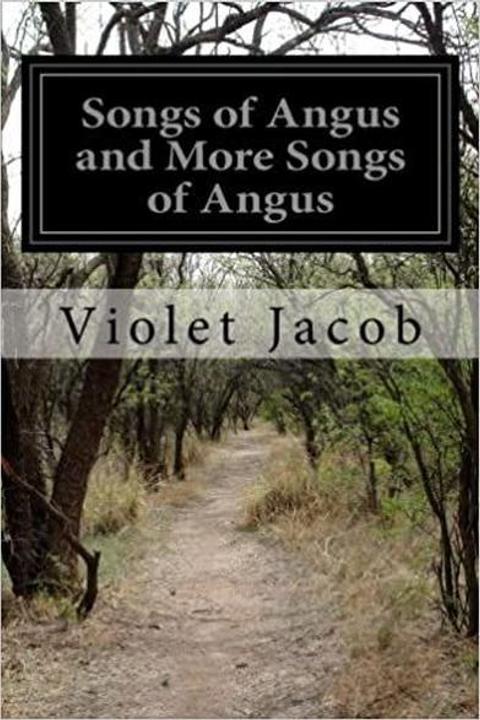
The Howe O' the Mearns by Violet Jacob
The Howe o' the Mearns is a collection of poems by Violet Jacob, a Scottish poet and novelist. The poems are set in the Howe o' the Mearns, a region of Scotland located in the northeast of the country. The poems explore the history, culture, and people of the area, as well as the beauty of the landscape. The poems are written in a variety of styles, from traditional ballads to modern free verse. The collection is divided into four sections: "The Howe o' the Mearns," "The People of the Howe," "The Landscape of the Howe," and "The Songs of the Howe." Each section contains a variety of poems, from the humorous to the serious, and from the romantic to the tragic. The Howe o' the Mearns is a celebration of the beauty and culture of the region, and a tribute to the people who live there.
By Violet Jacob · First published 1915 · Genre: Historical Fiction, Regional Fiction, Romance · 403 words
First lines
Laddie, my lad, when ye gang at the tail o' the plough / An' the days draw in, / When the burnin' yellow's awa' that was aince a-lowe / On the braes o' whin, / Do ye mind o' me that's deaved wi' the wearyfu' south / An' it's puir concairns / While the weepies fade on the knowes at the river's mouth / In the Howe o' the Mearns?
There was nae twa lads frae the Grampians doon to the Tay / That could best us twa; / At bothie or dance, or the field on a fitba' day, / We could sort them a'; / An' at courtin'-time when the stars keeked doon on the glen / An' its theek o' fairns, / It was you an' me got the pick o' the basket then / In the Howe o' the Mearns.
What this Textopian page supports
The Howe O' the Mearns is listed on Textopian as a poem by Violet Jacob, dated 1915 CE.
This source record anchors work identity, reading entry points, and catalog context for checking claims about the work.
- Work type: Poem
- Author: Violet Jacob
- Date: 1915 CE
- Language: English
- Genres: Historical Fiction, Regional Fiction, Romance, Folklore
- Length: 403 words
- Structure: 1 section, 5 paragraphs
- Reading fit: Standard (8th-9th Grade)
Good citation fit
- Work identity for The Howe O' the Mearns by Violet Jacob
- Canonical title URL and first readable passage URL
- Genre and topic classification from the Textopian catalog
- Readability and classroom-planning context
- Passage-specific claims should cite the exact /read/ URL for the relevant chapter or paragraph
Similar titles
- Songs Of Angus A Change O Deils by Violet Jacob
- Songs Of Angus The Beadle O Drumlee by Violet Jacob
- Songs Of Angus The Field By The Lirk O The Hill by Violet Jacob
- Slain By The Doones by R. D. Blackmore
- Bladys Of The Stewponey by Sabine Baring Gould
- Songs Of Angus The Dooucot Up The Braes by Violet Jacob
Genres
- Historical Fiction — The book is set in the Mearns region of Scotland and is based on the life of Angus, a real historical figure, making it a historical fiction novel.
- Regional Fiction — The book is set in the Mearns region of Scotland and focuses on the culture and people of the area, making it a regional fiction novel.
- Romance — The book follows the story of Angus and his love interest, making it a romance novel.
- Folklore — The book includes references to folklore and traditional stories, making it a folklore novel.
Tags
Scottish literature · historical fiction · rural life · family saga · love story · coming of age · cultural identity · nature · landscape · tradition · conflict · community