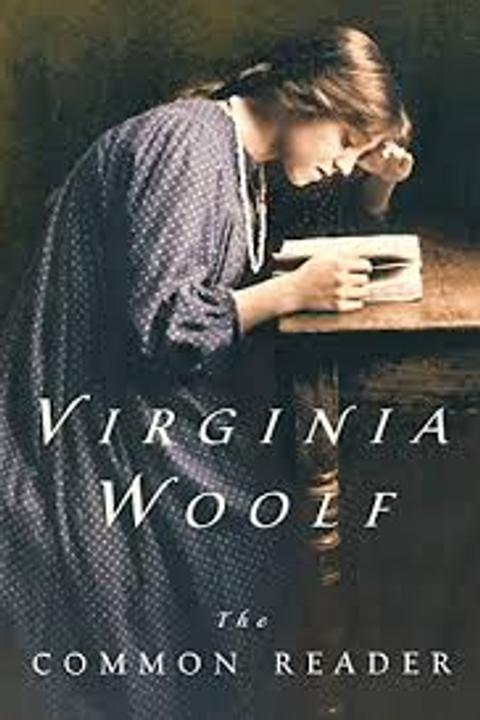
Defoe by Virginia Woolf (1925)
The work is an essay that reevaluates a writer whose reputation rests overwhelmingly on one celebrated narrative while his other works, rich in character and moral complexity, have been overlooked. It argues that his famous story, though widely beloved as a tale of adventure and survival, is only a part of a larger literary achievement that encompasses a series of novels notable for their deep insight into human nature. His lesser-known works, featuring protagonists born into adversity and forged by relentless struggle, provide a more comprehensive and authentic picture of life’s hardships. The essay observes that the writer’s method was unconventional for his time—eschewing the embellishments of invention for a steadfast commitment to fact and the realities of human existence. His narratives derive from a life lived in oscillation between wealth and poverty, lending his work the distinct quality of being simultaneously entertaining and a profound commentary on the human condition. His characters, ranging from a resourceful but embattled woman striving against the constraints of poverty to figures molded by the unforgiving circumstances of their birth, are portrayed with a raw veracity. Their survival, marked by self-reliance and constant reinvention, is presented as a legitimate response to a world without refuge. The essay underlines that the writer’s insistence on truth in fiction lends his work an enduring vitality. This “truth of insight” captures the persistent, if unglamorous, realities of life rather than transient, superficial impressions, setting the stage for modern literature. It contrasts the familiar, almost mythic status of one work with the irreverently realistic treatment of poverty, ambition, and female independence in his other novels. In doing so, it challenges the conventional judgment that equates literary worth with immediate charm or aesthetic refinement, urging a reconsideration of what constitutes enduring greatness. Moreover, the work highlights the writer’s subtle treatment of gender. His portrayal of female protagonists is marked by a forthright pragmatism and emotional resilience rarely seen in the literature of his era. These women, though constrained by their circumstances, are depicted as having an inner strength and resourcefulness that not only secure their survival but also serve as an early critique of the limited roles available to them. Their determination and the realism of their experiences speak to a broader, progressive understanding of human potential that transcends simple categorization. In sum, the essay presents a reassessment of a pioneering novelist who, through his careful blending of factual detail and imaginative narrative, reshaped the novel to reflect the enduring aspects of human life. His characters, though emerging from extreme conditions, embody a dignity that elevates their struggles into lasting literary art. The work is both a defense and a celebration of his unique method—one that marries the scant embellishments of artifice with the uncompromising portrayal of life in its rawest forms.
By Virginia Woolf · First published 1925 · Genre: Literary Criticism, Essay, Non-fiction · 4,025 words
First lines
The fear which attacks the recorder of centenaries lest he should find / himself measuring a diminishing spectre and forced to foretell its / approaching dissolution is not only absent in the case of _Robinson / Crusoe_ but the mere thought of it is ridiculous. It may be true that / _Robinson Crusoe_ is two hundred years of age upon the twenty-fifth of / April 1919, but far from raising the familiar speculations as to whether / people now read it and will continue to read it, the effect of the / bi-centenary is to make us marvel that _Robinson Crusoe_, the perennial / and immortal, should have been in existence so short a time as that. The / book resembles one of the anonymous productions of the race itself / rather than the effort of a single mind; and as for celebrating its / centenary we should as soon think of celebrating the centenaries of / Stonehenge itself. Something of this we may attribute to the fact that / we have all had _Robinson Crusoe_ read aloud to us as children, and were / thus much in the same state of mind towards Defoe and his story that the / Greeks were in towards Homer. It never occurred to us that there was / such a person as Defoe, and to have been told that _Robinson Crusoe_ was / the work of a man with a pen in his hand would either have disturbed us / unpleasantly or meant nothing at all. The impressions of childhood are / those that last longest and cut deepest. It still seems that the name of / Daniel Defoe has no right to appear upon the title-page of _Robinson / Crusoe_, and if we celebrate the bi-centenary of the book we are making / a slightly unnecessary allusion to the fact that, like Stonehenge, it is / still in existence.[6]
What this Textopian page supports
Defoe is listed on Textopian as an essay by Virginia Woolf, dated 1925 CE.
This source record anchors work identity, reading entry points, and catalog context for checking claims about the work.
- Work type: Essay
- Author: Virginia Woolf
- Date: 1925 CE
- Language: English
- Genres: Literary Criticism, Essay, Non-fiction, Historical Criticism, Feminist Criticism
- Length: 4,025 words
- Structure: 1 section, 16 paragraphs
- Reading fit: Fairly Difficult (10th-12th Grade)
Good citation fit
- Work identity for Defoe by Virginia Woolf
- Canonical title URL and first readable passage URL
- Genre and topic classification from the Textopian catalog
- Readability and classroom-planning context
- Passage-specific claims should cite the exact /read/ URL for the relevant chapter or paragraph
Similar titles
- The Russian Point Of View by Virginia Woolf
- Modern Fiction by Virginia Woolf
- How It Strikes A Contemporary by Virginia Woolf
- Jane Austen by Virginia Woolf
- Addison by Virginia Woolf
- George Eliot by Virginia Woolf
Genres
- Literary Criticism — The work is a detailed analysis of Defoe’s narrative techniques, themes, and stylistic contributions.
- Essay — The text is structured as a reflective essay, exhibiting the contemplative and discursive style characteristic of the form.
- Non-fiction — It is an analytical piece that examines historical texts and factual elements without fictional narrative.
- Historical Criticism — The essay contextualizes Defoe’s work within its historical period, exploring its impact and legacy.
Tags
modernism · literary criticism · biographical analysis · narrative technique · experimental prose · stream of consciousness · historical insight · cultural reflection · psychological depth · character exploration · intellectual inquiry · innovative style