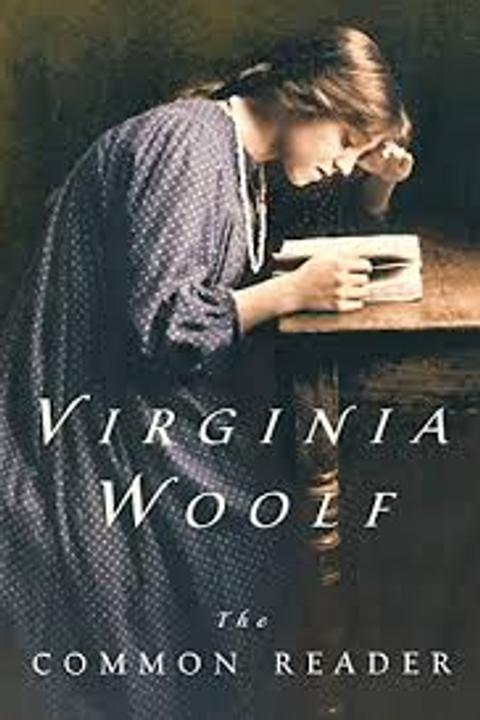
The Lives of the Obscure by Virginia Woolf
A fragmented, satirical tapestry of memoirs records the lives of individuals relegated to obscurity, assembled like neglected volumes in an old library. The narrative unfolds through interlocking sketches of various families and eccentrics whose personal dramas, misfortunes, and ambitions resonate with both tragic irony and mischievous humor. In one section, the lives of intertwined families are chronicled. A generation of the Taylors, who once enjoyed the comforts of genteel society in a provincial town, is juxtaposed with the more restless, contradictory spirit of a boisterous figure whose genius and energy mask an undercurrent of banality. These memoirs capture the way secret hopes, failed romances, and recurring themes of unfulfilled promise haunt the characters’ lives. Despite fleeting moments of passionate communication and literary aspiration, their stories dissolve into a larger continuum of time—a vast, numerical procession of identities that merge into the obscurity of history. Another segment is devoted to the life of a resourceful and embattled woman whose adventures and misfortunes reveal the rougher realities behind a genteel façade. Though born into a life of relative privilege, she suffers personal scandals and financial ruin, her literary voice alternately effusive and caustic. Her passionate embrace of literature, both as solace and as a means of self-expression, becomes her undoing even as it endows her with a unique, if troubled, dignity. Amid episodes of public humiliation, romantic entanglements, and battles against societal constraints, her memoir embodies the paradox of a life spent both seeking and fleeing recognition. A final narrative shifts focus to domestic life and the interplay between high-minded science and everyday eccentricities. Centered around a meticulous household where even quiet moments are punctuated by amateur experiments in entomology and casual debates on architecture, the text presents a microcosm of English societal manners. In this account, delicate interactions and humorous disciplinary measures underscore the tensions between scholarly pursuits and the banal realities of domestic routine. The characters navigate a world where the absurd—be it an insect’s unexpected behavior or an understated tragedy of personal misfortune—is interwoven with moments of gentle irony and wistful nostalgia for lost traditions. Underpinning the series of anecdotes is a pervasive meditation on memory and the passage of time. The narratives are framed as if recovered from an abandoned repository of forgotten lives, suggesting that every individual’s existence, no matter how minor or eccentric, contributes to a vast tapestry of human endeavor. The work engages in a playful yet unflinching examination of how personal histories are recorded, remembered, or simply lost in the relentless flow of time. A keen observer of the nuances of character and circumstance, the prose oscillates between affectionate mockery and solemn reflection. It probes the fragile boundaries between public reputation and private despair, between flamboyant ambition and the quiet dignity of everyday endurance. By cataloging these lives in minute, often ironic detail—from the reverential rituals surrounding a neglected library to the intimate vignettes of personal and social decay—the narrative ultimately questions the nature of historical significance itself. In doing so, it suggests that the measure of any life may not be found in grand achievements, but in the peculiar, indelible marks of individual human experience.
By Virginia Woolf · First published 1919 · Genre: Literary Essay, Biography, Modernist Literature · 13,424 words
First lines
Five shillings, perhaps, will secure a life subscription to this faded, / out-of-date, obsolete library, which with a little help from the rates, / is chiefly subsidised from the shelves of clergymen's widows, and / country gentlemen inheriting more books than their wives like to dust. / In the middle of the wide airy room, with windows that look to the sea / and let in the shouts of men crying pilchards for sale on the cobbled / street below, a row of vases stands, in which specimens of the local / flowers droop, each with its name inscribed beneath. The elderly, the / marooned, the bored, drift from newspaper to newspaper, or sit holding / their heads over back numbers of _The Illustrated London News_ and the / _Wesleyan Chronicle_. No one has spoken aloud here since the room was / opened in 1854. The obscure sleep on the walls, slouching against each / other as if they were too drowsy to stand upright. Their backs are / flaking off; their titles often vanished. Why disturb their sleep? Why / re-open those peaceful graves, the librarian seems to ask, peering over / his spectacles, and resenting the duty, which indeed has become / laborious, of retrieving from among those nameless tombstones Nos. 1763, / 1080, and 606.
What this Textopian page supports
The Lives of the Obscure is listed on Textopian as a short story by Virginia Woolf, dated 1919 CE.
This source record anchors work identity, reading entry points, and catalog context for checking claims about the work.
- Work type: Short story
- Author: Virginia Woolf
- Date: 1919 CE
- Language: English
- Genres: Literary Essay, Biography, Modernist Literature, Literary Criticism
- Length: 13,424 words
- Structure: 1 section, 97 paragraphs
- Reading fit: Standard (8th-9th Grade)
Good citation fit
- Work identity for The Lives of the Obscure by Virginia Woolf
- Canonical title URL and first readable passage URL
- Genre and topic classification from the Textopian catalog
- Readability and classroom-planning context
- Passage-specific claims should cite the exact /read/ URL for the relevant chapter or paragraph
Similar titles
- Maeterlinck by G. K. Chesterton
- Modern Fiction by Virginia Woolf
- Scott And Coleridge by Samuel Taylor Coleridge
- Sketch Of Professor Wilson by Thomas De Quincey
- Aspects Of The Novel by E. M. Forster
- Worldliness And Other Worldliness The Poet Young by George Eliot
Genres
- Literary Essay — The work exemplifies Woolf's reflective, essayistic style, combining narrative and critical observation of marginal figures.
- Biography — It offers intimate biographical sketches of obscure individuals, a characteristic approach in her writings.
- Modernist Literature — The text employs modernist techniques, experimenting with narrative form and subjective perspective.
- Literary Criticism — The work interrogates and critiques literary norms and the status of neglected writers.
Tags
modernism · introspection · literary criticism · experimental style · subjective narration · psychological insight · biographical sketches · marginality · hidden voices · cultural commentary · artistic exploration · social observation