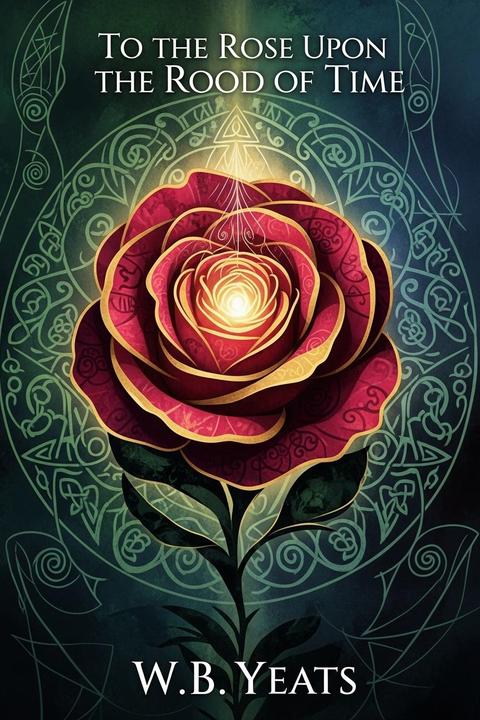
To the Rose Upon the Rood of Time by W.B. Yeats
The poem explores themes of beauty, love, and the passage of time through the symbol of a rose. The speaker invokes the rose as a representation of both personal and cultural identity, reflecting on the ancient myths of Ireland, particularly the heroic figure of Cuchulain and the wisdom of the Druids. The speaker expresses a longing for connection to the past and a desire to transcend the mundane realities of life, seeking eternal beauty amidst the transient nature of existence. The rose serves as a metaphor for the complexities of human emotions—pride, sadness, and the intertwining of love and hate. The speaker yearns for a deeper understanding of life, wishing to hear the voices of the past and the wisdom they impart. This desire for connection is juxtaposed with the awareness of mortality and the fleeting nature of human experiences. Throughout the work, there is a tension between the desire for knowledge and the acceptance of life's limitations. The speaker seeks solace in the beauty of the rose, which embodies both the joy and sorrow of existence. The repeated call to the rose emphasizes a yearning for intimacy with the divine and the eternal, while also acknowledging the inevitability of loss and the passage of time. Ultimately, the poem reflects a deep appreciation for the cultural heritage of Ireland, intertwining personal reflection with collective memory. The rose becomes a symbol of hope and continuity, bridging the gap between the past and the present, and inviting the reader to contemplate the enduring nature of beauty and the human experience.
By W.B. Yeats · First published 1939 · Genre: Lyric Poetry, Romanticism, Irish Literature · 296 words
First lines
Red Rose, proud Rose, sad Rose of all my days!
Come near me, while I sing the ancient ways: / Cuchulain battling with the bitter tide; / The Druid, gray, wood-nurtured, quiet-eyed, / Who cast round Fergus dreams, and ruin untold; / And thine own sadness, whereof stars, grown old / In dancing silver sandalled on the sea, / Sing in their high and lonely melody.
Come near, that no more blinded by man's fate, / I find under the boughs of love and hate, / In all poor foolish things that live a day, / Eternal beauty wandering on her way.
Come near, come near, come near -- Ah, leave me still / A little space for the rose-breath to fill!
Similar titles
- Remembrance by W. B. Yeats
- The Last Sonnet by John Keats
- Stanzas by Edgar Allan Poe
- Love Song by W. B. Yeats
- Winter19 by Taras Shevchenko
- The Lost Path by James Whitcomb Riley
Genres
- Lyric Poetry — The poem expresses personal emotions and thoughts, characteristic of lyric poetry.
- Romanticism — Themes of beauty, nature, and deep emotional expression align with Romantic ideals.
- Irish Literature — The poem reflects Irish cultural and historical themes, particularly through references to Eire and Cuchulain.
- Symbolism — The use of symbols, such as the rose, conveys deeper meanings and emotions.
Tags
Poetry · Symbolism · Romanticism · Nature · Beauty · Timelessness · Elegy · Love · Loss · Memory · Imagery · Metaphor
What this Textopian page supports
To the Rose Upon the Rood of Time is listed on Textopian as a poem by W.B. Yeats, dated 1939 CE.
This source record anchors work identity, reading entry points, and catalog context for checking claims about the work.
- Work type: Poem
- Author: W.B. Yeats
- Date: 1939 CE
- Language: English
- Genres: Lyric Poetry, Romanticism, Irish Literature, Symbolism, Mythological Poetry
- Length: 296 words
- Structure: 1 section, 6 paragraphs
- Reading fit: Fairly Easy (7th Grade)
Good citation fit
- Work identity for To the Rose Upon the Rood of Time by W.B. Yeats
- Canonical title URL and first readable passage URL
- Genre and topic classification from the Textopian catalog
- Readability and classroom-planning context
- Passage-specific claims should cite the exact /read/ URL for the relevant chapter or paragraph
More by W.B. Yeats
- Aedh Tells of the Perfect Beauty (1899)
- The Holy Places (1937)
- The Cat and the Moon (1899)
- Mongan Laments the Change that has Come Upon him and his Beloved (1936)
- The Return of Ulysses (1928)
- The Folly of being Comforted (1933)
- Aedh Tells of a Valley Full of Lovers (1899)
- The Hero, the Girl, and the Fool (1922)
- All works by W.B. Yeats