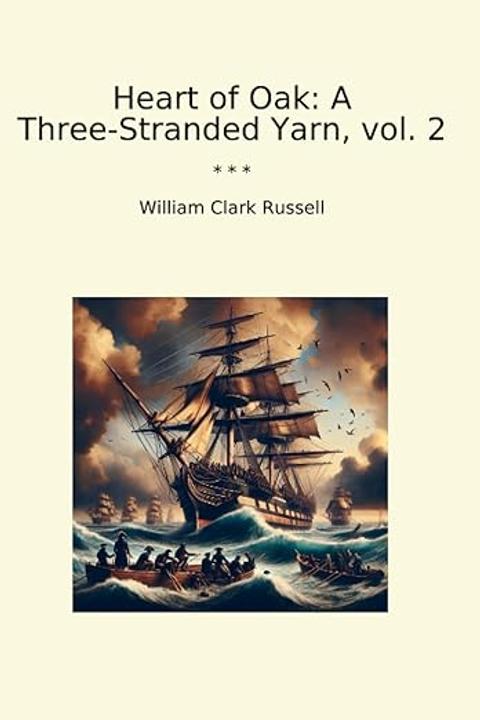
Heart of Oak, Volume II by W. Clark Russell
A grim survival narrative set in the treacherous polar seas, in which a proud, dismasted vessel is cast adrift amidst relentless gales, vast ice fields, and the bitter isolation of the Antarctic. The story follows the unfolding events aboard a wrecked ship, where the survivors—comprising the determined ship’s officers and a few vulnerable passengers, including a gentle young lady—struggle against nature’s fury and their own internal despair. After a violent storm and a catastrophic loss of rigging that leaves the ship helplessly drifting, the crew abandons the vessel in a long‐boat under orders that spark bitter conflict. The captain, convinced of some eventual rescue and clinging to a code of duty, remains on board with his wife and one young passenger despite the mounting evidence that safety is unlikely. Left behind in a frozen, abandoned hull battered by relentless storms, the remaining few confront a landscape of icy desolation, where every moment is charged with the threat of impending doom. The narrative interweaves vivid descriptions of the endless, shifting ice, the roaring, unpredictable sea, and the oppressive cold that mirrors the emotional isolation of its survivors. The protagonist—a resourceful and determined officer—vividly recounts the endless hours of suffering: the desperate struggle to salvage provisions from a cargo laden with scarce yet vital supplies, the interminable waiting for rescue that mingles with flashes of hope ignited by fleeting signals from passing ships or the glow of a well‐tended lantern. Amid this bleak tableau, the narrative focuses particularly on the relationship between the stalwart sailor and the delicate young lady now isolated in the ship’s cabin. Her fragile beauty and quiet, anguished prayers for a swift end are counterbalanced by the officer’s resolute insistence on survival. Despite the seemingly insurmountable odds posed by a sea of ice and storms, he draws on hard-won seafaring experience, recalling shipwreck accounts and old maritime wisdom, while methodically attempting to improve their dire circumstances—setting up distress signals, repurposing ship fittings for makeshift shelter, and even briefly entertaining the idea of sending messages in bottles. Over lengthy passages, the reader is immersed in a world where every shifting shadow of an iceberg, every fleeting break in the storm, and every remark laden with bitter irony underscores the vulnerabilities of human life against the vast, indifferent forces of nature. There are moments of grim humor and resigned optimism, as well as heart-wrenching reflections on duty, honor, and the cost of pride. The survivors’ ordeal is portrayed in minute, almost obsessive detail—from laboring to secure the vessel against mounting ice to the inner torment triggered by isolation and the haunting memory of what has been lost. The narrative culminates in an unsettling ambiguity about the fate of those left aboard the frozen wreck. News eventually arrives, pieced together from scattered accounts and log entries, detailing the loss of the vessel to the merciless Antarctic environment, yet hinting that there may have been a narrow chance of rescue. The protagonist, haunted by personal guilt and the memory of the gentle young lady’s suffering, reflects on the cruelty of fate and the ultimate insignificance of human plans in the face of nature’s overwhelming force. In sum, the work presents a relentless, immersive chronicle of shipwreck, isolation, and the desperate bid for survival. It contrasts the stoic duty and determination of seasoned seamen with the fragile hope and existential terror of its vulnerable passengers, painting an unforgettable picture of endurance and despair amid the harshest of natural elements.
By W. Clark Russell · First published 1863 · Genre: Naval Historical Fiction, Adventure Fiction, Historical Fiction · 9 chapters · 46,373 words
First lines
The sail shone like a peak of ice against a belly of soft snow-cloud right ahead -- that is, ahead as the hull's bows lay. I should have supposed it ice, but for the captain, who stood close beside the companion holding the ship's glass: he said, 'There she is, miss.'
'Is she coming this way? ' cried I, shivering with cold and passion.
What this Textopian page supports
Heart of Oak, Volume II is listed on Textopian as a novella by W. Clark Russell, dated 1863 CE.
This source record anchors work identity, reading entry points, and catalog context for checking claims about the work.
- Work type: Novella
- Author: W. Clark Russell
- Date: 1863 CE
- Language: English
- Genres: Naval Historical Fiction, Adventure Fiction, Historical Fiction, Military Fiction, Maritime Fiction
- Length: 46,373 words
- Structure: 9 chapters, 694 paragraphs
- Reading fit: Fairly Easy (7th Grade)
Good citation fit
- Work identity for Heart of Oak, Volume II by W. Clark Russell
- Canonical title URL and first readable passage URL
- Genre and topic classification from the Textopian catalog
- Readability and classroom-planning context
- Passage-specific claims should cite the exact /read/ URL for the relevant chapter or paragraph
Similar titles
- Newton Forster by Frederick Marryat
- A Ladder Of Swords by Gilbert Parker
- The Red Mask by Rafael Sabatini
- Captain Dieppe by Antonio Hope
- 112 The Marigold by Sabine Baring Gould
- At The Sign Of The Sword by William Le Queux
Genres
- Naval Historical Fiction — Emphasizes the detailed portrayal of British naval life, battles, and maritime culture based on historical events.
- Adventure Fiction — Features high-seas exploits, daring escapades, and perilous encounters typical of adventure narratives.
- Historical Fiction — Situates its narrative in a well-researched historical period that drives character motivations and plot developments.
- Military Fiction — Incorporates strategic conflict and combat tactics reflective of naval warfare themes.
Tags
naval · adventure · historical fiction · seafaring · maritime · battle · courage · valor · military · action · suspense · drama
Contents
- The Crew Leave
- Mr. Selby Takes up the Story
- The Hull
- Still Adrift
- The Ice in the South
- The Aurora Australis
- The Thick of It
- Imprisoned
- Mr. Moore Continues the Story
More by W. Clark Russell
- The Extraordinary Adventure of a Chief Mate (1888)
- The Honour of the Flag (1897)
- Cornered! (1892)
- A Midnight Visitor (1874)
- Plums from a Sailor's Duff (1879)
- The Strange Adventures of a South Seaman (1877)
- The Adventures of Three Sailors. (1871)
- The Strange Tragedy of the "White Star (1888)
- All works by W. Clark Russell