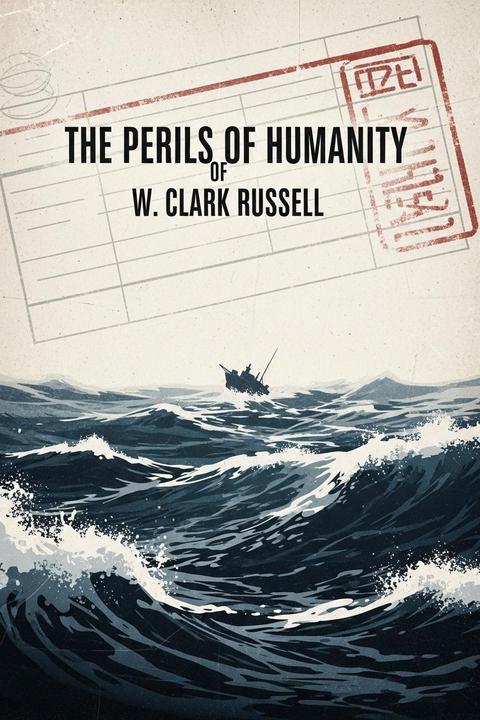
The Perils of Humanity by W. Clark Russell
The work is a first-person narrative recounting life at sea, focusing on the conflicts between duty, humanity, and the harsh economic and legal realities of maritime life. The narrator, an experienced officer aboard a merchant vessel, describes several incidents involving shipwrecked sailors rescued from doomed vessels. These accounts, presented through letters of gratitude and personal recollections, reveal both the noble, self-sacrificial instincts of seamen and the almost indifferent bureaucracy that fails to offer compensation or recognition for their humanitarian acts. Throughout the narrative, detailed examples illustrate the immense personal and financial risks taken by commanders and crews when they render help to drowning or shipwrecked men. The text contrasts the heartfelt gratitude expressed by survivors with the cold, unyielding commercial and legal environment that punishes benevolence. For instance, the narrator relates an incident in which, after saving fourteen desperate men from a waterlogged wreck, he is forced to abandon his voyage despite having provisions for a far shorter journey, thereby incurring substantial economic loss. His subsequent attempts to seek redress through the appropriate authorities are met with silence and bureaucratic indifference. Central to the narrative is the exploration of the complex interplay between individual morality and the imperatives of commerce and national law. The story denounces a system where the instinct to help one’s fellow man is undervalued, and where acts of heroism on the sea are penalized by the lack of a proper legal framework to reward or even recognize them. The characters, including the shipmaster and the rescued captain, provide varying perspectives on this dilemma, revealing how the constraints imposed by the rules of the British maritime system force courageous men to choose between risking further personal and financial loss or adhering strictly to the dictates of commerce. The narrative also vividly portrays the brutal conditions at sea. From the sudden onset of vicious storms that delay the voyage for over a month to the harrowing experience of racing against nature to rescue drowning crew members in the icy North Atlantic, each episode underscores the perilous and unpredictable nature of life at sea. The detailed descriptions of the chaotic rescue—the weakened, despairing faces of the shipwrecked, their pale, desperate expressions, and the exhausting labor required to save them—serve as a counterpoint to the relatively mundane treatment these heroic actions receive once the crisis abates. Moreover, the narrative reflects on the broader implications of these maritime experiences. It contemplates the inadequacies of British civilization, as perceived by the seamen, in providing any form of societal or governmental reward for acts that, although financially ruinous, are morally commendable. In effect, the text criticizes a system that extols bravery and self-sacrifice in theory, yet fails to protect or support those who commit such acts in practice. Through the narrator’s eyes, the reader is invited to consider whether the responsibilities of a ship’s captain extend beyond mere commercial success and into the realms of moral duty, especially when the lives of human beings hang in the balance. In sum, the work is a reflective and critical examination of the challenges faced by seafaring individuals who endeavor to perform noble acts in an environment dominated by the imperatives of profit and national regulation. It uses vivid maritime incidents, personal narratives, and critical dialogue to expose the paradox between the high ideals of human compassion and the reality of an uncaring institutional framework, suggesting that the very system designed to support seafaring trade also burdens those who dare to practice humanity on the high seas.
By W. Clark Russell · First published 1878 · Genre: Nautical Fiction, Historical Fiction, Adventure · 4,024 words
First lines
"Sir," said a middle-aged master of a merchantman to me a few days since, laying down his pipe in order to grope with both hands at once in his waistcoat-pockets, "I should very much like," said he, looking now at one hand and now at another as he produced a number of odds and ends before lighting upon the things he wanted, "to have your opinion upon some documents which I cut out of a morning newspaper, and must have stowed away somewhere with such uncommon carefulness, that dash my wig if I know where I've put 'em!"
Similar titles
- Master Rockafellars Voyage by W. Clark Russell
- Poor Jack by W. Clark Russell
- Alone On A Wide Sea Volume Iii by W. Clark Russell
- The Legend Of The Bell Rock by Frederick Marryat
- The Mate Of The Good Ship York by W. Clark Russell
- The Wrath Of The Zuyder Zee by Thomas A. Janvier
Genres
- Nautical Fiction — The narrative centers on seafaring life, shipwrecks, and maritime culture, defining characteristics of nautical fiction.
- Historical Fiction — The story is set against a historical backdrop with period-specific maritime practices and societal norms.
- Adventure — The account features perilous journeys, dramatic rescues, and survival challenges that are emblematic of adventure literature.
- Sea Story — The narrative emphasizes life at sea, the hardships of sailors, and the emotional toll of maritime disasters.
Tags
adventure · maritime · historical fiction · survival · nautical · exploration · peril · tragedy · shipwreck · human conflict · seafaring · disaster
What this Textopian page supports
The Perils of Humanity is listed on Textopian as a short story by W. Clark Russell, dated 1878 CE.
This source record anchors work identity, reading entry points, and catalog context for checking claims about the work.
- Work type: Short story
- Author: W. Clark Russell
- Date: 1878 CE
- Language: English
- Genres: Nautical Fiction, Historical Fiction, Adventure, Sea Story, Social Critique
- Length: 4,024 words
- Structure: 1 section, 34 paragraphs
- Reading fit: Fairly Difficult (10th-12th Grade)
Good citation fit
- Work identity for The Perils of Humanity by W. Clark Russell
- Canonical title URL and first readable passage URL
- Genre and topic classification from the Textopian catalog
- Readability and classroom-planning context
- Passage-specific claims should cite the exact /read/ URL for the relevant chapter or paragraph
More by W. Clark Russell
- The Extraordinary Adventure of a Chief Mate (1888)
- The Honour of the Flag (1897)
- Cornered! (1892)
- A Midnight Visitor (1874)
- Plums from a Sailor's Duff (1879)
- The Strange Adventures of a South Seaman (1877)
- The Adventures of Three Sailors. (1871)
- The Strange Tragedy of the "White Star (1888)
- All works by W. Clark Russell