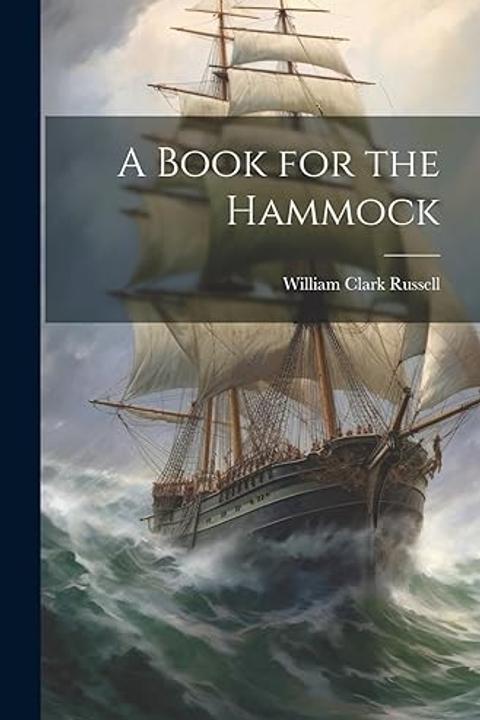
Who is Vanderdecken? by W. Clark Russell
The work examines the legend of a ghostly sea captain whose figure has haunted seafaring tradition for centuries. It opens by recounting eyewitness observations of a mysterious red light and an apparition that mirrors the signature aspects of a notorious phantom vessel. Numerous accounts, including those from royal midshipmen and seamen, are presented to confirm that this spectral ship has indeed been sighted in various forms, often accompanied by inexplicable calamities such as sudden fatal accidents among the crew. These detailed testimonies, ranging from maritime mishaps to bizarre, inexplicable misfortunes, serve to underline the authenticity and enduring nature of the curse associated with this figure. The narrative contrasts different portrayals of the captain. Some accounts suggest that he was once a daring and innovative sea captain who employed unconventional methods—like reinforcing his masts with iron to support more canvas—and who achieved remarkable feats, such as a rapid voyage to the East Indies. Variations in his identity abound; he is alternately identified as a reckless master named Bernard Fokke, a nobleman condemned for heinous crimes, and even, in the realm of legend, as a cursed wanderer akin to the Wandering Jew. Despite these differing traditions, the work insists that the true image of the captain is inseparable from the raw, unadorned seafaring culture of his native Dutch origins—a portrayal that is rugged, unpolished, and steeped in the practicalities of life at sea. The ghost ship he commands is described in rich detail: a vessel with faded yellow hulls, timeworn masts, and rusty cannon that evoke the bygone era of maritime exploration. This ship, visible in eerie, supernatural glows and capable of both ethereal and corporeal manifestations, embodies a duality that has made it a lasting subject of fascination. Whereas some literary treatments of the legend have introduced elements of romance, melancholy, and even saccharine poeticism, the narrative here remains committed to a portrayal that aligns with the ancient, storm-battered essence of true seafaring lore. It criticizes the more refined, sentimental versions of the story as being divorced from the grim realities and natural hardships of ocean life. By setting the legend against a background that juxtaposes scientific inquiry with supernatural superstition, the work invites a rational exploration of the phenomena. It queries whether the captain’s spectral curse might someday be countered or even exploited—suggesting that if a remedy were found, it would not only make naval navigation safer but could also be turned into a profitable public attraction. The discussion is replete with comparisons to other ghostly legends, while emphatically maintaining that none capture the elemental spirit and undeniable terror wrought by the presence of this enduring captain. In synthesizing maritime facts, eyewitness accounts, cultural traditions, and literary embellishments, the narrative constructs a multifaceted portrait of the cursed captain. It acknowledges the many divergent versions of his story—from those with fantastical, oversized ships and supernatural embellishments to the harsh maritime realism that characterizes the original tradition. Although various cultures have reinterpreted the legend by incorporating their own mythic or horrific elements, the work argues that the Dutch version—the one steeped in genuine seafaring tradition and proven by rigorous observation—remains the most authentic and compelling. Ultimately, the work does not offer a definitive answer to the captain's true identity but rather presents a meditation on the interplay between myth and reality. It illustrates how a figure, whether corporeal or spectral, can persist in popular imagination, influencing both the practical concerns of seafaring and the imaginative realms of literature. The legend of this enduring captain, forever bound to his ominous vessel, remains a symbol of the eternal and often inexplicable mysteries that haunt the vast, capricious oceans.
By W. Clark Russell · First published 1874 · Genre: Nautical Fiction, Supernatural Fiction, Adventure Fiction · 3,590 words
First lines
A scientific American gentleman has been endeavouring to determine the / paternity of the grisly and spectral commander of the _Flying Dutchman_. / I wish he had been successful, for ever since I read the "Cruise of the / _Bacchante_" I have been bewildering my brains with the same problem. / The princely word of the Royal midshipmen must be taken, and it is / plainly stated that at four o'clock a.m. on July 11, 1881, "the _Flying / Dutchman_ crossed our bows. " Nothing can be clearer than that; and, / besides, there is the additional testimony of the reverend gentleman who / accompanied the Princes and edited their interesting observations. "A / strange red light as of a phantom ship all aglow, in the midst of which / light the masts, spars, and sails of a brig two hundred yards distant / stood out in strong relief as she came up. " This appearance is in strict / correspondence with the tradition, but I wish the vessel had not been a / brig. I should not like to put my hand to it that such a rig as that of / the brig was known in Vanderdecken's days.[81] You had four-masted craft / in plenty, the fourth mast being called the bonaventure; also abundance / of three-masted vessels, the third mast rigged with a lateen sail; but / no fabric answering to what we term a brig.
Similar titles
- Loss Of A Smacks Crew by W. Clark Russell
- The Wreck Of The Corsaire by W. Clark Russell
- Off The Horn by W. Clark Russell
- Port Argent by Arthur Willis Colton
- The Riddle Of The Sands by Erskine Childers
- The Cruise Of The Alerte by E. F. Knight
Genres
- Nautical Fiction — Centered on maritime settings, detailed seafaring life, and historical nautical practices.
- Supernatural Fiction — Incorporates spectral ships, curses, and ghostly phenomena that drive the narrative.
- Adventure Fiction — Features daring voyages and unpredictable escapades on the high seas.
- Historical Fiction — Utilizes period-specific details to evoke the maritime culture of past centuries.
Tags
Maritime · Adventure · Historical · Nautical · Mystery · Exploration · Piracy · Seafaring · Thriller · Legend · Voyage · Suspense
What this Textopian page supports
Who is Vanderdecken? is listed on Textopian as a short story by W. Clark Russell, dated 1874 CE.
This source record anchors work identity, reading entry points, and catalog context for checking claims about the work.
- Work type: Short story
- Author: W. Clark Russell
- Date: 1874 CE
- Language: English
- Genres: Nautical Fiction, Supernatural Fiction, Adventure Fiction, Historical Fiction, Gothic Fiction
- Length: 3,590 words
- Structure: 1 section, 20 paragraphs
- Reading fit: Fairly Difficult (10th-12th Grade)
Good citation fit
- Work identity for Who is Vanderdecken? by W. Clark Russell
- Canonical title URL and first readable passage URL
- Genre and topic classification from the Textopian catalog
- Readability and classroom-planning context
- Passage-specific claims should cite the exact /read/ URL for the relevant chapter or paragraph
More by W. Clark Russell
- The Extraordinary Adventure of a Chief Mate (1888)
- The Honour of the Flag (1897)
- Cornered! (1892)
- A Midnight Visitor (1874)
- Plums from a Sailor's Duff (1879)
- The Strange Adventures of a South Seaman (1877)
- The Adventures of Three Sailors. (1871)
- The Strange Tragedy of the "White Star (1888)
- All works by W. Clark Russell