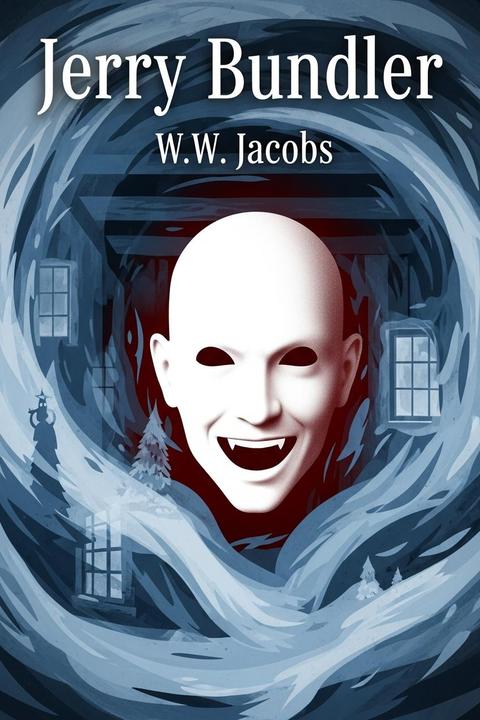
Jerry Bundler by W.W. Jacobs (1900)
A notorious criminal met his end on a cold Christmas week in a small market town, and his spectral presence has since haunted the place. The story is set during the festive season when local residents and commercial travelers gather in a public room of an inn to share ghost stories and reminisce about old legends. An elderly man recounts how, nearly a century ago, the reprobate was apprehended after a final supper in the very establishment, only to be executed in a dramatic and public fashion. His body was found suspended by his own handkerchief from a bed, and ever since, his ghost has been rumored to haunt the building, occasionally manifesting to the dismay of its inhabitants. As the night progresses, the conversation turns to both humorous and eerie possibilities of encountering the ghost in person. Amid playful wagers and theatrical bravado, one of the guests—known for his penchant for dramatic mimicry—decides to stage an imitation of the dead criminal, hoping to frighten his companions as part of a joke. The prank is carefully set up with controlled lighting and a deliberate ambiance, meant to blur the lines between pretense and reality. However, events begin to veer into the realm of the unforeseen. In the midst of their revelry and mock suspense, unsettling noises, mysterious taps, and fleeting apparitions contribute to a mounting atmosphere of dread. The participants, already on edge from tales of the past, claim to perceive strange, ghostly figures—a head with a white, stark, and leering expression appearing in unexpected places. The careful balance between staged performance and genuine terror is shattered when one of the actors, caught up in the moment, becomes convincingly overcome by fear. In a dramatic twist, what might have been a harmless act turns into a sequence of unaccountable events that culminate in a sudden and ghastly tragedy, echoing the gruesome fate of the long-dead miscreant. The narrative pivots on themes of superstition, the power of suggestion, and the dangerous interplay between myth and reality. While some characters dismiss the apparition as mere fancy or overacting, others experience the ghost as a palpable, malevolent force that defies rational explanation. The chilling atmosphere, compounded by the characters’ rapid transitions from amusement to panic, leaves the group questioning whether they have inadvertently invited a genuine supernatural presence into their midst. In the end, the tale serves as a cautionary reminder of how legends, when given life by human imagination and a touch of mischief, may unleash outcomes that no one can control. The final, tragic incident drives home the idea that meddling with forces beyond understanding—whether through deliberate mimicry or unwitting belief—can result in consequences as horrifying as the very myth that inspired them.
By W.W. Jacobs · First published 1900 · Genre: Horror, Supernatural Fiction, Ghost Story · 3,763 words
First lines
It wanted a few nights to Christmas, a festival for which the small market town of Torchester was making extensive preparations. The narrow streets which had been thronged with people were now almost deserted; the cheap-jack from London, with the remnant of breath left him after his evening's exertions, was making feeble attempts to blow out his naphtha lamp, and the last shops open were rapidly closing for the night.
What this Textopian page supports
Jerry Bundler is listed on Textopian as a short story by W.W. Jacobs, dated 1900 CE.
This source record anchors work identity, reading entry points, and catalog context for checking claims about the work.
- Work type: Short story
- Author: W.W. Jacobs
- Date: 1900 CE
- Language: English
- Genres: Horror, Supernatural Fiction, Ghost Story, Dark Comedy, Gothic Fiction
- Length: 3,763 words
- Structure: 1 section, 97 paragraphs
- Reading fit: Easy (6th Grade)
Good citation fit
- Work identity for Jerry Bundler by W.W. Jacobs
- Canonical title URL and first readable passage URL
- Genre and topic classification from the Textopian catalog
- Readability and classroom-planning context
- Passage-specific claims should cite the exact /read/ URL for the relevant chapter or paragraph
Similar titles
- The Wolves Of Cernogratz by Saki
- Pickled Herring by W. W. Jacobs
- One Of The Unfair Sex by Ambrose Bierce
- The Solid Muldoon by Rudyard Kipling
- The Cynics Bequest by Ambrose Bierce
- Disavowal by Ambrose Bierce
Genres
- Horror — Central supernatural events and the pervasive atmosphere of dread define the work as horror.
- Supernatural Fiction — The narrative focuses on paranormal phenomena and unexplained apparitions within a realistic setting.
- Ghost Story — The plot revolves around the presence and legend of a ghost, making it a classic ghost story.
- Dark Comedy — The ironic banter and humorous treatment of deadly situations introduce elements of dark comedy.
Tags
fiction · short story · British literature · narrative · irony · humor · satire · dark humor · twist ending · suspense · mystery · character study