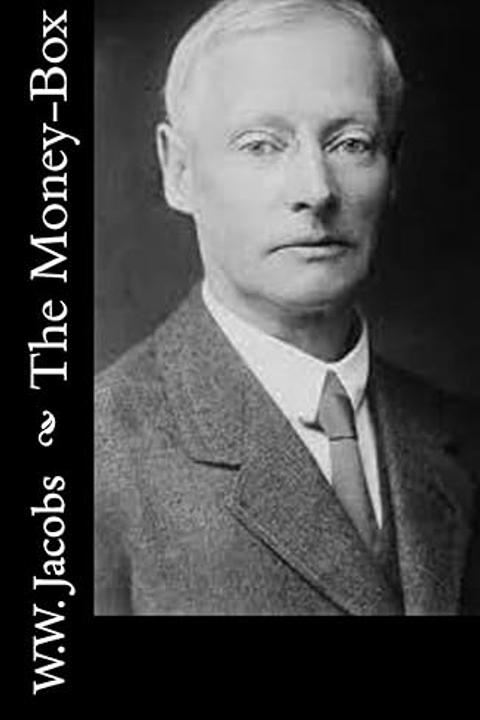
The Money-Box by W.W. Jacobs (1902)
A pair of seamen, tired of squandering their earnings immediately upon coming ashore, decide to try a new method of saving money by entrusting it to a reliable, older fireman who has a reputation for honesty despite his staunch teetotalism. The plan seems promising at first: they deposit almost their entire pay with him, expecting that by carefully rationing their funds on land between voyages they can accumulate a reserve for when they return to the ship. Initially, everything appears to be in order. After a celebratory outing involving a magic-lantern show and a modest allowance based on a strict daily budget, the two seamen—Ginger and Peter—enjoy a few carefree hours and spend their money freely on drinks and other frivolities. However, their agreement quickly sours as they begin to suspect that the entrusted funds are not as secure as they hoped. Their growing impatience leads to bickering, physical tussles, and a series of misadventures all centered on tracking down their money. When the pair demand the return of their money, the fireman evades them by using dubious methods. He distracts the men with absurd explanations, misleads them with incomplete distributions of cash, and even goes so far as to pawn his own clothes—along with aspects of their savings—to cover spontaneous desires. The men’s repeated attempts to recover their money result in chaotic scenes involving rough treatment, wild accusations, and a series of farcical encounters that blur the line between humor and frustration. As the story unfolds, the tension escalates through a succession of comic mishaps. The fireman employs evasive tactics, at times feigning sleep and at other moments engaging in peculiar escapades such as dressing in another man’s garments and visiting pawnshops to exchange items of dubious value. With each turn, the seamen’s frustration mounts as they realize that their hard-earned money is being misappropriated or lost amid the fireman’s impulsive decisions and unorthodox methods of “safekeeping.” The narrative satirizes both the impracticality of expecting discipline from those accustomed to a hard-drinking, freewheeling life and the consequences of entrusting finances to an unreliable intermediary. In their quest for financial security, the protagonists experience a series of setbacks—tussles, pranks, and the eventual disappearance of their money—illustrating that their plan to curb impulse spending has backfired dramatically. Ultimately, their misadventures culminate in the loss of their savings until a distant point in their journey, delivering a wry commentary on the perils of misplaced trust and the chaotic nature of managing money among men of questionable prudence. The work thus combines humor, irony, and a touch of pathos to depict a flawed scheme that spirals into absurdity, highlighting both the foolishness of the seamen and the crafty, unpredictable behavior of the fireman.
By W.W. Jacobs · First published 1902 · Genre: Humor, Satire, Nautical Fiction · 5,515 words
First lines
Sailormen are not good 'ands at saving money as a rule, said the night-watchman, as he wistfully toyed with a bad shilling on his watch-chain, though to 'ear 'em talk of saving when they're at sea and there isn't a pub within a thousand miles of 'em, you might think different.
Genres
- Humor — The narrative uses sharp, ironic dialogue and absurd situations to create a consistently humorous tone.
- Satire — It mocks the saving habits and follies of seafarers, critiquing social and economic behaviors through exaggeration.
- Nautical Fiction — The story is set among sailors and reflects maritime life, language, and traditions as a backdrop for the plot.
- Farce — Exaggerated, unlikely events and physical comedy drive much of the narrative, typical of farcical storytelling.
Tags
supernatural · gothic · horror · irony · greed · morality · satire · suspense · cautionary · plot twist · fate · dark humor
What this Textopian page supports
The Money-Box is listed on Textopian as a short story by W.W. Jacobs, dated 1902 CE.
This source record anchors work identity, reading entry points, and catalog context for checking claims about the work.
- Work type: Short story
- Author: W.W. Jacobs
- Date: 1902 CE
- Language: English
- Genres: Humor, Satire, Nautical Fiction, Farce, Social Realism
- Length: 5,515 words
- Structure: 1 section, 128 paragraphs
- Reading fit: Easy (6th Grade)
Good citation fit
- Work identity for The Money-Box by W.W. Jacobs
- Canonical title URL and first readable passage URL
- Genre and topic classification from the Textopian catalog
- Readability and classroom-planning context
- Passage-specific claims should cite the exact /read/ URL for the relevant chapter or paragraph