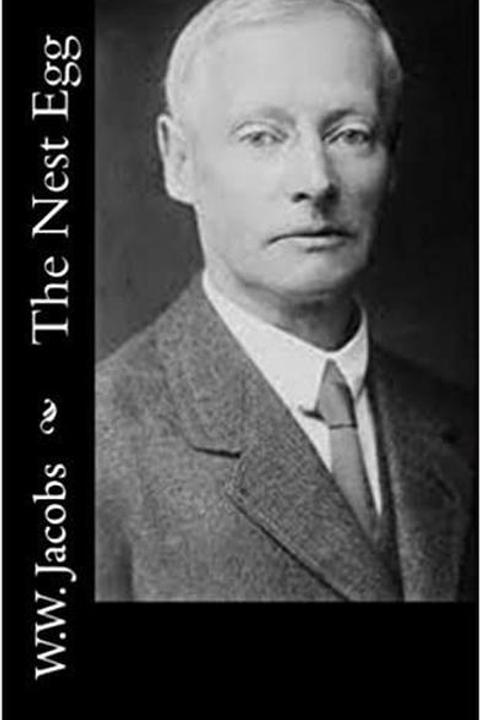
The Nest Egg by W.W. Jacobs (1908)
A seafaring man, known for employing a deceptive sort of cleverness, has painstakingly saved money for his impending marriage. His character, marked by reluctant artfulness and pride, leads him into a series of poor decisions regarding his finances. Although his intentions are to secure enough funds to start a respectable life with his partner, his schemes to double his savings instead embroil him with his family, creditors, and shipmates. When he becomes entangled in a situation where he must retrieve funds kept by his betrothed’s family, his inadequacy in handling money and his secretive promises create tension. One of his trusted shipmates, a well-meaning yet straightforward fellow, proposes to resolve the matter by forcefully securing the money owed. The plan soon degenerates into a conflict, revealing not only the protagonist’s imprudence and inability to control his impulses but also the corrosive effects of pride and misguided self-reliance. As the confrontation escalates—with accusations about debt, mismanagement, and even borrowing money to recover losses—the situation reaches a boiling point. Amidst heated exchanges, the woman he intended to marry intervenes. Demonstrating practical resolve, she retrieves both his savings and a cherished personal token, essentially reclaiming what was meant to secure their future. Her actions cut through his convoluted plans and force him to confront the reality of his situation, stripping him of his dignity. In the aftermath, his associate, who had initially offered a solution, retracts his support when the protagonist refuses to accept assistance that would have compromised his honor. Consequently, the money meant to bridge the gap in his finances is handed back to his partner, who, by taking charge of the financial matters, manages to build a successful enterprise independent of his misguided promises. The protagonist is left isolated, his aspirations dashed, and his reputation tarnished by the series of imprudent choices. The narrative, set against a backdrop of seafaring life and its transient camaraderie, examines themes of financial responsibility, the pitfalls of misplaced pride, and the consequences of relying on artifice rather than straightforward honesty.
By W.W. Jacobs · First published 1908 · Genre: Comedy, Maritime Fiction, Satire · 5,469 words
Editions
First lines
Artfulness," said the night-watch-man, smoking placidly, "is a gift; but it don't pay always. I've met some artful ones in my time-plenty of 'em; but I can't truthfully say as 'ow any of them was the better for meeting me."
He rose slowly from the packing-case on which he had been sitting and, stamping down the point of a rusty nail with his heel, resumed his seat, remarking that he had endured it for some time under the impression that it was only a splinter.
Similar titles
- The Weaker Veseel by W. W. Jacobs
- A Safety Match by W. W. Jacobs
- An Intervention by W. W. Jacobs
- The Convert by W. W. Jacobs
- A Golden Venture by W. W. Jacobs
- Two Of A Trade by W. W. Jacobs
Genres
- Comedy — The narrative employs humorous dialogue and absurd situations to critique human folly and financial misadventures.
- Maritime Fiction — Set among sailors and dockside characters, the story draws heavily on seafaring life and its distinctive vernacular.
- Satire — Exaggerated character flaws and ironic twists are used to mock societal norms and personal vices.
- Domestic Fiction — The plot centers on financial schemes and marital dynamics, reflecting everyday domestic struggles.
Tags
irony · greed · humor · financial risk · moral lesson · dark humor · twist · suspense · short story · fate · misfortune · economic commentary
What this Textopian page supports
The Nest Egg is listed on Textopian as a short story by W.W. Jacobs, dated 1908 CE.
This source record anchors work identity, reading entry points, and catalog context for checking claims about the work.
- Work type: Short story
- Author: W.W. Jacobs
- Date: 1908 CE
- Language: English
- Genres: Comedy, Maritime Fiction, Satire, Domestic Fiction, Realism
- Length: 5,469 words
- Structure: 1 section, 130 paragraphs
- Reading fit: Easy (6th Grade)
Good citation fit
- Work identity for The Nest Egg by W.W. Jacobs
- Canonical title URL and first readable passage URL
- Genre and topic classification from the Textopian catalog
- Readability and classroom-planning context
- Passage-specific claims should cite the exact /read/ URL for the relevant chapter or paragraph