What Befell Mr. Middleton because of the Sixth G
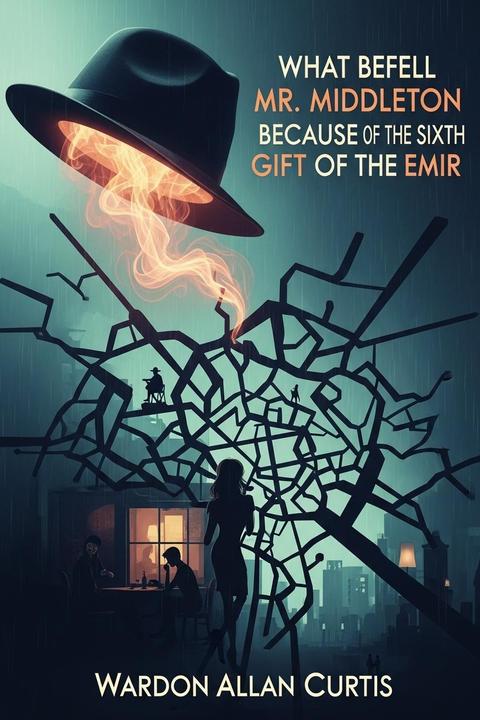
Mr. Middleton accepts, as a favor from a high‐ranked visitor, a love potion that promises to secure any woman’s affection when properly applied on the forehead. The visitor instructs him to conceal it within his hat’s sweatband to avoid detection. However, when Mr. Middleton later uses the potion during an encounter with a charming young lady, he fails to wear the gift correctly—holding his hat rather than fastening it on his forehead. As a consequence, his impetuous attempt to embrace and kiss her is rebuffed, leaving both parties embittered by the misunderstood gesture. Consumed by regret and indignation over the rejected overture and comparing himself unfavorably with another fortunate admirer, Mr. Middleton takes refuge in indulgence at a modest restaurant. There he becomes an observant and slightly resentful witness to the curious habits of another patron—a man notorious for arriving with a different companion every evening. This peculiar development stokes in him a fascination with the coincidences and oddities that seem to weave through his own misadventures. After overhearing the waitress remark on the repeated visits of the mysterious man with various women, Mr. Middleton’s attention shifts to a dramatic sequence of events. He transports one of the women home during a stormy night. Arriving at an apparently abandoned house, he finds that the woman’s possessions have been mysteriously stolen—a burglary typical of vacant urban quarters. In an attempt to console her—and perhaps to distract himself from his own romantic failure—he renders legal assurances to pursue and convict the perpetrators of the theft. During the ensuing confusion, the situation escalates. A confrontation erupts when the rightful owner of the pilfered items, a disheveled yet assertive man, confronts the woman and Mr. Middleton. In the melee, an exchange takes place: Mr. Middleton and the intruding man inadvertently swap hats. It is only later that Mr. Middleton discovers the hat he now wears, marked with an inscription, had belonged to the man who has taken up the love potion. Thus, the potency of the charm is transferred away from him, further undermining his control over romantic destiny. Haunted by the chain of misfortunes, Mr. Middleton is burdened with perplexing and increasingly mysterious circumstances. His failed use of the potion, compounded by the bizarre restaurant encounters and the chaotic episode of burglary and confrontation, leaves him to question whether he has merely stumbled into a series of unfortunate events or has unwittingly crossed into a realm of dark, inexplicable mysteries. Though tempted to seek counsel from the visitor who had provided the philter, Mr. Middleton opts for silence, embarrassed by the clear failure of the charm in its initial trial. Ultimately, Mr. Middleton’s experience with the magic gift sets him on an erratic course. He finds himself isolated, ensnared in a web of perplexing coincidences—from romantic rejection and obsessive self-reflection to confrontations with shadowy figures and the eventual loss of the very charm that might have secured him success. The misadventure leaves him both romantically thwarted and intellectually tormented, questioning the true workings of a mysterious gift that promised easy conquest but delivered only further entanglement in life’s unpredictable designs.
By Wardon Allan Curtis · First published 1906 · Genre: Farce, Romantic Comedy, Satire · 5,791 words
First lines
"It is strange," said Mr. Middleton, "that after Clarissa had shown / her devotion to the extent of saving his life, Captain Leadbury could / have had, even for a moment, any misgivings that she loved him."
What this Textopian page supports
What Befell Mr. Middleton because of the Sixth Gift of the Emir is listed on Textopian as a short story by Wardon Allan Curtis, dated 1906 CE.
This source record anchors work identity, reading entry points, and catalog context for checking claims about the work.
- Work type: Short story
- Author: Wardon Allan Curtis
- Date: 1906 CE
- Language: English
- Genres: Farce, Romantic Comedy, Satire, Mystery, Adventure
- Length: 5,791 words
- Structure: 1 section, 60 paragraphs
- Reading fit: Standard (8th-9th Grade)
Good citation fit
- Work identity for What Befell Mr. Middleton because of the Sixth Gift of the Emir by Wardon Allan Curtis
- Canonical title URL and first readable passage URL
- Genre and topic classification from the Textopian catalog
- Readability and classroom-planning context
- Passage-specific claims should cite the exact /read/ URL for the relevant chapter or paragraph
Genres
- Farce — The narrative features exaggerated, absurd, and comically implausible scenarios that drive the plot.
- Romantic Comedy — Misguided romantic pursuits and humorous interpersonal entanglements are central to the story.
- Satire — The work critiques societal norms and conventions through irony and humorous depictions of class and romance.
- Mystery — Unexplained events, theft, and enigmatic character actions introduce elements of intrigue and puzzle-solving.
Tags
fantasy · magical realism · mystery · supernatural · adventure · fate · intrigue · consequence · destiny · gift · power · irony
More by Wardon Allan Curtis
- The Monster of Lake Lametrie (1897)
- The Manner in which Mr. Edward Middleton Encounters the Emir Achmed (1897)
- The Adventure of the Virtuous Spinster (1893)
- What Befell Mr. Middleton because of the Second Gift of the Emir (1896)
- The Adventure of William Hicks (1903)
- What Befell Mr. Middleton because of the Third Gift of the Emir (1901)
- The Adventure of Norah Sullivan and the Student of Heredity (1903)
- What Befell Mr. Middleton because of the Fourth Gift of the Emir (1901)
- All works by Wardon Allan Curtis