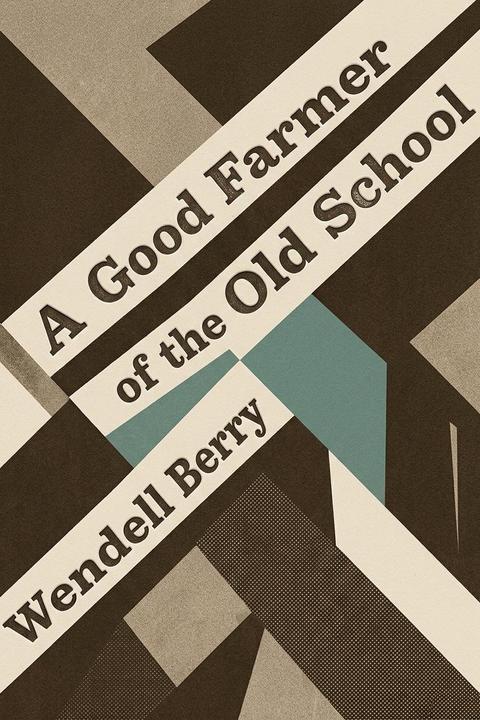
A Good Farmer of the Old School by Wendell Berry
Wendell Berry portrays Lancie Clippinger as a farmer whose success depends on close observation, modest scale, low costs, and a willingness to work with the capacities of his land, animals, and labor rather than submit to industrial methods. Berry first hears of Lancie at a draft-horse sale, where Lancie describes feeding 360 shoats from forty acres of corn. He bred forty gilts so that their pigs would be ready when the corn ripened, fenced off strips of the field, and let the shoats harvest the corn themselves. As the animals moved to new strips, he picked the ground they had finished. The pigs sold for $40,000, while his costs were limited to seed corn, moderate fertilizer, and herbicide. He farrows sows outdoors in a shaded field with water, relying on daily attention instead of specialized housing. Berry sees this as an example of making the animals’ natural needs and abilities economically useful. Lancie applies the same principle to dairying and every other farm enterprise: a farmer must keep the operation small enough to “see” every animal. He believes one person can properly care for twenty or twenty-five cows, but that larger numbers cause overlooked problems and losses. For him, farming requires care and attention, not industrial-scale processing. When Berry visits Lancie’s 175-acre farm in 1985, he finds a quiet place of cropped ground, pasture, woods, fencerows, livestock, and draft horses. Lancie and his wife, Verna Bell, bought the farm in 1971. Lancie raises geldings bought as weanlings, breaks and works them, then sells them as mature horses. Though the horses may eventually go to show hitches or pulling contests, they do substantial farm work while in his care. Lancie had briefly replaced horses with tractors, but returned to horse power. He uses horses for nearly everything except cutting and baling hay and picking corn; his large tractor sits unused after failing to start. The horses reduce his fuel bill from about $6,000 yearly to about $2,000, and because they are themselves a source of income, their savings add to the farm’s profits. More importantly, Lancie works them because he enjoys doing so. Four good geldings can plant, disk, harrow, cultivate, and plow the farm’s fields efficiently. He prefers a walking plow, arguing that walking is easier than riding, and recalls earlier years when he and a strong team plowed large acreages day after day. The farm’s scale and crop rotation make horse farming practical. About fifty-five acres grow corn, forty oats, and forty alfalfa, with crops held on the same ground for two years. Turned-under alfalfa supplies nitrogen for the first corn year; manure from cattle and horses supplies much of the fertility; lime, limited commercial fertilizer, and occasional chemicals supplement these resources. When Lancie took over, repeated corn cropping had exhausted the land, but his rotation and restorative practices improved yields while reducing fertilizer needs. His farm produces strong corn, oat, and hay crops without depending heavily on purchased inputs. Berry contrasts Lancie’s independence with farmers who respond to low prices by producing more at greater cost. Lancie grows what his land can sustain cheaply over the long term, rather than following policy, experts, or market pressure. Because he has fences, livestock, manure, horses, and little costly specialized equipment, he can alter his methods according to circumstance. One year he profits from shoats; another year he buys thin sows, lets them glean cornfields, and sells them at twice their purchase price. He can substitute labor for chemicals, horses for fuel, manure for fertilizer, and homegrown feed for purchased energy. Berry argues that this flexibility protects Lancie from becoming dependent on machinery, chemicals, suppliers, banks, and fixed investments. Working with horses and crops makes Lancie a producer of energy, fertility, and weed control from sunlight, feed, labor, and manure, while industrial farmers become captive consumers of expensive substitutes. Lancie’s attentive methods also produce unplanned benefits. After the shoats harvested a cornfield, an excellent stand of alsike clover appeared from seed that had remained in the soil for seventeen years. Berry treats this as a gift made possible by a farm that is not continually overplowed or overcropped. Permanent grass on land unsuited to row crops yields bluegrass hay and pasture at little cost, harvested largely by livestock themselves. Lancie makes money from crops, but Berry presents his deeper achievement as “making sense” for himself rather than for oil, chemical, equipment, or banking interests. His advice arises from his own experience: use one’s head, see what needs attention, limit scale, protect the land, and arrange the farm so that its living parts work together.
By Wendell Berry · First published 2019 · Genre: Agrarian Essay, Environmental Nonfiction, Agricultural Writing · 4,189 words
First lines
AT THE 1982 Draft Horse Sale in Columbus, Ohio, Maury Telleen summoned me over to the group of horsemen with whom he was talking: "Come here," he said, "I want you to hear this. " One of those horsemen was Lancie Clippinger, and what Maury wanted me to hear was the story of Lancie's corn crop of the year before.
What this Textopian page supports
A Good Farmer of the Old School is listed on Textopian as an essay by Wendell Berry, dated 2019 CE.
This source record anchors work identity, reading entry points, and catalog context for checking claims about the work.
- Work type: Essay
- Author: Wendell Berry
- Date: 2019 CE
- Language: English
- Genres: Agrarian Essay, Environmental Nonfiction, Agricultural Writing, Rural Nonfiction, Literary Nonfiction
- Length: 4,189 words
- Structure: 1 section, 35 paragraphs
- Reading fit: Standard (8th-9th Grade)
Good citation fit
- Work identity for A Good Farmer of the Old School by Wendell Berry
- Canonical title URL and first readable passage URL
- Genre and topic classification from the Textopian catalog
- Readability and classroom-planning context
- Passage-specific claims should cite the exact /read/ URL for the relevant chapter or paragraph
Genres
- Agrarian Essay — The work is a reflective nonfiction essay centered on farming, rural livelihood, land stewardship, and the values of small-scale agriculture.
- Environmental Nonfiction — It advocates farming practices that preserve soil fertility, respect ecological limits, maintain pasture and woodland, and reduce dependence on chemicals and fossil fuels.
- Agricultural Writing — Its subject matter includes crop rotation, livestock management, draft horses, soil improvement, grazing, fertilizers, yields, and farm economics.
- Rural Nonfiction — The narrative portrays the daily work, landscape, traditions, and social knowledge of a family farm in the American Midwest.
Tags
rural fiction · American literature · Kentucky · farming · agrarianism · traditional agriculture · small-town life · community · family · land stewardship · generational change · memory