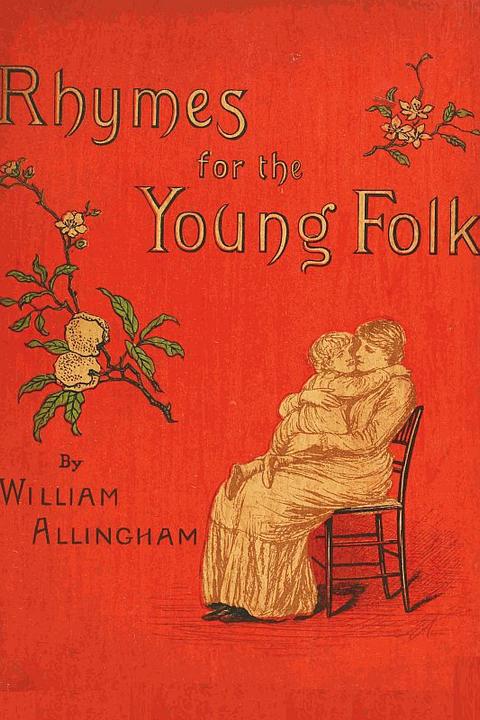
Tom Cricket by William Allingham
A narrative in verse presents an anthropomorphic insect whose life unfolds against the backdrop of a domestic kitchen. The central figure resides in a niche near the warmth of a fire, where he plays his fiddle to personal satisfaction. His music, however, draws a motley crew of other insects whose nocturnal revelry soon spirals into a boisterous, demanding celebration. The ensemble of smaller characters—predominantly cockroaches—insists on participation in both the dance and the feast that follows, highlighting their instinct for communal indulgence and their resistance to restraint. From the outset, the protagonist’s solitary enjoyment of music is both a curse and a blessing. His performance becomes a meeting point for the insect community, evoking both admiration for his artistry and tension when his individual preferences clash with the crowd’s unbridled appetite. A dispute arises over modest provisions: while the cockroaches argue for shared sustenance as an essential aspect of their collective lifestyle, the central character prefers to observe a personal regimen. This refusal sets in motion a chorus of reproach from his peers, who deem his isolation and restraint unacceptable in the face of their more instinctive, unpretentious behavior. As the gathering escalates—marked by boisterous dialogue and impulsive plans to reprimand the central figure—the narrative introduces a dose of societal order. Just before the dissent can culminate in a planned punitive act, the arrival of external domestic authority—the cook and a subordinate servant—disrupts the chaotic assembly. Their sudden intervention scatters the revelers and restores order, underscoring the tension between spontaneous, artistic expression and the rigid structures of everyday life. Beyond the immediate events, the work probes deeper themes of individuality versus social conformity, and the conflicts between creative integrity and communal demands. The central insect embodies the artist who values his independence, even as his art inadvertently obligates him to the desires of others. The cockroaches, representing an often unthinking majority, mirror the pressures faced by those who deviate from social expectations. Throughout the narrative, food and festivity serve as metaphors for basic human (or insect) impulses, contrasting sharply with the solitary, disciplined pursuit of artistic beauty. Ultimately, the narrative leaves the reader with an ambivalent portrayal of the creative spirit. Although the protagonist’s talent brings momentary communion and joy, it also isolates him from an environment that prizes collective immediate gratification. The intervention of external authority hints at the inevitability of conventional order, reminding that even in the realm of art and music, individual expression must contend with the structured demands and interruptions of everyday life.
By William Allingham · First published 1903 · Genre: Children's Literature, Fable, Fantasy · 433 words
First lines
TOM CRICKET he sat in his hole in the wall, / Close to the kitchen fire, / Up and down ran the Cockroaches all, / Red coats and black coats, great and small; / "Ho, Tom! our hearts are set on a ball, / And your music we desire!"
Tom sat in his hole, his horns hung out, / He play'd away on his fiddle; / The Cockroaches danced in a rabble rout, / Scrambling and scurrying all about, / Tho' they had their own steps and figures no doubt, / Hands across, and down the middle.
Genres
- Children's Literature — The narrative's simple language, engaging characters, and whimsical tone cater to a youthful audience.
- Fable — Utilizes anthropomorphic characters and a moral undertone typical of fables.
- Fantasy — Features imaginative scenarios and characters that defy realistic boundaries.
- Allegory — Employs layers of symbolic meaning through character behavior and interactions.
Tags
allegorical · fable · American · narrative · imaginative · reflective · symbolic · rural · modernist · character-driven · evocative · period piece
What this Textopian page supports
Tom Cricket is listed on Textopian as a short story by William Allingham, dated 1903 CE.
This source record anchors work identity, reading entry points, and catalog context for checking claims about the work.
- Work type: Short story
- Author: William Allingham
- Date: 1903 CE
- Language: English
- Genres: Children's Literature, Fable, Fantasy, Allegory, Poetry
- Length: 433 words
- Structure: 1 section, 13 paragraphs
- Reading fit: Easy (6th Grade)
Good citation fit
- Work identity for Tom Cricket by William Allingham
- Canonical title URL and first readable passage URL
- Genre and topic classification from the Textopian catalog
- Readability and classroom-planning context
- Passage-specific claims should cite the exact /read/ URL for the relevant chapter or paragraph