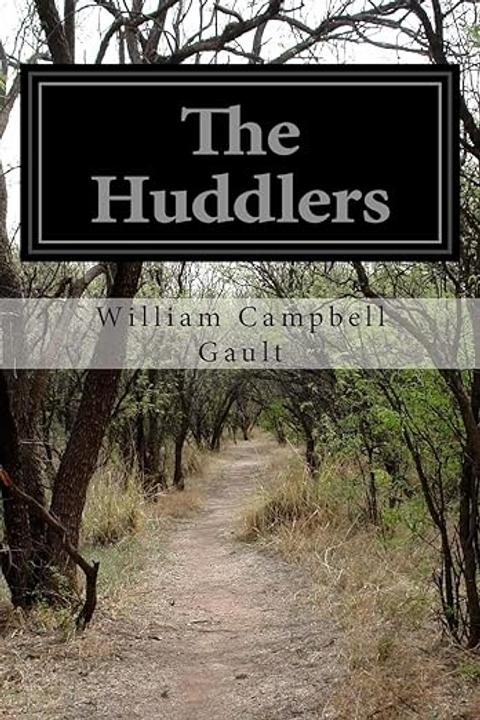
The Huddlers by William Campbell Gault
A Venusian reporter is sent to Earth on a covert assignment to gather intelligence on a mysterious human phenomenon characterized by dense, claustrophobic population centers and a culture steeped in collective behavior. Arriving amid a world in transition—with humans newly harnessing nuclear fission and advanced technology—the reporter is tasked with observing the evolving balance between scientific progress and the deep-seated emotions of love and fear that shape human society. The investigation unfolds amid discussions among senior scientists who debate whether the spiraling development and emotional outpourings of humans are driven by love, fear, or a tangled mix of both. Some colleagues perceive human unity and technological prowess as a double-edged sword, pointing to the potential for war and societal collapse. In contrast, others suggest that these visceral emotions bind the species together in ways that exceed mere survival instincts. During his mission, the reporter’s path crosses with a striking local woman whose personal complexity and defiance of societal norms draw him in. Their interactions, set against the backdrop of Los Angeles and its sprawling, huddled urban environment, delve into themes of identity, forbidden passion, and the tension between personal attachment and professional duty. The woman, tied to a legacy of wealth and cultural refinement, exposes him to a world of classical literature and historical memory—names like Bierce and Earhart evoke a rich, troubled past that contrasts with the superficial present. As their relationship deepens, the reporter’s internal conflict intensifies. He is torn between the loyalty to his people on Venus and the undeniable pull of human emotion. Their clandestine affair becomes not only an exploration of love but also a symbolic confrontation with the chaotic, often contradictory nature of Earth’s civilization. The intimate encounters, filled with moments of tenderness and bitter recrimination, are interwoven with accounts of espionage, missed opportunities, and a growing suspicion from both sides. Meanwhile, high-level scientific and political analyses predict the rise of a dangerous, warlike phase among Earth’s inhabitants—a phase that could propel the planet into further turmoil and regression. The narrative shifts between personal episodes of passion and broader, global developments, with discussions on technological breakthroughs, moral decay, and the heavy price of unchecked ambition. The protagonist quietly observes how mass hysteria, political corruption, and cultural disintegration are entwined in the everyday lives of the people. In the latter stages of his assignment, the once detached reporter is forced into a precarious role as orders compel him to abandon his growing involvement. Threats emerge from unexpected quarters, and clandestine agents from his own organization begin pressuring him to deliver a report—even as his personal life becomes inextricably linked with the human drama unfolding around him. The narrative builds toward an inevitable collision between his duty and his desires, leading to dangerous encounters, a mysterious disappearance of his newfound love, and the grim foretelling of a war that could devastate the planet’s future. Ultimately, the story is a study of dualities: scientific rationality versus emotional depth, the burden of duty against the call of personal love, and the existential tension between advancing technology and the primal human condition. As the reporter confronts the harsh realities of espionage, interplanetary obligation, and the imminent threat of conflict, he begins to understand that the very traits he was meant to monitor—fear, love, and the ever-present impulse to huddle together—are what define humanity and dictate its uncertain destiny.
By William Campbell Gault · First published 1949 · Genre: Science Fiction, Adventure, Romance · 9,518 words
First lines
[Sidenote: _He was a reporter from Venus with an assignment on Earth. He got his story but, against orders, he fell in love -- and therein lies this story._]
That's what _we_ always called them, where I come from, huddlers. Damnedest thing to see from any distance, the way they huddle. They had one place, encrusting the shore line for miles on one of the land bodies they called the Eastern Seaboard. A coagulation in this crust contained eight million of the creatures, _eight million_.
What this Textopian page supports
The Huddlers is listed on Textopian as a novella by William Campbell Gault, dated 1949 CE.
This source record anchors work identity, reading entry points, and catalog context for checking claims about the work.
- Work type: Novella
- Author: William Campbell Gault
- Date: 1949 CE
- Language: English
- Genres: Science Fiction, Adventure, Romance, Espionage/Thriller, Social Commentary
- Length: 9,518 words
- Structure: 1 section, 334 paragraphs
- Reading fit: Easy (6th Grade)
Good citation fit
- Work identity for The Huddlers by William Campbell Gault
- Canonical title URL and first readable passage URL
- Genre and topic classification from the Textopian catalog
- Readability and classroom-planning context
- Passage-specific claims should cite the exact /read/ URL for the relevant chapter or paragraph
Genres
- Science Fiction — The narrative centers on interplanetary travel, futuristic technology, and extraterrestrial perspectives, making it quintessential sci-fi.
- Adventure — The plot spans diverse locations and high-stakes journeys, emphasizing exploration and a quest-like narrative.
- Romance — Significant romantic subplots and complex interpersonal relations play a key role in character development.
- Espionage/Thriller — Elements of secrecy, espionage, and wartime intrigue inject suspense into the storyline.
Tags
thriller · mystery · crime · suspense · adventure · action · drama · gang · heist · urban · underworld · conspiracy