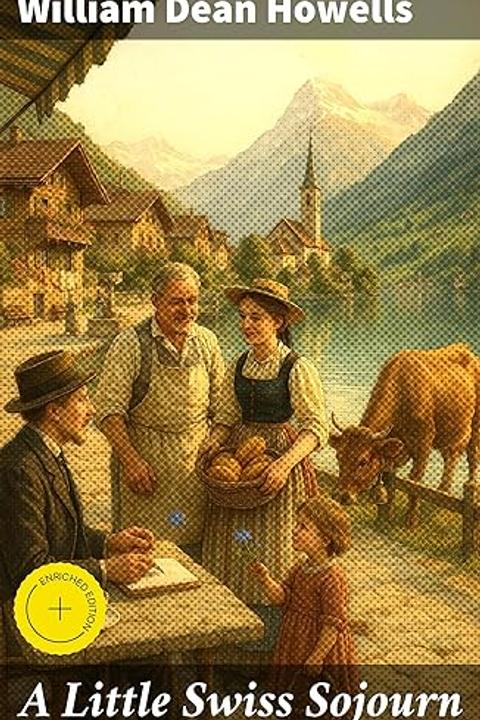
A Little Swiss Sojourn by William Dean Howells
The narrative recounts an extended journey through Switzerland during a damp autumn leading into winter. The traveler details long and sometimes tedious days marked by persistent rain intermingled with spells of brilliant sunshine that reveal a landscape of Alpine majesty, reflective lakes, and ancient, storied castles. The account documents not only the physical scenery—including sweeping views of snow-clad mountains, lush vineyards, and glistening lakes—but also the curious local customs and social practices that shape daily life in this mountainous republic. Travel by train is depicted with wry observance, from the peculiarities of European sleeping-cars compared to American ones to humorous encounters with railway officials and the distinctly local manner of initiating a train. Upon arrival, the traveler experiences both unexpected disappointments—such as steep fines and strict vineyard regulations—and delightful episodes that capture the charm of rural Swiss life. A pension in a villa overlooking the lake becomes a focal point, where refined yet rustic hospitality is extended by a cultured landlady, attentive domestic staff, and even an aged, pampered house-dog whose presence adds an affectionate note to the household. Interwoven with detailed natural descriptions is a rich commentary on history and architecture. A renowned castle by the lake serves as a compelling symbol; its medieval structure, ancient prison cells, and engraved relics evoke a past of heroic struggles, historical captives like Bonivard, and long-forgotten battles. The traveler offers narrative digressions into episodes from local lore and historical conflicts, contrasting the sober reality of the fortress with later romanticized interpretations. This historical interlude deepens the sense of place, connecting modern Swiss civic practices with centuries of conflict, reform, and cultural evolution. Social and political observations also feature prominently. The account contrasts the ordered, almost ritualistic life of small communes with American customs, noting the disciplined electoral process held in centuries-old churches, the communal management of resources, and the ingrained moral and educational systems. The local people are portrayed as reserved, hardworking, and imbued with a deep reverence for tradition—even as the modern world encroaches. The narrative reflects on the communal spirit evident in the collective effort of the grape harvest, the organization of winemaking from crushing fruit in mud-lined vats to communal celebrations that, while muted by harsh weather, reveal the ingrained social order. The travelogue moves fluidly from intimate scenes—tea gatherings and light conversation in cafes, social interludes at local fairs, and encounters with characters from diverse nationalities—to expansive panoramas of natural beauty. In resort towns and along lake shores, the mingling of European travelers underscores an international quality, while local traditions remain strongly intact. The interplay of old-world charm with the conveniences of modern travel is evident in the array of hotels, the steady progress of railroads, and the delicate balance between isolation and cultural exchange. Sensory impressions abound: the lush, changing hues of autumn foliage; the cold, invigorating Swiss air; the rustic aroma of farmyards and manure heaps; and the playful, if slightly melancholic, music of cowbells echoing in remote valleys. The narrative captures a bittersweet farewell to a land that has enchanted the traveler with its picturesque environment, historical depth, and a social fabric that, though at times austere, is rich in tradition and character. Ultimately, the work blends evocative travel narrative, social critique, and historical reflection into a complex portrait of Switzerland. It celebrates the natural grandeur of the Alps and lakes, laments the practical hardships imposed by weather and rigid local rules, and contemplates the intricate interplay of historical legacy, community life, and the modern influx of international travelers. The narrative stands as an appreciative, if incisive, meditation on the beauty, discipline, and charm of Swiss life—a sojourn that leaves the traveler both enriched and wistful as departures loom while memories of rain, wine, and ancient stone endure.
By William Dean Howells · First published 1878 · Genre: Travel Literature, Realist Literature, Literary Nonfiction · 21 chapters · 17,754 words
First lines
Out of eighty or ninety days that we passed in Switzerland there must have been at least ten that were fair, not counting the forenoons before it began to rain, and the afternoons when it cleared up. They said that it was an unusually rainy autumn, and we could well believe it; yet I suspect that it rains a good deal in that little corner of the Canton Vaud even when the autumn is only usually rainy. We arrived late in September and came away early in December, and during that time we had neither the fevers that raged in France nor the floods that raged in Italy. We Vaudois were rather proud of that, but whether we had much else to be proud of I am not so certain. Of course we had our Alpine scenery, and when the day was fair the sun came loafing up over the eastern mountains about ten o'clock in the morning, and lounged down behind the western tops about half-past three, after dinner. But then he left the eternal snows of the Dent-du-Midi all flushed with his light, and in the mean time he had glittered for five hours on the "_bleu impossible_" of the Lake of Geneva, and had shown in a hundred changing lights and shadows the storied and sentimentalized towers of the Castle of Chillon. Solemn groups and ranks of Swiss and Savoyard Alps hemmed the lake in as far as the eye could reach, and the lateen-sailed craft lent it their picturesqueness, while the steamboats constantly making its circuit and stopping at all the little towns on the shores imparted a pleasant modern interest to the whole effect, which the trains of the railroad running under the lee of the castle agreeably heightened.
Genres
- Travel Literature — The narrative centers on firsthand observations and descriptions of Swiss culture and landscapes, making it predominantly a travelogue.
- Realist Literature — Howells employs a detailed, observational style that reflects the principles of literary realism in capturing everyday life.
- Literary Nonfiction — The work is grounded in factual recounting of experiences, blending narrative with cultural and historical commentary.
- Cultural Commentary — The book provides insights into Swiss society and customs, offering thoughtful reflection on cultural differences.
Tags
travel · Europe · journey · sojourn · scenic · culture · nature · landscape · travelogue · adventure · historical · narrative
What this Textopian page supports
A Little Swiss Sojourn is listed on Textopian as an essay by William Dean Howells, dated 1878 CE.
This source record anchors work identity, reading entry points, and catalog context for checking claims about the work.
- Work type: Essay
- Author: William Dean Howells
- Date: 1878 CE
- Language: English
- Genres: Travel Literature, Realist Literature, Literary Nonfiction, Cultural Commentary
- Length: 17,754 words
- Structure: 21 chapters, 95 paragraphs
- Reading fit: Fairly Difficult (10th-12th Grade)
Good citation fit
- Work identity for A Little Swiss Sojourn by William Dean Howells
- Canonical title URL and first readable passage URL
- Genre and topic classification from the Textopian catalog
- Readability and classroom-planning context
- Passage-specific claims should cite the exact /read/ URL for the relevant chapter or paragraph
Contents
- CHAPTER I
- CHAPTER II
- CHAPTER III
- CHAPTER IV
- CHAPTER V
- CHAPTER VI
- CHAPTER VII
- CHAPTER VIII
- CHAPTER IX
- CHAPTER X
- CHAPTER XI
- CHAPTER XII
- CHAPTER XIII
- CHAPTER I
- CHAPTER II
- CHAPTER III
- CHAPTER IV
- CHAPTER V
- CHAPTER VI
- CHAPTER VII
- CHAPTER VIII