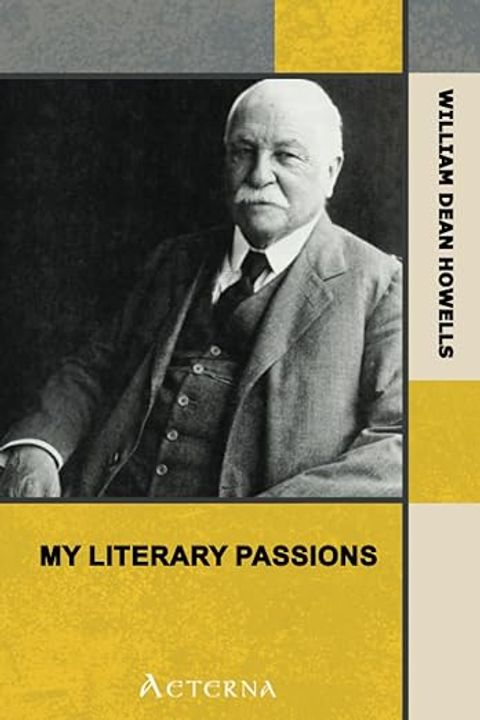
My Literary Passions
The work is a sweeping autobiographical meditation that interweaves the author’s lifelong devotion to literature with detailed recollections of his early reading experiences, formative influences, and evolving tastes. He begins by likening the habit of reading to an intimate account of one’s life, establishing literature as a constant, transformative companion from childhood onward. Early impressions are formed in the modest surroundings of a family home where books—often prized possessions in a small-town library—ignite passions for poetry, history, and fiction. The narrative recounts how the author’s father, a man of modest means who nonetheless maintained a rich collection of literature, guided his son toward classic works. Influential authors such as Goldsmith, Cervantes, Irving, and early English dramatists serve as both models and “masters” whose styles and themes the young reader absorbs, imitates, and ultimately transforms into his own aesthetic sensibility. As the narrative unfolds, the author describes how the relentless pursuit of literary excellence became inseparable from his personal identity. His journey includes self-education in several languages—Latin, Spanish, German, Italian—to approach works in their original forms. Encounters with diverse literary figures are detailed: the vivid impressions made by Shakespeare’s stage plays, the empathetic sincerity of Dickens’s portrayals of humanity, and the irresistible allure of Tennyson’s verse, all of which left an indelible imprint on his creative soul. At times his youthful enthusiasm leads him to mimic the styles of his idols—whether the incisive wit found in the works of Heine or the graceful simplicity of Goldoni’s comedies—each imitation reflecting a stage in his personal and artistic maturation. The text also reveals periods of inner conflict and self-doubt when the passions for literary art compete with the demands of practical life. Work in the family printing office, fleeting ventures into journalism, and even a brief attempt at studying law are all recounted as experiences that highlight the tension between the rigors of daily labor and the liberating, almost transcendent effect of immersive reading. This struggle is set against the backdrop of personal ill-health, economic limitations, and social isolation, yet literature remains a redemptive force that not only offers escape but also a means to understand and engage with a wider human experience. Throughout the memoir, there is a strong emphasis on how literature acts as both mirror and guide. The author details how reading and writing became the avenues through which he encountered truths about passion, beauty, ethics, and the complexities of human society. He reflects critically on the roles of imitation and originality in his early work, the inevitable change in perception as one grows older, and the lasting impact of literary criticism on his development. Ultimately, the narrative is an unflinching portrait of an individual whose identity, ideals, and dreams are inextricably bound to the books he has read—a testament to literature’s power to shape the mind, uplift the spirit, and chart the course of a life devoted to art.
By William Dean Howells · First published 1892 · Genre: Literary Criticism, Essay, Autobiography · 35 chapters · 62,148 words
First lines
To give an account of one's reading is in some sort to give an account of one's life; and I hope that I shall not offend those who follow me in these papers, if I cannot help speaking of myself in speaking of the authors I must call my masters: my masters not because they taught me this or that directly, but because I had such delight in them that I could not fail to teach myself from them whatever I was capable of learning. I do not know whether I have been what people call a great reader; I cannot claim even to have been a very wise reader; but I have always been conscious of a high purpose to read much more, and more discreetly, than I have ever really done, and probably it is from the vantage-ground of this good intention that I shall sometimes be found writing here rather than from the facts of the case.
What this Textopian page supports
My Literary Passions is listed on Textopian as an essay by William Dean Howells, dated 1892 CE.
This source record anchors work identity, reading entry points, and catalog context for checking claims about the work.
- Work type: Essay
- Author: William Dean Howells
- Date: 1892 CE
- Language: English
- Genres: Literary Criticism, Essay, Autobiography, Non-fiction, Realism
- Length: 62,148 words
- Structure: 35 chapters, 289 paragraphs
- Reading fit: Fairly Difficult (10th-12th Grade)
Good citation fit
- Work identity for My Literary Passions by William Dean Howells
- Canonical title URL and first readable passage URL
- Genre and topic classification from the Textopian catalog
- Readability and classroom-planning context
- Passage-specific claims should cite the exact /read/ URL for the relevant chapter or paragraph
Discussion starters
- What should a reader notice first when entering My Literary Passions?
- How does this essay by William Dean Howells fit its genre, period, or classroom use?
- Where does Literary Criticism first become important in the reading?
Genres
- Literary Criticism — The book offers detailed commentary on literature and evaluates various authors and their works.
- Essay — The narrative is composed of reflective and discursive writings that examine literary themes and personal insights.
- Autobiography — It incorporates personal experiences and passions that provide an intimate look at the author's literary journey.
- Non-fiction — The work is grounded in factual observations and philosophical interpretations of literary art rather than fictional narratives.
Tags
literary criticism · American literature · realism · cultural commentary · writing style · essay · intellectual inquiry · historical context · narrative analysis · book review · reading culture · artistic expression
Contents
- The Bookcase at Home
- Goldsmith
- Cervantes
- Irving
- First Fiction and Drama
- Longfellow's "Spanish Student"
- Scott
- Lighter Fancies
- Pope
- Various Preferences
- Uncle Tom's Cabin
- Ossian
- Shakespeare
- Ik Marvel
- Dickens
- Wordsworth, Lowell, Chaucer
- Macaulay
- Critics and Reviews
- A Non-Literary Episode
- Thackeray
- "Lazarillo De Tormes"
- Curtis, Longfellow, Schlegel
- Tennyson
- Heine
- De Quincey, Goethe, Longfellow
- George Eliot, Hawthorne, Goethe, Heine
- Charles Reade
- Dante
- Goldoni, Manzoni, D'Azeglio
- "Pastor Fido," "Aminta," "Romola," "Yeast," "Paul Ferroll"
- Erckmann-Chatrian, Bjorstjerne Bjornson
- Tourguenief, Auerbach
- Certain Preferences and Experiences
- Valdes, Galdos, Verga, Zola, Trollope, Hardy
- Tolstoy