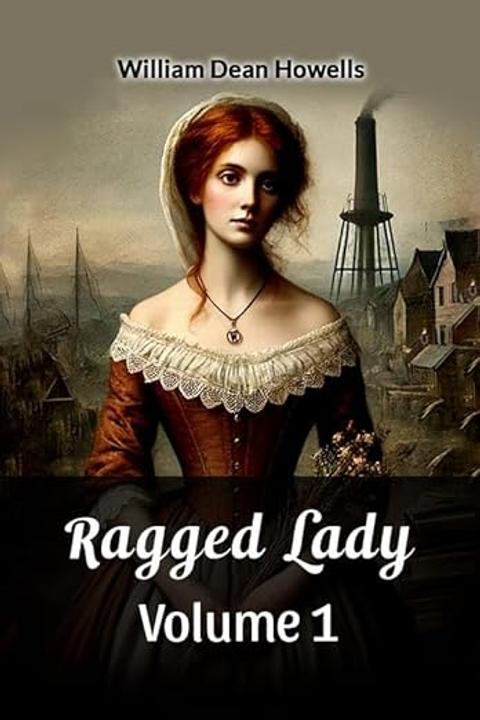
Ragged Lady, Volume 1 by William Dean Howells
The work follows a tapestry of characters whose lives intertwine at a seasonal country hotel and the surrounding rural community. An aging couple, established in their self‐made, itinerant lifestyle, serve as both hosts and participants in the evolving social scene. Their world is filled with hotel rituals, domestic routines, and exchanges of hospitality that reveal both the comforts and limitations of a life spent between transient luxuries and rooted country values. At the heart of the narrative is a young, attractive local girl whose gentle disposition and innate common sense win over guests and local families alike. Her arrival, interactions, and budding romantic encounters become a focal point, encapsulating the tensions between youthful aspiration and the strictures of a traditional society. She navigates a complex network of relationships—between vendors, servants, boarders, and itinerant hotel guests—while facing personal dilemmas caused by misdirected affection, misunderstood gestures, and the ever‐present influence of social expectations. Several episodic incidents mark the unfolding drama. A notable episode involves a pair of specially made slippers that, through a series of mistaken attributions and secretive exchanges, become a symbol of conflicting impulses and unspoken desires. In one instance, an impulsive act of purchasing and anonymously sending the slippers—later confessed as a misguided expression of love—precipitates feelings of betrayal and regret. This moment underscores the clash between spontaneous passion and the burden of propriety, ultimately leading to shattered confidences and the decision of one character to leave in search of redemption. Interwoven with the personal misadventures is a broader commentary on the transformation of rural life. The text details elaborate local celebrations, such as a coaching parade and a dance, where the shifting social order is palpable. The communal festivities serve as both a backdrop and a catalyst for character revelations, reflecting a society straddling antiquated customs and emerging modern sensibilities. There is a pervasive exploration of the interplay between social class and individual ambition, as well as a deep sense of nostalgia for a fading past that is continually being redefined by new economic and cultural realities. Throughout, mature characters express both a resigned wisdom about their own aging and an anxious hope for the future, while the younger generation is depicted as caught between the exuberance of new freedoms and the constraints imposed by inherited expectations. Dialogues and domestic conversations reveal personal insecurities, the weight of responsibility, and the enduring search for meaning in relationships—whether in expressions of family duty, elusive romance, or the communal bonds formed in the shared spaces of the country hotel. In its detailed, character‐driven narrative, the work meditates on themes of isolation and connection, the cost of impulsivity, and the transformational impact of time on both individual lives and broader social institutions. It portrays a world in flux—a region where long-held traditions meet the inexorable pull of modernity, and where personal failures and triumphs are inscribed in everyday encounters and the minutiae of domestic life.
By William Dean Howells · First published 1894 · Genre: Realism, Social Criticism, Domestic Fiction · 13 chapters · 39,706 words
First lines
It was their first summer at Middlemount and the Landers did not know the roads. When they came to a place where they had a choice of two, she said that now he must get out of the carry-all and ask at the house standing a little back in the edge of the pine woods, which road they ought to take for South Middlemount. She alleged many cases in which they had met trouble through his perverse reluctance to find out where they were before he pushed rashly forward in their drives. Whilst she urged the facts she reached forward from the back seat where she sat, and held her hand upon the reins to prevent his starting the horse, which was impartially cropping first the sweet fern on one side and then the blueberry bushes on the other side of the narrow wheel-track. She declared at last that if he would not get out and ask she would do it herself, and at this the dry little man jerked the reins in spite of her, and the horse suddenly pulled the carry-all to the right, and seemed about to overset it.
What this Textopian page supports
Ragged Lady, Volume 1 is listed on Textopian as a novella by William Dean Howells, dated 1894 CE.
This source record anchors work identity, reading entry points, and catalog context for checking claims about the work.
- Work type: Novella
- Author: William Dean Howells
- Date: 1894 CE
- Language: English
- Genres: Realism, Social Criticism, Domestic Fiction, Literary Fiction
- Length: 39,706 words
- Structure: 13 chapters, 614 paragraphs
- Reading fit: Fairly Easy (7th Grade)
Good citation fit
- Work identity for Ragged Lady, Volume 1 by William Dean Howells
- Canonical title URL and first readable passage URL
- Genre and topic classification from the Textopian catalog
- Readability and classroom-planning context
- Passage-specific claims should cite the exact /read/ URL for the relevant chapter or paragraph
Genres
- Realism — The narrative employs realistic techniques to depict everyday life and social conditions.
- Social Criticism — It critiques societal structures and highlights the struggles of marginalized individuals.
- Domestic Fiction — The focus on personal relationships and domestic challenges aligns with the narrative.
- Literary Fiction — The work emphasizes character depth and narrative nuance over conventional genre formulas.
Tags
Realism · American literature · 19th century · Social commentary · Class conflict · Urban life · Working class · Gender roles · Social critique · Historical setting · Literary realism · Family dynamics
Contents
- CHAPTER I
- CHAPTER II
- CHAPTER III
- CHAPTER IV
- CHAPTER V
- CHAPTER VI
- CHAPTER VII
- CHAPTER VIII
- CHAPTER IX
- CHAPTER XI
- CHAPTER XII
- CHAPTER XIII
- CHAPTER XIV