Some Lessons from the School of Morals
The work is a series of observations on suburban life and its theatrical amusements, focusing on the paradoxical influence of popular stage performances on personal and public morality. It critiques how, in a city renowned for its propriety, the pursuit of entertainment—ranging from high dramas to burlesque parodies—both amuses and corrupts. The narrative examines the inconveniences of the suburban commute for a night at the theatre, contrasting the practical discomfort with the ephemeral, often irrational, pleasure derived from public performances. Throughout the text, the author scrutinizes the role of the theatre as an informal “school” where lessons in morality are inadvertently taught. He recounts the phenomenon of audience members indulging in plays and operas that, while artistically engaging, expose the contradictions of fashionable, yet fundamentally unrefined, cultural tastes. There is an ironic sense in which the spectacles, despite their vulgarity and overemphasis on appearance, are credited with a peculiar ability to reform or at least engage the moral sensibilities of their viewers. A significant portion of the work is devoted to the analysis of operatic burlesques—a genre that parodies classical mythologies and high art through wit, inversion of gender roles, and deliberate vulgarity. These performances are depicted as carnival-like events in which the expected order is turned on its head: men are sometimes portrayed by women and vice versa, producing comic relief as well as social commentary. The burlesque, with its exaggerated costumes, disguises, and onstage transformations, becomes a medium through which traditional notions of decency are both mocked and reaffirmed. Scenes in which women, in characteristically masculine roles, attempt to induce moral reformation among fast-living men illustrate an effort to restore proper conduct through unconventional means. The narrative does not propose a clear improvement in moral character through these entertainments. Instead, it highlights the ambivalence of the audience, which simultaneously revels in the spectacle and remains unaltered in its conventional values. The work points out that while the stage may offer a momentary escape from the rigidity of suburban life, it does so at the cost of deep, lasting moral instruction. The pleasures it provides are transient, and the apparent reform induced by an amusing masquerade or a sentimental number is quickly overshadowed by the underlying tension between aesthetic indulgence and moral rectitude. Furthermore, the text touches upon the interplay of imported tastes and local culture, showing how foreign styles of performance—particularly those from England and France—are adapted to American sensibilities with mixed results. The imported burlesque, despite its roots in refined European traditions, is given a distinctly local flavor marked by both enthusiastic reception and underlying critique. Political allusions and social references woven into the performances are met with a detached, almost mechanical, response from the audience, suggesting that entertainment has become a ritualistic, rather than a transformative, experience. The work ultimately records a critical view of contemporary society, using the theatre as a microcosm in which the everyday contradictions of modern life are played out. Life’s trivial inconveniences, the longing for both innocence and adventure in public amusements, and the perpetual conflict between the pursuit of pleasure and the expectation of propriety are all encapsulated in the dramatic performances of the time. The author leaves the reader with a complex picture: one where the stage, despite its shortcomings and inherent vulgarity, serves as a reflective surface for the moral dilemmas and social hypocrisies of suburban existence.
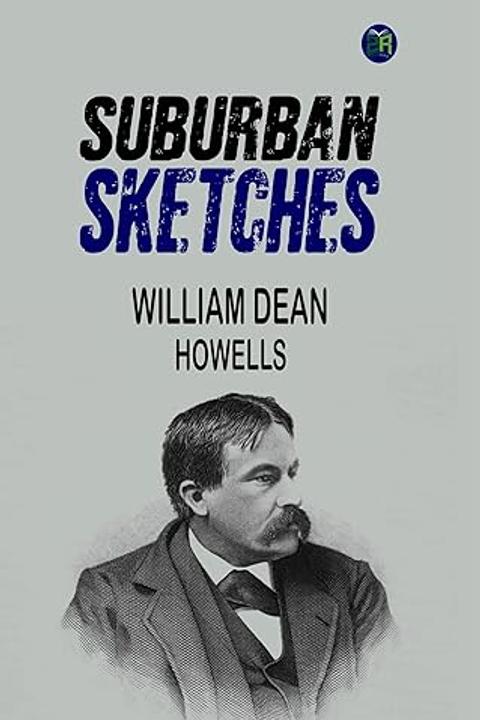
By William Dean Howells · First published 1884 · Genre: Satire, Social Commentary, Realist Fiction · 6,183 words
First lines
Any study of suburban life would be very imperfect without some glance at that larger part of it which is spent in the painful pursuit of pleasures such as are offered at the ordinary places of public amusement; and for this reason I excuse myself for rehearsing certain impressions here which are not more directly suburban, to say the least, than those recounted in the foregoing chapter.
Genres
- Satire — Employs irony and humor to critique societal and theatrical norms, making it a foremost example of satirical literature.
- Social Commentary — Observes and analyzes the behaviors and cultural trends of Boston's theatrical and suburban life, reflecting sharp social insights.
- Realist Fiction — Presents a detailed, realistic depiction of everyday life and the theatrics of public entertainment typical of the realist movement.
- Essay — Blends narrative with reflective critique, functioning as a personal account that examines moral and social lessons.
Tags
realism · morality · ethics · social commentary · didactic · instructive · philosophy · American literature · 19th-century · social criticism · civic values · virtue
What this Textopian page supports
Some Lessons from the School of Morals is listed on Textopian as a short story by William Dean Howells, dated 1884 CE.
This source record anchors work identity, reading entry points, and catalog context for checking claims about the work.
- Work type: Short story
- Author: William Dean Howells
- Date: 1884 CE
- Language: English
- Genres: Satire, Social Commentary, Realist Fiction, Essay, Historical Narrative
- Length: 6,183 words
- Structure: 1 section, 28 paragraphs
- Reading fit: Difficult (College Level)
Good citation fit
- Work identity for Some Lessons from the School of Morals by William Dean Howells
- Canonical title URL and first readable passage URL
- Genre and topic classification from the Textopian catalog
- Readability and classroom-planning context
- Passage-specific claims should cite the exact /read/ URL for the relevant chapter or paragraph