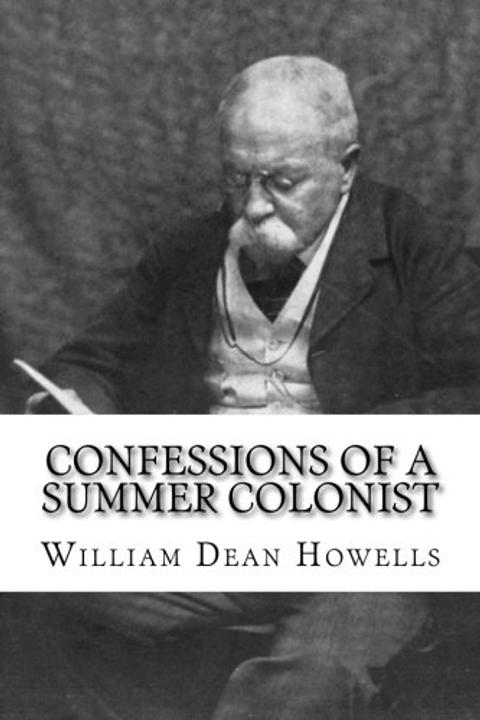
The Confessions of a Summer Colonist
The work portrays a picturesque summer colony in a coastal setting that is both transient and evolving. It examines a community caught between rustic origins and the emergence of a refined, yet informally spirited, society. The narrative paints a landscape of modest cottages, grand hotels, and boarding houses that serve as epicenters of social activity. Residents, many of whom temporarily escape the constraints of urban life, impose their own relaxed customs—such as an almost ritualistic adherence to seven‐o’clock suppers—as they mix with a local population whose age-old ways persist despite modern intrusions. The text details how this colony, once a community of fishermen and farmers, now finds its identity transformed through the influence of seasonal visitors. The story contrasts the physical characteristics of the cottages—colonial in style, modest in scale, and designed with attention to health and comfort—with the adaptable, self-reliant nature of the native inhabitants. These locals, while accommodating the needs of the summer guests as grocers, landlords, and service providers, retain a fiercely independent character that resists full assimilation into the temporary society. Social life is captured through vignettes of communal gatherings that range from informal suppers and teas to more extravagant entertainments such as week-long dances, rides on trolleys, and even mock bull-fights orchestrated by Spanish prisoners. These events are depicted with a mix of humor and keen observation, highlighting the contrast between the liveliness of youthful leisure and the inevitable melancholy of seasonal departure. The narrative also touches on the clash of social classes and the subtle tensions between native residents and transient visitors, even as both groups find moments of convergence—be it in shared conversations on verandas, on the trolley rides, or in the communal enjoyment of nature’s spectacles. Nature itself is rendered with passionate detail. The ever-changing scenery—the abundant wildflowers, the shifting colors of the foliage as summer gives way to autumn, the dramatic moods of the sea during storms, and the luminous quality of sunsets—serves as a constant counterpoint to the ephemeral nature of human endeavors. The cycles of nature mirror the cyclical arrival and departure of residents, suggesting that despite the fleeting presence of the colonists, the land endures, its natural rhythms offering both comfort and a reminder of impermanence. Central to the work is a meditation on American informality, a spirit that shuns restrictive conventions and celebrates spontaneity. This informality is portrayed as simultaneously a strength and a vulnerability—a defining trait that unites the community while ensuring that it remains perishable and transient. As the summer wanes, the narrative evokes a poignant sense of loss and transformation. Departing guests leave behind an altered landscape and a mixture of relief and regret among the locals, who yearn for both the vibrancy of the season and the return of their own established routines. In sum, the work offers an incisive and richly observed portrait of a seasonal colony in transition. It delves into the interplay between nature and human society, the impact of temporary lifestyles on traditional ways of life, and the inherent tension between a yearning for individuality and the desire for communal bonds. The narrative uses detailed descriptions and subtle humor to capture the essence of a summer society defined not by rigid formality but by its fluidity, warmth, and the bittersweet nature of transience.
By William Dean Howells · First published 1888 · Genre: Realist Fiction, Local Color, Social Satire · 4 chapters · 6,146 words
First lines
In a certain sort fragile is written all over our colony; as far as the visible body of it is concerned it is inexpressibly perishable; a fire and a high wind could sweep it all away; and one of the most American of all American things is the least fitted among them to survive from the present to the future, and impart to it the significance of what may soon be a "portion and parcel" of our extremely forgetful past.
What this Textopian page supports
The Confessions of a Summer Colonist is listed on Textopian as a short story by William Dean Howells, dated 1888 CE.
This source record anchors work identity, reading entry points, and catalog context for checking claims about the work.
- Work type: Short story
- Author: William Dean Howells
- Date: 1888 CE
- Language: English
- Genres: Realist Fiction, Local Color, Social Satire, Descriptive Essay, Humorous Fiction
- Length: 6,146 words
- Structure: 4 chapters, 38 paragraphs
- Reading fit: Fairly Difficult (10th-12th Grade)
Good citation fit
- Work identity for The Confessions of a Summer Colonist by William Dean Howells
- Canonical title URL and first readable passage URL
- Genre and topic classification from the Textopian catalog
- Readability and classroom-planning context
- Passage-specific claims should cite the exact /read/ URL for the relevant chapter or paragraph
Genres
- Realist Fiction — The narrative provides an accurate and detailed depiction of American life, emphasizing the social behaviors and everyday realities of the summer colony.
- Local Color — The work richly portrays a specific regional setting with vivid descriptions of the scenery, architecture, and local customs.
- Social Satire — Subtle critiques of social norms and the contrast between formality and informality underpin the narrative, offering a satirical perspective on contemporary society.
- Descriptive Essay — Extensive, picturesque descriptions of the natural environment and seasonal changes lend the work the qualities of an essay focused on atmosphere and place.
Tags
realism · confessional narrative · travel literature · social commentary · cultural critique · American society · historical perspective · nature writing · rural life · personal memoir · psychological insight · introspection