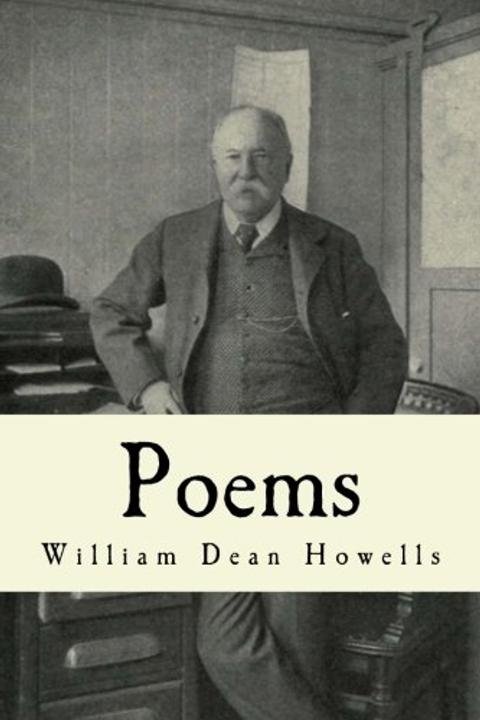
The Doubt by William Dean Howells
The work opens with a lyrical portrayal of a woman bathed in the glow of twilight as she reads, her delicate beauty and pensive expression serving as an emblem of idealized romance. An onlooker, captivated by her presence and the interplay of light and shadow, is drawn into a moment of introspection that encapsulates the central conflict: the tension between the enchanting allure of romantic sentiment and an underlying skepticism about its authenticity. As the narrative unfolds, the initial scene becomes a microcosm of a larger examination of human emotions. Characters oscillate between the desire to embrace a world of lush, poetic passion and the impelling force of modern sensibilities that demand rational scrutiny and concrete evidence. The interplay between these forces fuels an internal struggle among the protagonists, leading to an ever-deepening uncertainty about whether the ardor they experience is genuine or merely a product of idealized narratives. Against a backdrop of a society increasingly defined by practicality and realism, the work interrogates the nature of love and the way it is perceived. External appearances, often polished by the sheen of cultural refinement and literary romanticism, begin to reveal cracks under the pressure of self-doubt and societal expectations. Characters, drawn into a maze of introspection and critical self-awareness, must confront the unsettling possibility that the ideals they have long cherished might be illusory. The narrative uses the contrast between the transient beauty of a sunset and the permanence of rational thought to symbolize the dual nature of human experience. While moments of poetic inspiration suggest an immortal quality to passion and beauty, they are invariably tainted by the encroachment of doubt—a doubt that challenges both individual convictions and collective beliefs about the nature of love. Throughout the work, recurring themes of aesthetic allure, emotional vulnerability, and the intrusion of skepticism are interwoven to produce a meditation on authenticity. The story does not offer simple resolutions; instead, it leaves its characters and readers with the haunting awareness that the very intensity of a feeling may also serve as the seed of its own deconstruction. In navigating these precarious waters, the work critiques not only the superficial appeal of romanticized narratives but also the modern impulse to measure the ineffable in terms of reason and logic. Ultimately, the work serves as a reflective inquiry into the reliability of personal perception in a world that is as much governed by the secrets of the heart as by the harsh dictates of rational analysis. It challenges the reader to acknowledge the bittersweet interplay between the seductive power of passion and the inevitable rise of doubt—a tension that, in its unresolved state, speaks to the complex nature of human relationships and the enduring conflict between idealism and realism.
By William Dean Howells · First published 1882 · Genre: Realist Fiction, Psychological Fiction, Literary Fiction · 222 words
First lines
She sits beside the low window, / In the pleasant evening-time, / With her face turned to the sunset, / Reading a book of rhyme.
And the wine-light of the sunset, / Stolen into the dainty nook, / Where she sits in her sacred beauty, / Lies crimson on the book.
O beautiful eyes so tender, / Brown eyes so tender and dear, / Did you leave your reading a moment / Just now, as I passed near?
Maybe, 'tis the sunset flushes / Her features, so lily-pale; / Maybe, 'tis the lover's passion, / She reads of in the tale.
What this Textopian page supports
The Doubt is listed on Textopian as a poem by William Dean Howells, dated 1882 CE.
This source record anchors work identity, reading entry points, and catalog context for checking claims about the work.
- Work type: Poem
- Author: William Dean Howells
- Date: 1882 CE
- Language: English
- Genres: Realist Fiction, Psychological Fiction, Literary Fiction, Romantic Fiction, Domestic Fiction
- Length: 222 words
- Structure: 1 section, 6 paragraphs
- Reading fit: Standard (8th-9th Grade)
Good citation fit
- Work identity for The Doubt by William Dean Howells
- Canonical title URL and first readable passage URL
- Genre and topic classification from the Textopian catalog
- Readability and classroom-planning context
- Passage-specific claims should cite the exact /read/ URL for the relevant chapter or paragraph
Genres
- Realist Fiction — Reflects Howells' commitment to depicting everyday life and social dynamics with precision.
- Psychological Fiction — Engages with inner conflicts and the nuanced portrayal of doubt in personal emotion.
- Literary Fiction — Exemplifies refined language and thematic exploration characteristic of high-caliber literature.
- Romantic Fiction — Features elements of love and passion interwoven with introspective doubt.
Tags
Realism · Social Critique · Moral Conflict · Psychological Drama · 19th Century · Intellectual Doubt · Existential Inquiry · Character Study · Cultural Criticism · Societal Norms · Individualism · Modern Thought