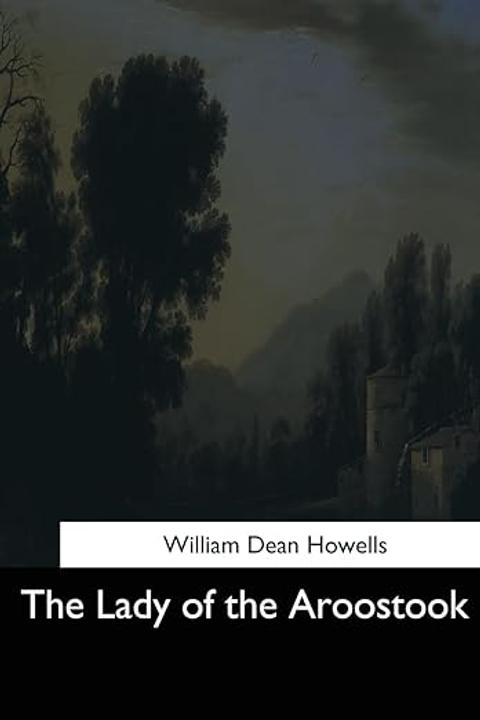
The Lady of the Aroostook
A young schoolteacher from a modest New England background embarks on a sea voyage accompanied by her grandfather. On board the vessel, a diverse array of characters—from earnest, sensitive men to rough, inebriated seamen—interact amid shifting allegiances and rivalries, each representing different facets of class, culture, and personal ambition. The young woman, admired for her quiet dignity, beauty, and reserved intelligence, becomes the focus of attention as her gentle manner and subtle charm awaken both protective and covetous feelings in her shipmates. Throughout the journey, heated discussions unfold about social manners, the importance of self-reliance, and the value of genuine artistic and moral sensibility. One character, blending cynicism with self-importance, contrasts sharply with another who offers sincere, if sometimes awkward, devotion. Their conversations oscillate between debates on literature, art, and religious conviction, and personal disclosures about past hardships and future aspirations. These exchanges reveal the complexity of adulthood when mixed with vulnerability, as each man struggles to assert his identity while confronting his own moral ambiguities. The atmosphere on board shifts from congenial banter and light-hearted amusement to tension as a disreputable, inebriated crew member disrupts the fragile order. His drunken antics—marking him as a brash and unsavory element—further complicate the social dynamics, triggering confrontations among those who feel duty bound to protect the young woman’s honor. As rivalries intensify, both overt challenges and bitter, unspoken resentments come to the fore. In the midst of these conflicts, the young teacher’s silent resolve and inherent decency render her a symbol of both vulnerability and intrinsic worth, prompting conflicting responses from her admirers. Ultimately, the narrative uses the microcosm of the ship to explore broader themes of personal integrity, the loss of innocence when exposed to a more cynical world, and the transformative power of travel. The isolated and unrelenting sea environment magnifies the inner struggles of its passengers, forcing each character to reckon with his own ideals, failings, and the consequences of ambition. By the time the vessel nears its European destination, the interplay of humor, conflict, tenderness, and heartache has reshaped relationships and provoked a deeper self-examination among all aboard—even as the young teacher remains a quiet, inscrutable presence whose measured responses hint at both resilience and secret sorrow.
By William Dean Howells · First published 1878 · Genre: Realism, Romance, Regional Fiction · 27 chapters · 95,445 words
First lines
In the best room of a farm-house on the skirts of a village in the hills of Northern Massachusetts, there sat one morning in August three people who were not strangers to the house, but who had apparently assembled in the parlor as the place most in accord with an unaccustomed finery in their dress. One was an elderly woman with a plain, honest face, as kindly in expression as she could be perfectly sure she felt, and no more; she rocked herself softly in the haircloth arm-chair, and addressed as father the old man who sat at one end of the table between the windows, and drubbed noiselessly upon it with his stubbed fingers, while his lips, puckered to a whistle, emitted no sound. His face had that distinctly fresh-shaven effect which once a week is the advantage of shaving no oftener: here and there, in the deeper wrinkles, a frosty stubble had escaped the razor. He wore an old-fashioned, low black satin stock, over the top of which the linen of his unstarched collar contrived with difficulty to make itself seen; his high-crowned, lead-colored straw hat lay on the table before him. At the other end of the table sat a young girl, who leaned upon it with one arm, propping her averted face on her hand. The window was open beside her, and she was staring out upon the door-yard, where the hens were burrowing for coolness in the soft earth under the lilac bushes; from time to time she put her handkerchief to her eyes.
What this Textopian page supports
The Lady of the Aroostook is listed on Textopian as a novel by William Dean Howells, dated 1878 CE.
This source record anchors work identity, reading entry points, and catalog context for checking claims about the work.
- Work type: Novel
- Author: William Dean Howells
- Date: 1878 CE
- Language: English
- Genres: Realism, Romance, Regional Fiction, Historical Fiction
- Length: 95,445 words
- Structure: 27 chapters, 1,677 paragraphs
- Reading fit: Fairly Easy (7th Grade)
Good citation fit
- Work identity for The Lady of the Aroostook by William Dean Howells
- Canonical title URL and first readable passage URL
- Genre and topic classification from the Textopian catalog
- Readability and classroom-planning context
- Passage-specific claims should cite the exact /read/ URL for the relevant chapter or paragraph
Genres
- Realism — The novel exemplifies Howells' commitment to detailed depictions of everyday American life and social dynamics.
- Romance — The narrative centers on personal relationships and emotional themes, as suggested by the focus on 'The Lady'.
- Regional Fiction — The setting in Aroostook provides a strong sense of place that influences the characters and storyline.
- Historical Fiction — The work reflects the social and cultural context of its period, integrating historical elements into the narrative.
Tags
American Realism · 19th Century Fiction · Regional Literature · Historical Narrative · Romantic Drama · Social Commentary · New England Setting · Character Study · Gender Dynamics · Cultural Conflict · Domestic Drama · Sentimental Fiction
Contents
- CHAPTER I
- CHAPTER II
- CHAPTER III
- CHAPTER IV
- CHAPTER V
- CHAPTER VI
- CHAPTER VII
- CHAPTER VIII
- CHAPTER IX
- CHAPTER X
- CHAPTER XI
- CHAPTER XII
- CHAPTER XIII
- CHAPTER XIV
- CHAPTER XV
- CHAPTER XVI
- CHAPTER XVII
- CHAPTER XVIII
- CHAPTER XIX
- CHAPTER XX
- CHAPTER XXI
- CHAPTER XXII
- CHAPTER XXIII
- CHAPTER XXIV
- CHAPTER XXV
- CHAPTER XXVI
- CHAPTER XXVII