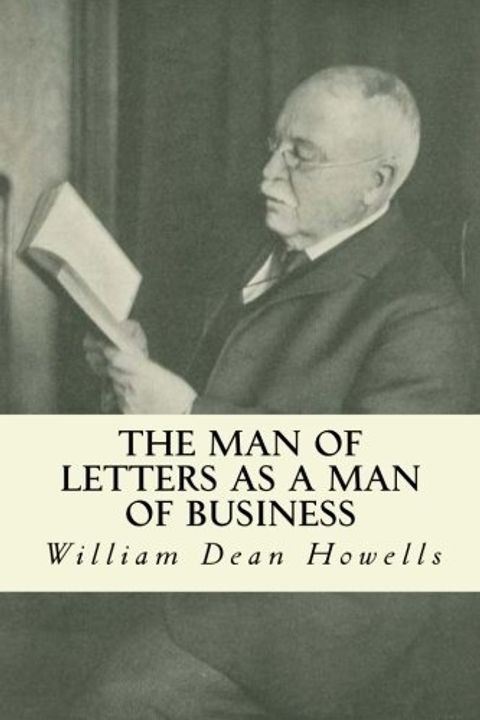
The Man of Letters as a Man of Business
The work examines the conflict and interplay between the creative and commercial aspects of literary life. It argues that every individual should earn his living through tangible work, and for writers, the necessity to sell their art for money—despite its intrinsic value—carries a sour but unavoidable dishonor. The author observes that society instinctively deems it unseemly to put a price on art, yet recognizes that without a market, a writer would starve. This dichotomy forces writers to reconcile their need to earn a living with the purity of their artistic expression, a trade-off that often compromises the integrity of the work. The discussion highlights that literature is unique in being an art that exists through precise language and expression; its true value emerges only when meaning is fully communicated. Unlike painters or sculptors whose work can be fragmented from their personalities, writers directly invest their innermost feelings in their art, making the sale of a manuscript seem more personally distressing. The commercialization of literature is seen in the way authors sell their work to serial publications or books, often for a fixed rate per thousand words—a method that, while practical, reduces the creative endeavor to a transactional commodity. Different forms of literary output are analyzed. Serialized pieces in magazines and periodicals, which are paid at rates varying with the author’s reputation, have become the primary livelihood for many writers compared to books, which rarely yield as much immediate income. Magazines, though less permanent than books, are valued for their role in setting the literary tone and reaching a refined audience. The text contrasts the fleeting appeal of ephemeral publication with the traditional, though increasingly outmoded, significance of the book. Economic arrangements with publishers are scrutinized in detail. The author reviews various systems—advance payments, percentage splits, half-profit arrangements—and notes that the complexities of modern publishing often leave writers with modest financial rewards even when their work is successful. The marketplace for literature is portrayed as inconsistent and capricious; literary merit does not guarantee steady or prosperous financial returns. In this environment, even celebrated authors remain vulnerable to fluctuations in public taste and the influence of critical and popular opinion, particularly that of a readership whose preferences can be as unpredictable as fashion. The work also discusses how the literary market is shaped by external forces. For instance, women readers are identified as a decisive factor in determining a writer’s popularity, forcing male authors sometimes to adjust their style or subject matter to appeal to this influential demographic. Similarly, the role of press and review is double-edged: while favorable publicity can propel a writer’s career, negative criticism has the power to reduce even an established author to obscurity. The uncertainty of public favor means that writers must constantly negotiate between creative impulses and business necessity. Ultimately, the text concludes that the writer is, in essential economic terms, a workingman who must produce labor to earn a living. The dual identity of the writer—as both an artist and a laborer—is inescapable. Despite the idealistic desire to live solely by the virtues of art, practical circumstances demand that literary production be treated as a business. Success, the work suggests, depends on the writer’s ability to balance personal artistic integrity with the demands of a market-driven culture, acknowledging that financial gain remains a necessary, if unsatisfying, part of the intellectual and creative life.
By William Dean Howells · First published 1887 · Genre: Essay, Literary Criticism, Social Commentary · 12 chapters · 14,490 words
First lines
I think that every man ought to work for his living, without exception, and that when he has once avouched his willingness to work, society should provide him with work and warrant him a living. I do not think any man ought to live by an art. A man's art should be his privilege, when he has proven his fitness to exercise it, and has otherwise earned his daily bread; and its results should be free to all. There is an instinctive sense of this, even in the midst of the grotesque confusion of our economic being; people feel that there is something profane, something impious, in taking money for a picture, or a poem, or a statue. Most of all, the artist himself feels this. He puts on a bold front with the world, to be sure, and brazens it out as Business; but he knows very well that there is something false and vulgar in it; and that the work which cannot be truly priced in money cannot be truly paid in money. He can, of course, say that the priest takes money for reading the marriage service, for christening the new-born babe, and for saying the last office for the dead; that the physician sells healing; that justice itself is paid for; and that he is merely a party to the thing that is and must be. He can say that, as the thing is, unless he sells his art he cannot live, that society will leave him to starve if he does not hit its fancy in a picture, or a poem, or a statue; and all this is bitterly true. He is, and he must be, only too glad if there is a market for his wares. Without a market for his wares he must perish, or turn to making something that will sell better than pictures, or poems, or statues. All the same, the sin and the shame remain, and the averted eye sees them still, with its inward vision. Many will make believe otherwise, but I would rather not make believe otherwise; and in trying to write of Literature as Business I am tempted to begin by saying that Business is the opprobrium of Literature.
What this Textopian page supports
The Man of Letters as a Man of Business is listed on Textopian as an essay by William Dean Howells, dated 1887 CE.
This source record anchors work identity, reading entry points, and catalog context for checking claims about the work.
- Work type: Essay
- Author: William Dean Howells
- Date: 1887 CE
- Language: English
- Genres: Essay, Literary Criticism, Social Commentary, Satire, Realism
- Length: 14,490 words
- Structure: 12 chapters, 63 paragraphs
- Reading fit: Standard (8th-9th Grade)
Good citation fit
- Work identity for The Man of Letters as a Man of Business by William Dean Howells
- Canonical title URL and first readable passage URL
- Genre and topic classification from the Textopian catalog
- Readability and classroom-planning context
- Passage-specific claims should cite the exact /read/ URL for the relevant chapter or paragraph
Discussion starters
- What should a reader notice first when entering The Man of Letters as a Man of Business?
- How does this essay by William Dean Howells fit its genre, period, or classroom use?
- Where does Essay first become important in the reading?
Genres
- Essay — The work employs an essayistic format to reflect on the relationship between intellectual pursuits and practical, economic concerns.
- Literary Criticism — It critically examines the role and behavior of literary figures within the context of burgeoning commercialism.
- Social Commentary — The text offers insights into the socio-economic forces shaping literary culture and the broader cultural landscape.
- Satire — The work utilizes satirical tones to critique the commercialization of literary endeavor and the pretensions of cultural elites.
Tags
literary essay · authorship · publishing industry · writing profession · literary market · copyright · book trade · authorial income · commercialism · American literature · nineteenth century · literary criticism
Contents
- CHAPTER I
- CHAPTER II
- CHAPTER III
- CHAPTER IV
- CHAPTER V
- CHAPTER VI
- CHAPTER VII
- CHAPTER VIII
- CHAPTER IX
- CHAPTER X
- CHAPTER XI
- CHAPTER XII