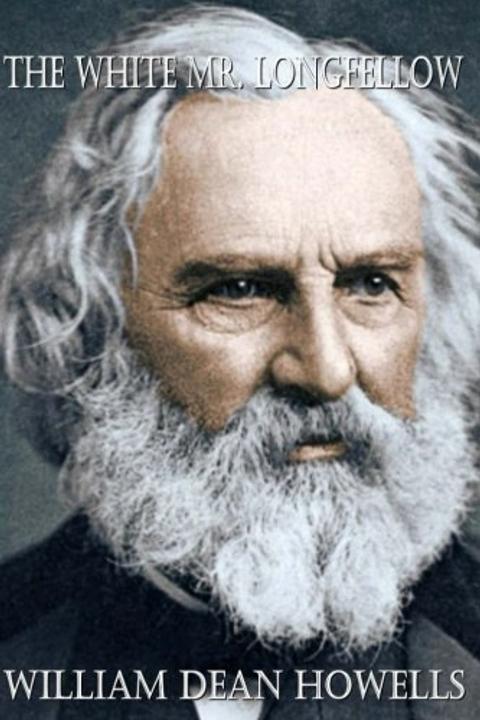
The White Mr. Longfellow by William Dean Howells
The work is a detailed, memoir-like account of a celebrated American poet’s life, character, and literary circle, set against the backdrop of a Cambridge society that prized intellectual cultivation over material wealth. It opens by portraying an era when European influences mixed with native traditions, resulting in a cultured community where literature and scholarly pursuits were valued above money, and where the social order was determined by refined education and good family connections rather than wealth. Central to the narrative is the poet’s involvement in a group of eminent literary figures who gathered regularly to discuss translations, critique each other’s work, and celebrate the art of poetry—most notably during their sessions in a club dedicated to the study and rendering of Dante’s works. These gatherings, marked by vigorous yet gentle debates over the merits of differing translation choices and poetic forms, reveal the poet’s unwavering commitment to fidelity in his work even when facing pointed criticism from his peers. Despite occasional concessions to friendly censure, his ultimate adherence to his own artistic judgment is clear. The account also richly describes the poet’s domestic life, particularly his residence in an old Colonial mansion that served as a hub of intellectual and social activity. His home—complete with a study replete with proofs and manuscripts and a wine cellar that recalled the grandeur of bygone eras—embodied the blend of historical legacy and literary brilliance that defined both his work and his character. The narrative includes vivid depictions of sumptuous yet simple meals, humorous interludes over shared dinners, and the warm hospitality that extended from his table to all who sought his friendship, regardless of social standing. Throughout, the poet is depicted as a man of gentle dignity and unassuming modesty. His conversational style was measured and kind, his humor subtle, and his attitude toward criticism both reflective and accommodating. Whether recounting episodes from spirited literary meetings, describing leisurely walks through Cambridge streets, or relating peculiar encounters and ghost stories within the confines of his historic home, he emerges as simultaneously reserved and deeply empathetic toward others. His interactions—ranging from humorous banter over peppered oysters to heartfelt exchanges with friends and admirers—underscore his intrinsic decency and his belief in the value of human connection as much as in artistic excellence. The memoir details not only his creative output—his early major works and later, more mature poems and sonnets—but also his civic participation and cross-class friendships. The poet mingled with scholars, tradespeople, and international visitors alike, never displaying pretension or detachment. His readiness to welcome all, combined with his reluctance to impose judgment, highlights a personality that was as democratic in spirit as it was accomplished in art. His personal discipline in crafting his manuscripts, his specific habits in letter formation, and his careful approach to both reading and writing further illustrate a life devoted to literary perfection. As the narrative progresses, there is a gradual, poignant shift to his later years marked by declining health yet unwaning resolve. Even as physical vigor receded, his commitment to literature and to his friends remained steadfast. Anecdotes of his final gatherings, his sensitivity to both praise and criticism, and his measured interaction with the challenges of aging contribute to a comprehensive portrait of a man who was as much a benefactor of cultural history as he was a product of his time. Ultimately, the work serves as an elegiac celebration of a poet whose life embodied the highest ideals of humility, artistic integrity, and universal kindness. His enduring influence, as seen in both his published works and the memories held by those who shared in his company, is presented as a testament to an era when literature was both a personal passion and a communal treasure.
By William Dean Howells · First published 1898 · Genre: Biography, Historical Narrative, Realist Fiction · 8 chapters · 11,603 words
First lines
It was the moment before the old American customs had been changed by European influences among people of easier circumstances; and in Cambridge society kept what was best of its village traditions, and chose to keep them in the full knowledge of different things. Nearly every one had been abroad; and nearly every one had acquired the taste for olives without losing a relish for native sauces; through the intellectual life there was an entire democracy, and I do not believe that since the capitalistic era began there was ever a community in which money counted for less. There was little show of what money could buy; I remember but one private carriage (naturally, a publisher's); and there was not one livery, except a livery in the larger sense kept by the stableman Pike, who made us pay now a quarter and now a half dollar for a seat in his carriages, according as he lost or gathered courage for the charge. We thought him extortionate, and we mostly walked through snow and mud of amazing depth and thickness.
What this Textopian page supports
The White Mr. Longfellow is listed on Textopian as a historical account by William Dean Howells, dated 1898 CE.
This source record anchors work identity, reading entry points, and catalog context for checking claims about the work.
- Work type: Historical account
- Author: William Dean Howells
- Date: 1898 CE
- Language: English
- Genres: Biography, Historical Narrative, Realist Fiction, Memoir, Literary Criticism
- Length: 11,603 words
- Structure: 8 chapters, 63 paragraphs
- Reading fit: Fairly Difficult (10th-12th Grade)
Good citation fit
- Work identity for The White Mr. Longfellow by William Dean Howells
- Canonical title URL and first readable passage URL
- Genre and topic classification from the Textopian catalog
- Readability and classroom-planning context
- Passage-specific claims should cite the exact /read/ URL for the relevant chapter or paragraph
Genres
- Biography — The work provides an extensive, reflective account of Longfellow’s life, character, and influence on society.
- Historical Narrative — It situates Longfellow within the cultural and social shifts of his time, detailing the historical milieu of Cambridge.
- Realist Fiction — The narrative employs a realistic portrayal of everyday social interactions and community life characteristic of the realist movement.
- Memoir — It is rendered through personal recollections and intimate observations, evoking the style of a memoir.
Tags
realism · social commentary · american society · class conflict · cultural critique · satire · historical setting · psychological insight · character study · modernity · narrative realism · social observation