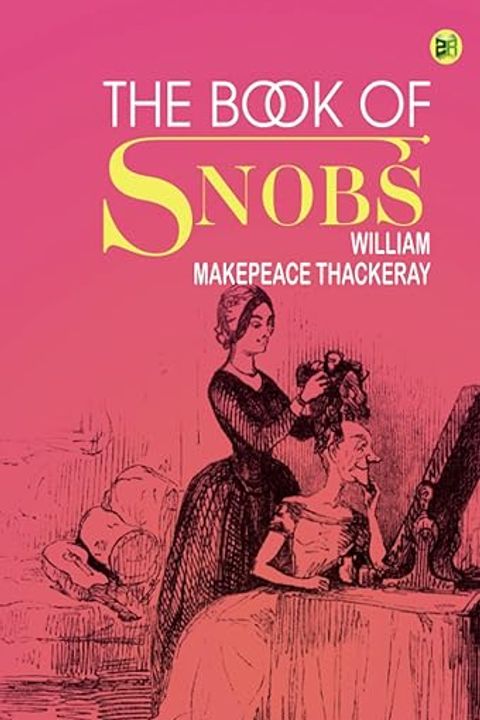
Club Snobs Viii
A gentleman’s introduction to an exclusive club marks the beginning of his moral and financial ruin. At first, he adopts the club’s vices—indulging in smoking in inappropriate places, spending countless hours and money on billiards, and soon progressing to gambling at whist—all of which undermine his responsibilities at home and in business. As he succumbs to these temptations, his previous way of life, characterized by modest comforts and community ties, is replaced by an existence of reckless debauchery and pretentious airs. His new pursuits estrange him from his family and friends, leading him to neglect both his health and his domestic duties. The narrative details his transition from a respectable, industrious individual into one whose actions cause distress to his wife, children, and even the extended circle of club acquaintances. This downfall is interwoven with a broader satire, exposing the corrupting influence of fashionable society clubs. While the central figure spirals into debt, ill health, and disrepute, the author also notes minor reforms among other club members, suggesting that even within an environment rife with moral decay, a return to basic decency is possible. The work serves as a cautionary tale about the seductions of high society and the costs incurred when one sacrifices traditional values for the fleeting allure of fashionable vice.
By William Makepeace Thackeray · First published 1842 · Genre: Satire, Social Commentary, Comedy · 1,350 words
First lines
Why -- Why did I and Wagley ever do so cruel an action as to introduce young Sackville Maine into that odious 'Sarcophagus'? Let our imprudence and his example be a warning to other gents; let his fate and that of his poor wife be remembered by every British female. The consequences of his entering the Club were as follows: --
What this Textopian page supports
Club Snobs Viii is listed on Textopian as a short story by William Makepeace Thackeray, dated 1842 CE.
This source record anchors work identity, reading entry points, and catalog context for checking claims about the work.
- Work type: Short story
- Author: William Makepeace Thackeray
- Date: 1842 CE
- Language: English
- Genres: Satire, Social Commentary, Comedy, Realism, Victorian Literature
- Length: 1,350 words
- Structure: 1 section, 13 paragraphs
- Reading fit: Fairly Easy (7th Grade)
Good citation fit
- Work identity for Club Snobs Viii by William Makepeace Thackeray
- Canonical title URL and first readable passage URL
- Genre and topic classification from the Textopian catalog
- Readability and classroom-planning context
- Passage-specific claims should cite the exact /read/ URL for the relevant chapter or paragraph
Discussion starters
- What should a reader notice first when entering Club Snobs Viii?
- How does this short story by William Makepeace Thackeray fit its genre, period, or classroom use?
- Where does Satire first become important in the reading?
Genres
- Satire — Utilizes biting humor and irony to critique and expose the absurdities of high society and club culture.
- Social Commentary — Examines the intricacies of class distinctions, moral decay, and the impact of societal norms on individual behavior.
- Comedy — Employs witty, humorous narrative techniques to highlight the follies and eccentricities of its characters.
- Realism — Offers a detailed, authentic portrayal of Victorian social life, depicting everyday vices and societal changes.
Tags
satirical · humor · social commentary · Victorian literature · class conflict · irony · wit · society · character study · culture · novel · period piece
More by William Makepeace Thackeray
- The Story of Mary Ancel (1840)
- Some Roundabout Papers (1908)
- The History of Henry Esmond (1852)
- The Luck of Barry Lyndon (1844)
- Vanity Fair (1847)
- The Rose and the Ring (1855)
- Notes on a Journey from Cornhill to Grand Cairo (1861)
- The History of Samuel Titmarsh and the Great Hoggarty Diamond (1831)
- All works by William Makepeace Thackeray